


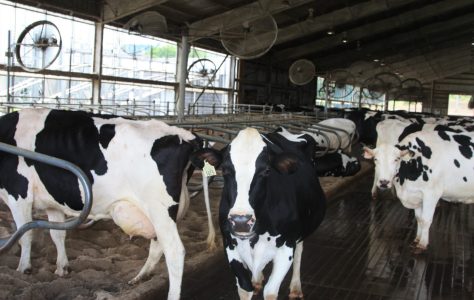
A four-year, USD 1.15 million USDA-funded project brings artificial intelligence and precision agriculture together to develop a Self-learning Dairy (SLDairy) tool, as reported by Julie Shlisky of Virginia Tech.
The tool would accurately match feed protein supply with the individual animal’s needs, improving income over feed cost and reducing ammonia emissions to the atmosphere.
Rather than feeding all cows in a pen the same diet, commercial dairy producers can have a personalized nutrition program for every cow in the herd.
At the center of the effort is Mark Hanigan, the David R and Margaret Lincicome Professor in the School of Animal Sciences.
Together with researchers from Emory University and the Universities of Idaho, Nebraska, and Tennessee, the project aims to move the dairy industry beyond generalized feeding recommendations toward precise, data-driven nutrition management.
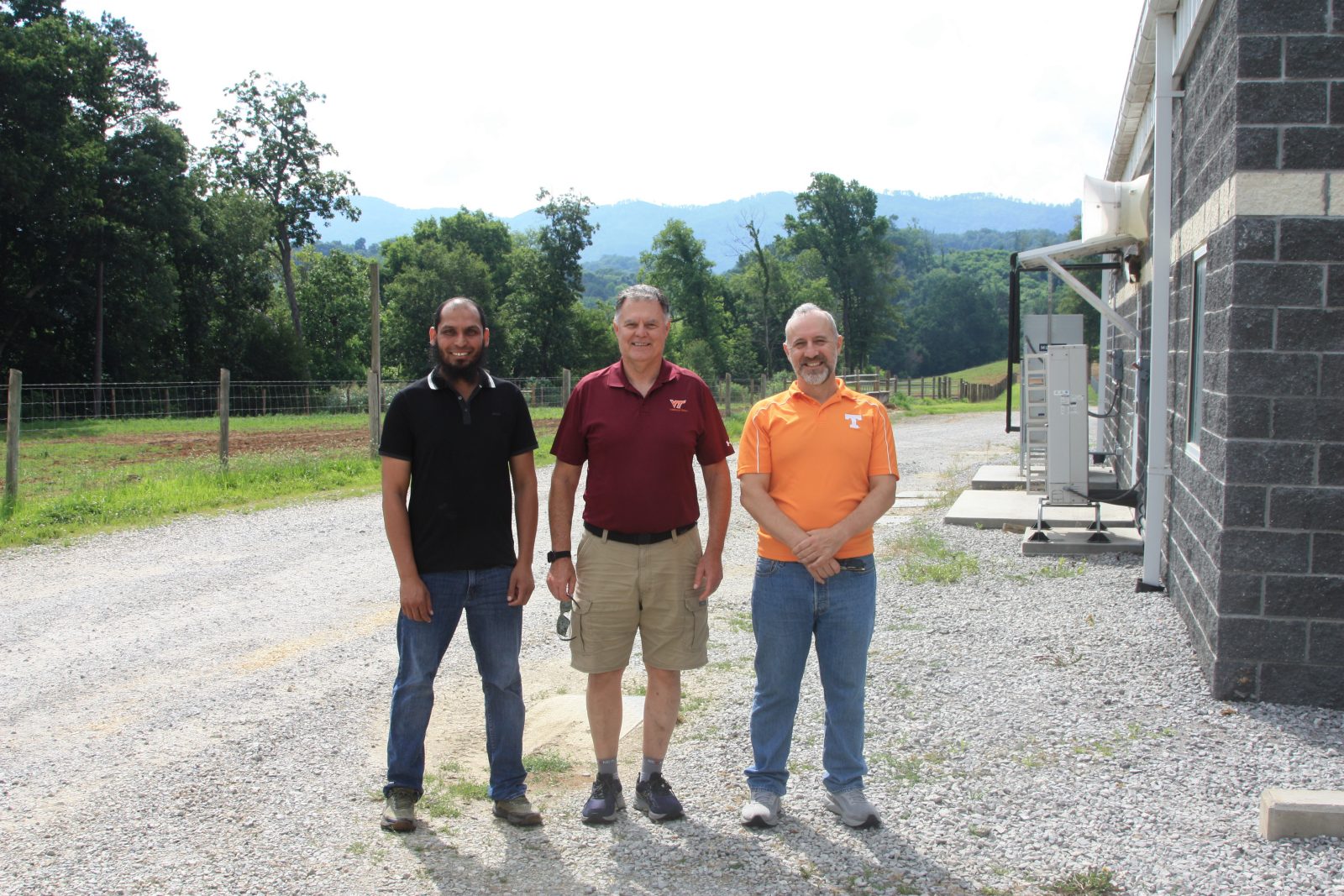

Prof Mark Hanigan (center) joins University of Tennessee Knoxville researcher Irfan Malik and Associate Professor Agustín Ríus to conduct a precision feeding trial at the University of Tennessee Knoxville (Photo courtesy: Mark Hanigan).
The dairy cow metabolism guru
Although this application of the technology is new, Prof Hanigan has spent 35 years studying how dairy cows use the protein and energy in their diets.
With support from USDA-NIFA, industry partners, Hatch Multistate Capacity funding, and the Lincicome and Pratt Endowments, his research has helped explain how the availability of energy and amino acids affects milk production and milk protein content. Amino acids are the building blocks of proteins, while energy fuels the process of assembling them.
“We’ve been working to understand how the various nutrient sensing mechanisms are integrated to control milk protein synthesis, and the dose-response relationship between milk protein synthesis and concentrations of each of the amino acids, insulin, and other metabolites,” Prof Hanigan said.
With support from USDA-NIFA capacity funding, Hanigan built a network of collaborators across the country and around the world to investigate fundamental questions about dairy cow nutrition and translate their findings into practical tools for cattle producers.
This research laid the groundwork for sophisticated mathematical models of dairy cow metabolism that helped inform the National Academies’ 2021 Nutrient Requirements of Dairy Cattle.
Feeding the individual, not the average
Current feeding systems rely on average responses from large groups of cows to develop diets for animals grouped by milk production level.
However, this approach does not account for differences among individual cows. Prof Hanigan’s recent trials show that cows vary considerably in how they respond to dietary protein.
Robotic milking systems equipped with automated feeders continuously collect data on milk production and cow performance, allowing researchers to measure how individual cows respond to different levels of protein in their diets.
Prof Hanigan’s research shows that about one-third of cows respond as predicted by models based on herd averages. Another third needs significantly less protein than expected – meaning conventional feeding systems provide more than they require. The remaining third benefit from higher protein levels.
By shifting excess protein from cows that need less to those that benefit from more, dairy producers could increase the herd’s milk protein production without increasing the total amount of protein fed.
The benefits extend beyond profitability. Protein is an expensive feed ingredient, and excess protein is broken down, with much of its nitrogen excreted in manure and urine, contributing to environmental pollution, including ammonia emissions. Matching protein intake to each cow’s needs could improve nitrogen-use efficiency and reduce the amount of nitrogen released into the environment.
The research could also create new opportunities for selective breeding. By identifying cows that consistently use nutrients more efficiently, breeders could select for those traits in future generations.
Associate Professor Rebecca Cockrum, a dairy geneticist, is working to identify genetic markers associated with high nitrogen-use efficiency, potentially offering another way to make dairy production more sustainable.
Building the dairy farm of the future
The SLDairy project brings together dairy scientists, economists, mathematicians, computer scientists, and extension specialists to develop the next generation of precision dairy management tools.
Building on the project’s self-learning feeding platform, researchers are exploring ways to incorporate animal behavior, health, and environmental data into feeding decisions.
Planned advances include using wearable sensors to track activity, accounting for weather and heat stress when adjusting diets, and identifying potential health problems before they affect milk production.
These tools could help dairy farmers manage rising costs and labor shortages while reducing feed waste, limiting environmental impacts, and improving animal care.
“The focus over the past century has been on increasing animal production,” Prof Hanigan said.
“The next century will be focused on using sensor data and automated management systems to discover each cow’s needs and tailor management to her needs.”