


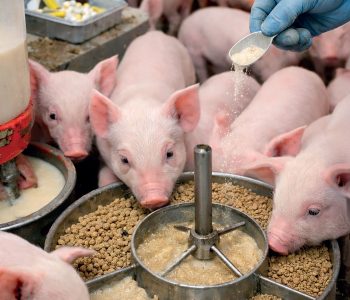
Active Feeding strategy for PRRS-positive weaned piglets
Alberto Morillo Alujas
DVM, PhD, Nutritionist, MSc Statistics, and Consultant at Tests and Trials, S.L.U.
Porcine Reproductive and Respiratory Syndrome (PRRS) remains one of the greatest global threats to the swine industry. Its impact extends beyond reproductive and respiratory symptoms, affecting the animal’s systemic, metabolic, and immune health.
In this context, Active Feeding represents a shift from conventional nutritional support toward a targeted strategy designed to address the central pathophysiological effects of PRRS virus infection.
Active Feeding is based on the intestine-lung axis, recognizing the connection between gut microbiota and respiratory immune response.
PRRSv as a systemic challenge
PRRSv is a positive-sense single-stranded RNA virus that causes reproductive disorders in sows and respiratory disease in piglets. Clinical signs include fever, tachypnea, dyspnea, diarrhea, and growth retardation.
These clinical manifestations are often worsened by secondary bacterial infections, increasing morbidity and mortality. At the same time, PRRSv induces a costly immune response that diverts nutrients and energy away from growth and tissue synthesis.
The reduced feed intake and suppressed growth observed in infected piglets are partly explained by the diversion of nutrients toward immune activation.
From respiratory disease to metabolic burden
The impact of PRRSv should not be viewed only as a localized respiratory issue. Instead, it is a systemic and multifaceted disease with significant energy and metabolic costs that directly affect productivity.
This is why nutritional strategies must go beyond maintaining basic nutrient supply. The objective is to help the animal maintain productive performance despite infection by supporting immunity, gut integrity, and metabolic efficiency.
The goal is not only to feed the piglet, but to strengthen its ability to resist and recover from viral challenge.
The intestine-lung axis
The intestine-lung axis describes the interaction between the gut microbiota and respiratory immune function. Research shows that gut microorganisms can influence lung health, and PRRSv infection can disrupt intestinal microbial balance.
Infection with virulent PRRSv strains has been associated with dysbiosis, including reduced microbial diversity and the loss of beneficial anaerobic bacteria such as:
- Roseburia
- Anaerostipes
- Butyricicoccus
- Prevotella
Gut dysbiosis may worsen the clinical picture, creating a negative cycle between disease, inflammation, and impaired microbiota balance.
Microbiota as a predictor of resistance
One of the most important points highlighted in the article is that microbiome composition may help explain why some piglets are more resistant to PRRSv than others. Resistant animals tend to show lower viral load and higher weight gain, even after infection.
Beneficial bacterial groups associated with better PRRSv response include:
- Prevotellaceae-NK3B31
- Prevotella
- Faecalibacterium
- Ruminococcaceae
In contrast, genera such as Campylobacter, Desulfovibrio, Treponema, Methanobrevibacter, Parabacteroides, and others have been linked with poorer outcomes, diarrhea, immune imbalance, higher viral load, or lower growth.
Active Feeding objective
The diet should promote beneficial bacteria while reducing the excess of opportunistic or pathogenic genera associated with worse PRRSv outcomes.
A proactive strategy from weaning
A key finding discussed in the article is that microbiome differences may already exist before infection in piglets that later show resistant or susceptible phenotypes. This changes the nutritional perspective: rather than acting only after disease appears, Active Feeding should be implemented proactively from weaning.
The aim is to build a state of microbiological and metabolic resilience before viral exposure, allowing piglets to better manage viral load, inflammation, and performance loss.
Active Feeding focuses on prevention and resilience, not only on treating clinical symptoms after infection.
Probiotics and prebiotics in Active Feeding
Probiotics and prebiotics are central components of this strategy because they act directly on the gut microbiome and help modulate the host response. Probiotics such as Bacillus subtilis and Lactobacillus acidophilus may contribute through pathogen exclusion, antimicrobial compound production, improved nutrient digestibility, and immune modulation.
Prebiotics provide substrates for beneficial microorganisms, supporting microbial balance and improving host health.
Prebiotics and probiotics help create a microbial environment that supports immune balance and improved resilience during viral challenge.
Mannan-oligosaccharides and immune modulation
Mannan-oligosaccharides (MOS) are presented as a key case study for immuno-nutritional intervention. Piglets fed MOS and exposed to PRRSv showed reduced fever and improved feed-to-gain ratio.
MOS supplementation was also associated with lower concentrations of TNF-α and higher concentrations of IL-10, suggesting reduced pro-inflammatory burden and improved anti-inflammatory balance.
Reducing inflammation allows more energy to be redirected toward growth, recovery, and productive performance.
Functional proteins and intestinal barrier support
Functional proteins, including spray-dried plasma and egg-derived compounds, may help improve intestinal barrier function and modulate immune response. These ingredients support the core principles of Active Feeding by limiting systemic inflammation and improving nutritional efficiency.
Functional proteins can help preserve intestinal structure during immune stress, supporting both health and growth.
A phased nutritional approach
The article proposes a gradual implementation of the Active Feeding strategy through two phases: proactive and reactive.
Phase I – Proactive
This phase begins at weaning and should be administered to all piglets, regardless of health status. Its purpose is to develop a robust and resilient microbiome before potential viral exposure.
Phase II – Reactive
In piglets with confirmed or suspected PRRSv infection, the diet should be adjusted to provide higher concentrations of key components, including high-energy-density nutrients and immunomodulatory compounds to support recovery.
The phased approach allows nutritionists to prepare piglets before infection and intensify support during disease challenge.
Recommended ingredient profile
An Active Feeding diet should include ingredients that provide nutrients while also exerting specific physiological effects. Recommended categories include:
- Functional proteins: highly digestible sources such as plasma and egg-derived compounds
- Prebiotics: MOS and fermentable fibers to support beneficial bacteria
- Probiotics: multispecies blends including Lactobacillus and Bifidobacterium
- Fatty acids: high-quality fats such as omega-3 polyunsaturated fatty acids
- Vitamins and minerals: essential cofactors for immune and metabolic function
The goal is to formulate diets that promote beneficial microbial genera while supporting immunity, intestinal integrity, and metabolic efficiency.
Conclusion
Active Feeding for PRRSv-positive weaned piglets is a science-based nutritional approach that addresses PRRSv not only as a respiratory disease, but as a systemic condition influenced by the gut-lung axis.
By incorporating MOS, probiotic blends, functional proteins, and energy-dense immune-supportive ingredients, the diet can reduce inflammatory burden, improve metabolic efficiency, and strengthen the animal’s ability to mitigate the most severe effects of infection.
Promoting a resilient microbiome from weaning onward may improve piglet health, welfare, performance, and long-term sustainability in swine production.