


RUMINANT NUTRITION | FEED INGREDIENTS | SUSTAINABILITY
Can Native African Forages Reduce Methane Emissions Without Compromising Cattle Nutrition?
A new study examining 15 indigenous forage species in West Africa suggests that naturally occurring plant compounds could help reduce methane production during ruminal fermentation. However, the findings reveal an important trade-off between methane mitigation, nutrient digestibility and energy availability.
Reducing enteric methane emissions while maintaining animal productivity is one of the most significant challenges facing the global ruminant livestock industry.
As producers explore nutritional strategies to improve the environmental sustainability of cattle production, researchers are increasingly investigating the potential of natural plant compounds found in locally available forage species.
A recent study published in Scientific Reports on October 30, 2026 evaluated the nutritional composition, phytochemical characteristics and methane production potential of 15 indigenous forage species used in cattle feeding systems in Benin, West Africa.
The research, conducted by Marthe Montcho and colleagues, investigated how differences in tannins, polyphenols and other secondary plant metabolites influence ruminal fermentation, digestibility and estimated energy availability.
The results suggest that certain native forages could contribute to methane mitigation strategies, although selecting the most appropriate ingredients requires balancing their environmental benefits with their nutritional value.
RESEARCH AT A GLANCE
15 forage species
Evaluated for nutritional value, natural phytochemical composition, in vitro digestibility and methane production using bovine rumen fluid.
The challenge of reducing methane from cattle production
Enteric methane is produced naturally during the microbial fermentation of feed in the rumen.
As microorganisms break down carbohydrates and other dietary components, hydrogen and carbon dioxide become available for methane-producing microorganisms, known as methanogenic archaea.
Methane is subsequently released from the animal, primarily through eructation.
Although this process is a normal consequence of ruminant digestion, methane emissions contribute to the environmental footprint of livestock production.
In addition to its climate implications, methane formation represents a pathway through which part of the energy derived from feed is lost rather than being available for animal metabolism.
For this reason, improving ruminal fermentation efficiency has become an important research objective.
Nutritional strategies that modify fermentation, improve feed utilization or reduce methane formation could potentially contribute to more efficient livestock systems.
However, reducing methane production does not automatically mean improving animal performance.
Some compounds capable of suppressing fermentation may also reduce nutrient degradation and digestibility, creating potential disadvantages for cattle productivity.
The nutritional challenge: An effective methane mitigation strategy must reduce emissions without substantially compromising feed digestibility, nutrient availability or animal performance.
Why investigate indigenous forage species?
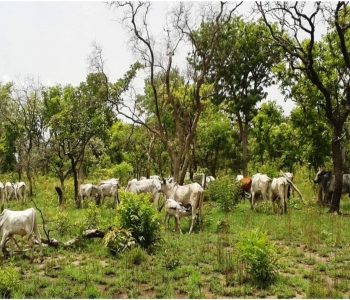
In many West African livestock production systems, cattle rely heavily on natural grazing areas and locally available vegetation.
These resources include grasses, shrubs and tree leaves that may contribute important nutrients during different seasons.
However, the nutritional characteristics of indigenous forage species can vary considerably depending on their botanical composition and concentrations of secondary plant metabolites.
Certain plants naturally contain compounds such as tannins, flavonoids and other polyphenols, which may influence ruminal microbial activity and fermentation.
Previous research has suggested that some tannin-containing plants can reduce methane production through their effects on rumen microorganisms and nutrient degradation.
Nevertheless, the effectiveness of these compounds depends on their chemical characteristics, concentration and the overall composition of the diet.
The researchers therefore investigated whether forage species already recognized and used by cattle farmers in Benin could offer a practical foundation for developing locally adapted methane mitigation strategies.
How was the research conducted?
The study evaluated 15 forage species identified with the participation of local cattle farmers.
Plant samples were collected during the rainy season from natural grazing areas in several regions of Benin, including Upper Alibori, N’Dali, Tchaourou and Sota.
The researchers analyzed the nutritional and phytochemical characteristics of the collected material, including the presence of secondary metabolites potentially associated with changes in ruminal fermentation.
They subsequently used in vitro fermentation techniques with bovine rumen fluid to evaluate organic matter digestibility, estimated metabolizable energy and methane production.
This approach allowed comparisons between forage species under controlled laboratory conditions.
Importantly, the experiment did not involve feeding the experimental forages to live cattle. Therefore, the results describe laboratory fermentation responses rather than measured reductions in methane emissions from animals under commercial production conditions.
Tannin-rich forages showed lower methane production, but also lower digestibility
One of the clearest findings was the relationship between certain tannin-rich forages, reduced digestibility and lower methane production.
Three species in particular—Acacia sieberiana, Khaya senegalensis and Detarium microcarpum—showed relatively low organic matter digestibility and estimated metabolizable energy.
Their organic matter digestibility values ranged from approximately 30.0% to 47.1%, while estimated metabolizable energy ranged from 1,281.6 to 1,952.4 kcal/kg of dry matter.
These species also produced relatively low amounts of methane during laboratory fermentation, ranging from approximately 185 to 282 mL of methane per kilogram of dry matter.
Although these results indicate methane mitigation potential, the associated reduction in nutritional value is an important consideration.
Forages that produce less methane because they undergo less extensive fermentation may also provide fewer usable nutrients to the animal.
Consequently, their suitability for practical feeding programs cannot be determined from methane production alone.
LOW-METHANE FORAGE GROUP
185–282 mL CH₄/kg DM
Methane production reported for three forage species associated with comparatively low organic matter digestibility and metabolizable energy.
Some high-tannin species maintained more favorable nutritional characteristics
Interestingly, not all forages containing substantial concentrations of tannins showed poor digestibility.
The researchers identified Anogeissus leiocarpa and Isoberlinia doka as species with relatively high tannin concentrations but more favorable nutritional characteristics.
Their measured tannin contents were approximately 4.556% and 2.486%, respectively.
Despite these concentrations, both species demonstrated comparatively good digestibility and energy values, alongside moderate methane production.
These observations suggest that the relationship between tannins and ruminal fermentation is more complex than a simple association between higher tannin content and lower methane production.
Differences in tannin structure, other plant compounds and overall forage composition may influence how individual species behave during fermentation.
This finding is particularly relevant for feed formulation because it suggests that the type and characteristics of plant secondary metabolites may be as important as their total concentration.
Highly digestible forages produced more methane
At the opposite end of the nutritional spectrum, several forage species showed high digestibility and energy availability.
These included Blighia sapida, Leucaena leucocephala and Faidherbia albida.
The researchers described these species as relatively low in tannins and rich in nitrogen, with organic matter digestibility values ranging from approximately 43.1% to 62.8%.
Their estimated metabolizable energy values exceeded 2,200 kcal/kg of dry matter.
Among all the evaluated species, Blighia sapida showed the highest reported organic matter digestibility, reaching 62.8%.
It also achieved an estimated metabolizable energy value of 2,657.6 kcal/kg of dry matter.
However, this species also produced the highest methane volume observed in the study, at approximately 505 mL CH₄/kg of dry matter.
These findings illustrate an important trade-off: forages that support more extensive fermentation and greater nutrient availability may also generate more methane under laboratory conditions.
Key finding: Blighia sapida demonstrated high digestibility and energy availability, but also the highest methane production. This reinforces the need to evaluate environmental and nutritional outcomes together.
Comparing the nutritional characteristics of the forage groups
| Forage group | Nutritional characteristics | Methane response |
|---|---|---|
| Lower-digestibility, tannin-containing species Acacia sieberiana Khaya senegalensis Detarium microcarpum |
OMD: 30.0–47.1% ME: 1,281.6–1,952.4 kcal/kg DM |
185–282 mL CH₄/kg DM |
| High-tannin species with favorable digestibility Anogeissus leiocarpa Isoberlinia doka |
Relatively good digestibility and energy values | Moderate methane production |
| More digestible, nitrogen-rich species Blighia sapida Leucaena leucocephala Faidherbia albida |
OMD: 43.1–62.8% ME: above 2,200 kcal/kg DM |
Highest reported value: 505 mL CH₄/kg DM for B. sapida |
| Intermediate phytochemical profiles Piliostigma thonningii Daniellia oliveri Combretum collinum Annona senegalensis Diospyros mespiliformis |
Average OMD: 53.3% ME: 1,868.3–2,206.4 kcal/kg DM |
Potential compromise between digestibility and methane production |
Source: Montcho et al., Scientific Reports (2026). OMD = organic matter digestibility; ME = metabolizable energy; DM = dry matter. Values summarize groups described by the researchers and should not be interpreted as individual measurements for every listed species.
Moderate concentrations of plant compounds may offer a better balance
Beyond the species showing particularly low or high methane production, the researchers identified another group of plants with intermediate nutritional and phytochemical characteristics.
These included Piliostigma thonningii, Daniellia oliveri, Combretum collinum, Annona senegalensis and Diospyros mespiliformis.
The group showed an average organic matter digestibility of approximately 53.3%, with estimated metabolizable energy values ranging from 1,868.3 to 2,206.4 kcal/kg of dry matter.
According to the researchers, these species may represent a useful compromise between maintaining nutritional value and limiting methane production.
Their relatively balanced phytochemical profiles, including polyphenols and flavonoids, could influence fermentation without causing the same degree of reduction in digestibility observed for some other species.
This suggests that the most promising forage ingredients may not necessarily be those that produce the lowest absolute methane volumes.
Instead, priority may need to be given to species that combine adequate nutrient availability with a favorable fermentation profile.
What role do tannins and other phytochemicals play?
Tannins are naturally occurring polyphenolic compounds found in many plant species.
In ruminant nutrition, their effects depend on several factors, including concentration, molecular structure, forage composition and interactions with other dietary ingredients.
At appropriate levels, certain tannins may influence rumen fermentation and microbial activity in ways that reduce methane formation.
Potential mechanisms include changes in microbial populations, reduced availability of fermentation substrates and effects on methane-producing microorganisms.
However, tannins can also bind dietary proteins and influence the degradation of other nutrients.
At excessive concentrations, these interactions may reduce digestibility and limit the nutritional value of a feed ingredient.
The study therefore reinforces the importance of evaluating phytochemical compounds as part of a complete nutritional profile rather than treating tannin concentration as an isolated indicator of methane mitigation potential.
A more targeted approach: Selecting forage ingredients based on their nutritional value and phytochemical characteristics could help identify feeding strategies that influence rumen fermentation while maintaining adequate nutrient utilization.
What are the implications for cattle feeding systems?
The findings are particularly relevant for livestock systems that depend on locally available forage resources.
In many parts of West Africa, access to specialized commercial feed additives may be constrained by cost, availability and infrastructure.
Indigenous forage species could therefore provide opportunities to explore nutritional strategies based on resources already present in local production environments.
However, translating laboratory findings into practical feeding recommendations requires additional investigation.
Several factors will influence the suitability of these plants for cattle diets, including seasonal availability, palatability, nutrient variability, potential antinutritional effects and interactions with other feed ingredients.
It will also be necessary to establish whether the observed fermentation responses translate into meaningful reductions in methane emissions when the forages are included in complete diets.
The research provides a useful starting point for identifying candidates for subsequent animal feeding trials and more detailed nutritional evaluations.
Why laboratory methane reductions are not the same as farm-level reductions
An important limitation of the study is that methane production was evaluated through in vitro fermentation rather than direct measurements from live cattle.
Laboratory systems are valuable for screening feed ingredients because they allow researchers to compare fermentation responses under controlled conditions.
However, they cannot fully reproduce the complexity of the living rumen or account for all the factors influencing feed intake, animal performance and methane emissions.
In addition, lower methane production per unit of incubated forage does not necessarily translate into lower methane emissions per kilogram of milk or meat produced.
For example, a forage that substantially reduces digestibility could also reduce nutrient supply and animal productivity.
Future research should therefore evaluate methane emissions alongside feed intake, digestibility, growth or milk production, and overall animal health.
These measurements will be essential for determining whether the identified species can contribute to practical and economically viable methane mitigation programs.
Toward more sustainable and locally adapted ruminant nutrition
The study highlights the potential of indigenous forage resources as a foundation for developing nutritional strategies adapted to local livestock production systems.
By examining both nutritional composition and methane production, the researchers demonstrated why environmental outcomes must be considered together with feed quality.
Some species produced relatively low methane volumes but had limited digestibility and energy availability, while others offered better nutritional characteristics at the expense of greater methane production.
A third group showed intermediate characteristics that may provide a more promising balance between these competing objectives.
Although further research involving live animals is required, the findings suggest that careful selection and combination of forage species could contribute to more sustainable ruminant feeding strategies.
For cattle nutritionists and producers, the central message is that methane mitigation should not be pursued independently of animal nutrition.
The most effective feeding strategies will be those capable of supporting adequate nutrient utilization and productive performance while reducing the environmental impact of livestock production.
Source and further reading
Montcho, M., Lesse, P., Salako, V., Dakpogan, H., & Sinsin, B. (2026).
Nutritional values, phytochemical profiles and enteric methane mitigation potential of West African indigenous forage species for sustainable ruminant livestock production systems.
Scientific Reports.DOI: 10.1038/s41598-026-78209-7