


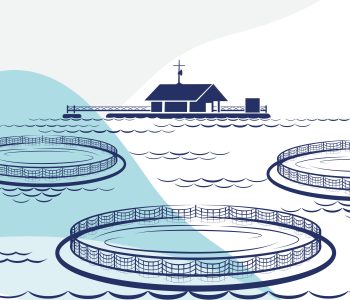
Global production from fisheries and aquaculture reached an all-time high in 2024, driven by continued expansion of fish farming and a modest recovery in wild catches, according to the Food and Agriculture Organization of the United Nations (FAO). In its 2026 edition of The State of World Fisheries and Aquaculture (SOFIA 2026), FAO estimates total output at 235 million tonnes, comprising 195 million tonnes of aquatic animals and nearly 40 million tonnes of algae.
Aquaculture now accounts for the majority of aquatic animal production for human consumption, underscoring its central role in global food security, nutrition and livelihoods.
RECORD GLOBAL PRODUCTION
Global fisheries and aquaculture output reached 235 million tonnes in 2024, including almost 195 million tonnes of aquatic animals and close to 40 million tonnes of algae. Aquaculture was the main driver of this record production.
Record output, led by aquaculture
FAO’s latest figures show:
- Total aquatic animal production: almost 195 million tonnes in 2024
- Aquaculture contribution: around 103 million tonnes, up 8.2% year on year
- Capture fisheries: nearly 92 million tonnes, up about 1.7%
- Algae production: close to 40 million tonnes, also at record levels
This marks the first time that combined fisheries and aquaculture output has reached 235 million tonnes, reflecting sustained investment in aquaculture, improved management of some wild stocks and growing global demand for fish and other aquatic foods.
Aquaculture overtakes capture for human consumption
A key milestone highlighted in SOFIA 2026 is that aquaculture has overtaken capture fisheries as the main source of aquatic animals for human consumption. While wild catches remain essential for many coastal communities and for specific species, most of the growth in supply available to consumers now comes from farmed fish, crustaceans, molluscs and algae.
FAO projects that over the next decade:
- Global aquatic animal production will rise by about 10%, reaching 214 million tonnes by 2034.
- Aquaculture will account for most of this growth, while capture fisheries are expected to remain broadly stable, constrained by biological limits and management measures.
Other analyses cited alongside SOFIA indicate that aquaculture’s share of total aquatic animal production could reach around 52% by 2030, with per-capita consumption of aquatic foods continuing to climb, particularly in developing regions.
A STRUCTURAL SHIFT IN AQUATIC FOOD PRODUCTION
Aquaculture is no longer simply supplementing wild fisheries. Farmed aquatic animals are becoming the main source of future supply growth, while capture fisheries are expected to remain comparatively stable over the coming decade.
Rising consumption and nutritional importance
Fish and other aquatic foods are increasingly recognized as critical sources of high-quality protein, essential fatty acids, vitamins and minerals. FAO data show that global per-capita consumption of aquatic foods has more than doubled since the 1960s, supported by population growth, rising incomes, urbanization and improved cold-chain and distribution systems.
Although SOFIA 2026 does not provide a single updated per-capita figure in all summaries, related reporting based on FAO data indicates that average consumption is now well above 20 kg per person per year globally, with significant variation between regions and countries.
In many low- and middle-income countries, fish remains one of the most affordable and accessible animal-source foods, making it a cornerstone of food and nutrition security, especially in small island developing states and coastal communities.
Regional and sectoral highlights
FAO’s report and associated analyses point to several important trends:
- Asia remains the dominant producer and consumer, accounting for the bulk of both aquaculture output and inland fisheries. Countries such as China, India, Indonesia, Vietnam and Bangladesh continue to drive global growth in farmed species including carp, tilapia, catfish, shrimp and salmonids.
- High-value species such as shrimp, salmon and certain finfish are seeing strong production increases, supported by technological advances in feed, breeding, health management and, in some cases, recirculating and indoor systems.
- Small-scale fisheries still employ tens of millions of people worldwide and are vital for local food security, even as their share of total landings varies by region and species.
- Algae production continues to expand, not only for direct human consumption but also for use in feed, fertilizers, cosmetics and emerging bio-based products.
At the same time, the sector faces challenges, including climate change impacts on marine ecosystems, overfishing in some stocks, pollution, habitat loss and social issues in parts of the supply chain.
Sustainability and governance
SOFIA 2026 places strong emphasis on the need to balance growth with sustainability. FAO highlights that:
- The proportion of fish stocks within biologically sustainable levels has stabilized in recent years but remains below historic highs, underscoring the importance of effective fisheries management, science-based quotas and enforcement.
- Aquaculture’s environmental footprint varies widely by species, system and location. Best practices in site selection, feed formulation, disease control and effluent management are critical to ensuring that growth does not come at the expense of ecosystems or local communities.
- Certification schemes, traceability systems and improved data collection are increasingly used to support responsible sourcing and to meet the requirements of major import markets.
FAO also calls for greater recognition of small-scale fishers and fish farmers in policy frameworks, including secure access rights, social protection and support for adaptation to climate change.
GROWTH AND SUSTAINABILITY MUST ADVANCE TOGETHER
With aquaculture expected to provide most future supply growth, expansion will increasingly depend on efficient feed formulation, responsible health management, environmental performance, traceability and climate resilience.
Outlook to 2034
Looking ahead, FAO projects:
- Global demand for aquatic products (for food and non-food uses) will grow by around 11% over the next decade, driven by population growth, urbanization and rising incomes, particularly in Asia and Africa.
- Aquaculture will be the main engine of supply growth, with production expected to increase by roughly 10% by 2034, while capture fisheries are forecast to remain relatively flat, subject to management measures and environmental variability.
- Trade in fish and fish products will continue to be significant, with developing countries playing a major role as both exporters and importers, depending on species and market segments.
These projections assume continued investment in research, infrastructure and governance, as well as progress on climate adaptation and mitigation in the sector.
Implications for industry and policy
For governments, the SOFIA 2026 findings reinforce the need to:
- Integrate fisheries and aquaculture into national food security, nutrition and rural development strategies.
- Strengthen management of wild stocks and invest in data systems to monitor status and trends.
- Support sustainable intensification of aquaculture, including access to finance, technology and training for small and medium-scale producers.
For businesses and investors, the report highlights:
- Long-term growth opportunities in aquaculture, especially in high-value species, feed ingredients, health solutions and value-added products.
- The importance of robust environmental and social performance to maintain market access and brand reputation.
- Potential risks from climate change, regulatory shifts and input constraints (e.g. fishmeal and fish oil availability) that need to be factored into strategy and risk management.
OPPORTUNITY FOR THE FEED AND NUTRITION INDUSTRY
Continued aquaculture growth will increase demand for efficient feeds, alternative proteins, functional ingredients, health solutions and technologies capable of improving feed conversion while reducing environmental impact.
Key takeaway
SOFIA 2026 confirms that global fisheries and aquaculture have reached unprecedented levels of production, with aquaculture now the dominant source of aquatic animals for human consumption. The sector’s future trajectory will depend on how well growth is managed to ensure environmental sustainability, social equity and resilience in the face of climate and market pressures.