


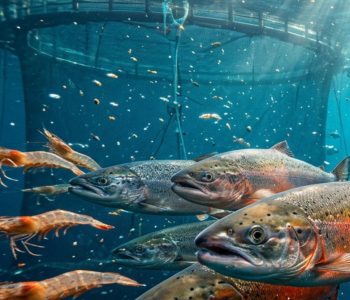
Astaxanthin supplementation in aquaculture: functional benefits and applications
Introduction
Carotenoids are becoming an important supplement in aquaculture feed production. These molecules are naturally synthesized by algae, fungi, and other photosynthetic organisms. Carotenoids generally absorb light rays at different wavelengths, accumulating in the tissues of plants and animals, resulting in distinct red, orange, or yellow coloration.
They have been introduced in several industries, including pharmaceuticals and the feed industry, owing to their impact on human and animal health. Carotenoids have been observed to act as antioxidants, enhance the immune response, and improve growth performance in animal production.
Astaxanthin is one of the most important carotenoids in aquaculture, especially for crustacean and salmonid production.
These molecules also significantly reduce the cases of diseases, including cancer, and numerous cardiovascular diseases, by acting as a protective shield against oxidative damage to tissues and cells.
Astaxanthin is one of the most important carotenoids in aquaculture, and these molecules are being incorporated into several aquaculture diets, especially for crustacean and salmonid production. Most importantly, they have been supplemented in the diets of salmonids to enhance coloration, which has been observed to influence consumer preferences and increase the demand for these products.
Recently, synthetic carotenoids have been produced using several genetic engineering techniques to improve quality and increase their commercial availability for aquaculture production.
Structure of astaxanthin
Basically, carotenoids are categorized into two major groups based on their chemical composition:
- Carotenes
- Xanthophylls
Carotenes are the first group of carotenoids that contain only carbon and hydrogen in their chemical structure, and the second group, xanthophylls, contains oxygen in their chemical composition.
The distinctive feature of astaxanthin is the presence of hydroxyl (OH) and carbonyl (C=O) groups in the ionone ring.
The distinctive feature of astaxanthin is the presence of hydroxyl (OH) and carbonyl (C=O) in the ionone ring. Two major reactions, 3-hydroxilation and 4-ketolation, occur in the ionone ring, resulting in astaxanthin production. Enzymes, specifically β-carotene hydroxylase and β-carotene ketolase, catalyze the 3-hydroxilation and 4-ketolation pathways, respectively.
The presence of conjugated double bonds in carotenoid structures confers a unique molecular structure and influences their chemical properties. These bonds can exist in two forms, either as cis or trans geometric isomers, although most carotenoids naturally exist in the trans form.
Astaxanthin can be esterified by different fatty acids, including palmitic, oleic, linoleic, or stearic acid, although this is dependent on its origin. Astaxanthin can also exist in a free state with a non-esterified hydroxyl group; however, this form is considerably unstable and has a higher susceptibility to oxidation.
Sources of astaxanthin
Astaxanthin can be found in several organisms, particularly fungi, algae, yeast, and some specific bacteria. In the aquatic environment, astaxanthin is synthesized by microalgae, such as Haematococcus pluvialis. Similarly, yeast, such as Phaffia rhodozyma, is capable of naturally synthesizing astaxanthin.
These microalgae are eaten by zooplankton, which in turn are eaten by smaller fish, moving astaxanthin up towards the food web.
In aquatic ecosystems, astaxanthin moves through the food web from microalgae to zooplankton and then to fish and crustaceans.
Evidence of astaxanthin in the aquatic environment can be found in the distinctive color of organisms that consume it, particularly fish. However, the sustainability of astaxanthin availability has led to the production of similar synthetic derivatives, consequently, because of their increasing economic relevance in aquaculture production.
Several researchers have studied techniques for the extraction of astaxanthin from the tissues of these microalgae. H. pluvialis was found to contain a relatively higher amount of astaxanthin in its tissues, accumulating to about 9.2 mg/g cell.
Astaxanthin can also be synthetically produced either by chemical composition or through natural microbial components such as the red yeast Xanthophyllomyces dendrorhous and green microalgae H. pluvialis. Other sources of astaxanthin include the muscles of wild and some wild farmed species such as shrimp, trout, and salmonids.
Differences between natural astaxanthin and synthetic astaxanthin
The main difference between natural astaxanthin and synthetic astaxanthin is the cost of production. Synthetic astaxanthin is relatively cheaper to produce than natural astaxanthin, which requires the cultivation and harvesting of microalgae, and is relatively expensive and time-consuming.
Synthetic astaxanthin is usually in unesterified form, while naturally synthesized astaxanthin is esterified. Naturally synthesized astaxanthin has better antioxidant properties and a higher accumulation rate than synthetic astaxanthin.
Natural astaxanthin is generally more expensive to produce, but it may offer better antioxidant properties and higher tissue accumulation than synthetic astaxanthin.
Biological functions of astaxanthin
The inclusion of astaxanthin in the diets of aquatic organisms has been observed to improve the growth and survival of aquaculture species. Astaxanthin has been proven to shorten the molting cycle of shrimp and increase post-larvae growth and development by improving nutrient uptake in aquatic animals.
Research has shown that astaxanthin supplementation increased enzyme activities in the digestive tract of these animals, promoting nutrient absorption and utilization, resulting in better growth performance. Reproductive performance has also been observed to improve when aquatic species are fed diets supplemented with astaxanthin.
Astaxanthin supplementation can support growth, survival, nutrient uptake, reproductive performance, immune competence, and pigmentation in aquaculture species.
Astaxanthin acts as an antioxidant and serves as a precursor of vitamin A. These molecules capture singlet and reactive oxygen species and free radicals from several metabolic processes. Elimination of free radicals is achieved by reacting with these compounds to produce less harmful products and disrupting their free-radical chain reactions.
These molecules enhance higher cell signaling during the embryonic developmental stages, hence increasing the concentration of vitamin A in the fry of fish, particularly Atlantic salmon.
Astaxanthin-supplemented diets have been shown to improve reproductive traits, including oocyte maturation and fertilization rates in several fish species. Furthermore, it enhances embryonic development, improves sperm quality, egg quality, and larval quality of fish and crustaceans.
Astaxanthin has also proven effective in enhancing the immunocompetence of aquatic animals. These molecules improve phagocytic activities in fish against a wide range of infectious diseases. The humoral, cell-mediated, and innate immune responses have been observed to improve in aquatic animals fed diets supplemented with astaxanthin.
Astaxanthin, like other carotenoids, influences the color of aquatic animals. These molecules aggregate in the tissues of aquatic animals, leading to distinct coloration. Customer preferences have been observed to be influenced by the meat color, especially in shrimp and salmonids.
Limitations of astaxanthin utilization in aquaculture
Natural astaxanthin is limited in quantity and less available, leading to the shift to synthetic production. Synthetic astaxanthin production is relatively expensive, thus less affordable for many aquaculture producers.
Microalgae may accumulate large amounts of heavy metals present in the natural environment, which influences the quality of these molecules and can result in bioaccumulation of these compounds in aquatic animals.
Long-term storage of astaxanthin is also a concern because these molecules are highly oxidative in nature and can lead to the production of deleterious compounds.
Availability, production cost, heavy metal accumulation in microalgae, and oxidative instability during storage remain important limitations for astaxanthin use in aquaculture.
Conclusion
Carotenoids, including astaxanthin, are becoming an important feed supplement in aquaculture feed production, due to their positive impact on growth, survival, health, and performance of aquatic animals.
These molecules have been proven to have no negative impact on aquatic animal nutrition and provide an alternative as a biologically safe product, promoting sustainable aquaculture production. However, production and availability can be a challenge, and it poses significant constraints to the full utilization of these molecules in future aquaculture applications.
Astaxanthin remains a valuable functional carotenoid in aquaculture nutrition, supporting pigmentation, antioxidant protection, immunity, reproduction, and overall performance.