


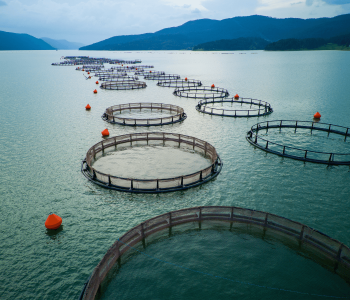
Can European Aquaculture Become Climate-Neutral?
European aquaculture is under growing pressure to align with the EU’s climate goals, but can an industry that produces fish, shellfish and algae ever be truly climate-neutral?
A new analysis from Wageningen University & Research (WUR) in the Netherlands argues that it is technically possible—but only if the sector embraces systemic change across feeds, energy, site design, species choice and integration with other industries.
CAN AQUACULTURE REACH NET ZERO?
According to the analysis, the answer could be yes—but not through incremental efficiency gains alone. Climate-neutral aquaculture would require coordinated changes across feed production, energy use, farm design, species selection, waste management and the wider value chain.
Why aquaculture matters for Europe’s climate goals
Aquaculture is the fastest-growing food production sector globally and a strategic priority for the EU, which sees “blue foods” as a way to:
- Increase domestic protein supply and reduce reliance on imported seafood.
- Provide nutrient-dense foods with relatively low land use compared with terrestrial livestock.
- Support coastal and rural economies, especially in regions with limited agricultural land.
At the same time, the EU has committed to climate neutrality by 2050 and ambitious interim targets for 2030. All food sectors, including aquaculture, are expected to contribute through deep emissions cuts and, where possible, carbon removal.
The WUR analysis asks: what would it take for European aquaculture not just to reduce emissions, but to reach net-zero or even net-negative status?
Where do aquaculture emissions come from?
Greenhouse gas (GHG) emissions from aquaculture vary widely by species, system and location, but major sources include:
- Feed production: For carnivorous species (e.g. salmon, trout, seabass, seabream), feed is often the largest emissions hotspot. Ingredients such as fishmeal, fish oil, soy, wheat and other crops carry embedded emissions from farming, processing and transport.
- Energy use: Pumps, aerators, water treatment, heating/cooling and processing facilities consume electricity and fuels. In recirculating aquaculture systems (RAS) and indoor facilities, energy can dominate the carbon footprint.
- On-farm emissions: Nitrogen and carbon cycles in ponds, cages and tanks generate CO₂, methane (CH₄) and nitrous oxide (N₂O), especially in organic-rich sediments and poorly managed systems.
- Supply chain and logistics: Transport of live fish, processed products, feed and equipment, plus packaging and cold storage, add further emissions.
NOT ALL AQUACULTURE HAS THE SAME FOOTPRINT
WUR emphasizes that carbon intensity per kilogram of product can differ by an order of magnitude between low-impact systems, such as extensive bivalve culture, and high-input systems, such as heated RAS for warm-water species.
What “climate-neutral aquaculture” would look like
The WUR analysis outlines a vision of climate-neutral European aquaculture built on several pillars.
1. Low-carbon, circular feeds
Feed is the biggest lever for many species. Pathways include:
- Shifting to lower-trophic species: Expanding production of herbivorous and omnivorous fish (e.g. carp, tilapia in suitable climates) and especially bivalves (mussels, oysters, clams) and seaweed, which require little or no formulated feed and can even extract nutrients from the water.
- Using alternative ingredients:
- By-products from fisheries and food processing (e.g. trimmings, viscera) turned into fishmeal/oil.
- Single-cell proteins (yeast, bacteria), insect meals and microbial oils produced via fermentation.
- Locally grown oilseeds, legumes and algae, reducing import dependence and embedded land-use emissions.
- Improving feed efficiency: Better formulation, precision feeding and genetics to lower feed conversion ratios (FCR), directly cutting emissions per kilogram of fish produced.
For fed aquaculture species, reducing the carbon footprint of feed—and using that feed more efficiently—could be one of the most important pathways toward lower-emission production.
2. Renewable energy and energy efficiency
For energy-intensive systems, notably RAS and some hatcheries, several pathways are available:
- Electrification with renewable power: Sourcing electricity from wind, solar, hydro or certified green tariffs; co-locating farms with offshore wind or solar where feasible.
- Energy-efficient design: Optimizing pump systems, using gravity flow where possible, improving insulation and heat recovery, and deploying smart controls to match aeration and water exchange to real-time demand.
- Low-temperature species and site selection: Favoring species that thrive in ambient European water temperatures to avoid heating, and siting farms where natural conditions minimize energy needs.
3. System design that cuts on-farm emissions
WUR highlights several design and management strategies:
Integrated multi-trophic aquaculture (IMTA)
Integrated multi-trophic aquaculture (IMTA) involves co-culturing fish with shellfish and seaweeds so that wastes from one species become resources for others. This can:
- Reduce nutrient discharge and local eutrophication risk.
- Sequester carbon in biomass (especially seaweed and shellfish shells).
- Diversify income and spread risk.
Improved sediment and waste management
Regular removal or treatment of organic-rich sediments in ponds and near cages can help limit methane and nitrous oxide formation. Anaerobic digestion can also be used to convert sludge and processing waste into biogas and digestate.
Water-smart practices
In freshwater systems, optimizing water exchange and using constructed wetlands or biofilters can treat effluents while enhancing biodiversity and carbon storage in vegetation and soils.
4. Blue carbon and nature-based solutions
Aquaculture can potentially contribute to carbon removal, not just emissions reduction.
Seaweed farming
Macroalgae fix CO₂ through photosynthesis. While much of this carbon is re-released when seaweed is consumed or decomposes, some can be:
- Harvested and used in long-lived products such as materials, biochar and construction products.
- Sunk into deep water or buried in sediments as part of verified carbon removal schemes, although this remains an emerging area.
Shellfish reefs and beds
Bivalves build calcium carbonate shells, which store carbon over long timescales. Restoring or expanding shellfish habitats can enhance local carbon sinks while providing habitat and water filtration.
Mangrove-linked systems
In EU overseas territories and in cooperation with partner countries, integrating aquaculture (e.g. shrimp, fish) with mangrove conservation and restoration can generate “blue carbon” credits and improve resilience, though this is more relevant outside continental Europe.
FROM LOWER EMISSIONS TO CARBON REMOVAL?
Seaweed, shellfish habitats and other nature-based systems could potentially allow parts of aquaculture to contribute to carbon removal. However, WUR stresses that blue carbon claims must be robustly measured and verified to avoid overstating their climate benefits.
5. Digitalization and bio-economic optimization
A recurring theme in WUR’s work is the need for data-driven decision-making:
- Bio-economic benchmarking: Tools that simultaneously model biological performance (growth, survival, FCR) and economic outcomes (costs, margins) at farm level, allowing producers to identify practices that reduce both cost and emissions.
- Digital traceability: Using sensors, IoT and blockchain-like systems to track inputs, emissions and product flows, supporting:
- More accurate carbon accounting.
- Premium markets for low-carbon or climate-neutral seafood.
- Compliance with emerging EU sustainability regulations.
- AI and decision support: Optimizing feeding, aeration and health management in real time to minimize waste and energy use while maintaining welfare and productivity.
Species and system choices: not all aquaculture is equal
A key message from WUR is that “aquaculture” is not a single category. Climate performance varies dramatically.
Bivalves
Bivalves such as mussels, oysters and clams are generally among the lowest-carbon animal proteins. They require no feed input, filter nutrients from the water and can contribute to water quality improvement and habitat creation.
Expanding bivalve production is presented as a clear no-regrets option for climate-neutral seafood.
Seaweed
Seaweed has very low direct emissions, potential for nutrient extraction and carbon sequestration, and multiple uses across food, feed, materials and bioenergy. Scaling seaweed farming in suitable European waters is another priority.
Extensive and semi-extensive freshwater fish
Species such as carp can have moderate emissions, especially when integrated with agriculture or when fed with local by-products and low-impact feeds.
Marine finfish
Marine finfish such as salmon, seabass and seabream generally have higher emissions due to feed and, in some cases, energy use. Climate-neutral production will require:
- Major shifts in feed composition toward by-products, novel proteins and lower-trophic ingredients.
- Renewable energy and efficiency gains.
- Potentially rethinking where and how these species are farmed through better siting, offshore production and IMTA.
Recirculating aquaculture systems (RAS)
RAS can be highly resource-efficient in terms of water and land use, but they are energy-intensive. Their climate performance hinges on:
- Access to cheap, renewable electricity.
- High-efficiency equipment and smart controls.
- Species choice, with cold-water species in cool climates being more favorable than heating systems for warm-water species.
A climate-neutral European aquaculture sector will likely feature more bivalves and seaweed, more low-trophic fish, and redesigned high-trophic systems tightly optimized for energy and feed efficiency.
Policy and market enablers
WUR’s analysis makes clear that technology alone is not enough. Enabling conditions include:
Clear definitions and standards
EU-wide methodologies are needed for measuring and verifying the carbon footprint of aquaculture products, including feed, energy and blue carbon contributions, to avoid greenwashing and enable fair comparison.
Incentives and finance
- Grants, loans and tax incentives for renewable energy, energy efficiency and circular feed infrastructure.
- Support for pilot and demonstration projects for IMTA, seaweed and bivalve expansion, and low-carbon RAS.
- Integration of aquaculture into carbon markets where credible removal or avoidance can be demonstrated.
Spatial planning and licensing
Streamlined, science-based permitting should:
- Prioritize low-impact, climate-positive sites, for example for bivalves and seaweed.
- Ensure environmental safeguards while avoiding unnecessary delays that push investment to less regulated regions.
Research and innovation
Continued public-private R&D will be needed on:
- Alternative feed ingredients and precision nutrition.
- Low-energy system designs and renewable integration.
- Blue carbon measurement, verification and long-term storage options.
Recent cooperation between the Netherlands and countries like Vietnam illustrates how European expertise in low-carbon aquaculture, digital traceability and bio-economic optimization can be co-developed and then applied both in Europe and in partner regions, reinforcing the EU’s role as a hub for sustainable aquaculture innovation.
Challenges and trade-offs
The path to climate neutrality is not without tensions:
- Cost and competitiveness: Low-carbon feeds, renewable energy and advanced systems can raise production costs, at least initially. Without market premiums or policy support, European producers may struggle against imports from regions with weaker climate and environmental standards.
- Consumer acceptance: Expanding bivalve and seaweed consumption in Europe requires cultural shifts and product innovation to make these foods convenient, tasty and mainstream.
- Ecological limits: Even low-impact systems must be carefully sited and managed to avoid local biodiversity impacts, conflicts with other sea users and cumulative effects in sensitive coastal zones.
- Measurement uncertainty: Quantifying on-farm emissions, especially CH₄ and N₂O, and blue carbon benefits remains scientifically complex. Robust, standardized methods are essential to ensure credibility.
CLIMATE NEUTRALITY IS NOT JUST A TECHNOLOGY CHALLENGE
The transition must also address economic competitiveness, consumer acceptance, ecological limits and credible carbon accounting. Without these pieces, technical improvements alone may not be enough to transform the sector.
Outlook: a plausible but demanding transition
WUR’s conclusion is cautiously optimistic: climate-neutral aquaculture in Europe is technically feasible, but it will not happen by incremental tweaks alone.
It requires:
- A portfolio approach that expands low-impact species (bivalves, seaweed, some freshwater fish) while decarbonizing higher-impact segments through feed, energy and system innovation.
- Strong policy signals that reward low-carbon production, support R&D and ensure a level playing field with imports.
- Collaboration across the value chain—farmers, feed companies, energy providers, processors, retailers and researchers—to align incentives and share data and best practices.
If these pieces come together, European aquaculture could not only meet its own climate targets but also position itself as a global benchmark for sustainable, climate-smart blue food production.
Sources
Wageningen University & Research (WUR) analysis on climate-neutral aquaculture in Europe, including feed, energy, system design, blue carbon and digitalization pathways; related EU context on climate neutrality targets and carbon capture/storage infrastructure supporting net-zero goals; research on valorization of fish waste via anaerobic digestion and circular bioeconomy links to climate-neutral aquaculture; Netherlands–Vietnam cooperation on sustainable aquaculture, low-emission production, digital traceability and blue carbon, illustrating practical implementation of WUR concepts.