


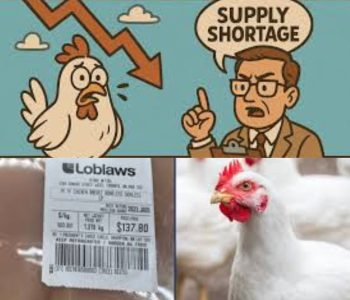
Canadian chicken prices rise as demand outpaces supply
Rising consumer demand and tight supply are putting new pressure on Canada’s chicken market.
Canadian chicken prices are rising as demand continues to outpace supply, adding pressure to a market already dealing with high input costs and changing protein consumption patterns. With beef remaining expensive, more consumers are turning to poultry as a familiar, versatile, and comparatively affordable option.
That shift is helping support demand for chicken across retail channels, but it is also tightening the balance between supply and consumption. When household demand increases faster than production can adjust, prices tend to reflect the strain quickly. For Canada’s poultry sector, that means stronger sales can come alongside greater market volatility.
Chicken has traditionally occupied a unique position in Canadian diets. It is widely viewed as a cost-effective protein source that offers flexibility across a wide range of cuisines and meal occasions. As consumers become more price conscious, poultry often benefits from substitution effects, particularly when beef and other animal proteins become more expensive.
Consumer demand continues to support poultry consumption
The current environment highlights how sensitive protein markets can be to changing consumer behavior. As households look for ways to manage grocery budgets, many are choosing chicken more frequently because it remains relatively affordable compared to other protein categories.
This demand shift is occurring across multiple channels, including grocery retail, foodservice, prepared meals, and value-added poultry products. Consumers are not necessarily purchasing less protein overall; instead, they are often adjusting the mix of proteins they buy.
As a result, chicken consumption remains resilient even during periods of broader economic pressure. This helps support poultry demand but can also contribute to tighter market conditions when supply expansion cannot occur quickly enough.
Supply challenges limit market flexibility
The situation also underscores the sensitivity of the poultry market to broader food inflation trends. Chicken often benefits when consumers look for lower-cost protein alternatives, but that same dynamic can create pressure on processors, distributors, and retailers if supply chains are already stretched.
In practical terms, the market is being asked to do more with limited flexibility. Poultry production requires careful coordination across breeding operations, hatcheries, feed suppliers, growers, processors, transportation networks, and retailers. Adjustments in production capacity cannot happen overnight.
For producers, the challenge is not only meeting demand, but doing so consistently and efficiently. Feed costs, labour availability, processing capacity, transportation logistics, energy costs, and biosecurity management all influence how effectively the sector can respond to changing market conditions.
Because poultry operates within a highly integrated production system, maintaining stability requires constant coordination among all participants in the value chain.
The role of production costs
Beyond demand growth, producers continue to face elevated production costs. Feed remains one of the largest expenses in poultry production, and fluctuations in grain markets can significantly affect overall costs.
At the same time, producers must continue investing in animal welfare, environmental stewardship, worker safety, and biosecurity programs. These investments are essential for maintaining consumer confidence and ensuring long-term sector sustainability, but they also contribute to the overall cost structure of production.
In a market where margins can be tight, higher costs throughout the production chain often translate into pricing pressure further downstream.
What this means for the Canadian poultry sector
Canada’s poultry industry has demonstrated resilience in the face of economic uncertainty, shifting consumer preferences, and supply chain disruptions. However, the current environment highlights the importance of maintaining sufficient production capacity and operational efficiency to meet evolving demand.
The challenge moving forward will be balancing affordability for consumers with profitability and sustainability for producers. Maintaining that balance will require continued investment in production efficiency, processing infrastructure, workforce development, and supply chain resilience.
Market outlook
Looking ahead, chicken is likely to remain one of the most important proteins in the Canadian market. Its affordability, nutritional value, and versatility continue to support consumption across a broad range of demographic groups.
However, the current market environment suggests that price pressure may persist if supply growth does not keep pace with rising demand. Continued population growth, evolving dietary preferences, and ongoing inflationary pressures could further reinforce demand for poultry products in the coming years.
For producers, processors, retailers, and consumers alike, the coming months will provide an important indication of how effectively the poultry supply chain can adapt to changing market conditions.
Conclusion
Canadian chicken prices are rising because demand remains strong while supply faces practical limitations. Although poultry continues to benefit from its position as an affordable protein option, the sector must navigate ongoing challenges related to production costs, capacity, labour, and supply chain efficiency.
If demand continues to outpace production growth, the poultry market is likely to experience continued pricing pressure. At the same time, the long-term fundamentals for Canadian poultry remain positive, supported by strong consumer demand and the essential role chicken plays in Canada’s food system.