


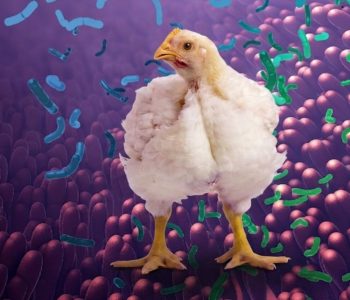
Gut health has become one of the main drivers of productivity, resilience and sustainability in modern poultry production. Rather than being limited to the absence of intestinal disease, gut health is now recognized as the optimal interaction between the intestinal epithelium, the immune system, and the gut microbiota, allowing efficient nutrient digestion and absorption while protecting birds against enteric challenges.
Among these components, the gut microbiota has emerged as a key biological regulator of broiler performance. Evidence increasingly shows that the first days of life represent a unique window during which the intestinal microbial community is established, shaping digestive efficiency, immune competence, and long-term productivity. Consequently, nutritional strategies aimed at supporting microbiota development early in life can provide lasting benefits throughout the production cycle.
THE FIRST DAYS OF LIFE: A CRITICAL WINDOW FOR MICROBIOTA ESTABLISHMENT
The gastrointestinal tract of a newly hatched chick is rapidly colonized by microorganisms acquired from the environment. In commercial poultry production, these microorganisms originate primarily from the hatchery environment, the eggshell, litter, feed, and drinking water. Unlike naturally hatched birds, exposure to the maternal microbiota is limited, making environmental management and early nutrition particularly important.
Several factors influence this colonization process, including litter quality, diet composition, environmental hygiene, management practices and antibiotic use. Even subtle changes during this early period can permanently modify microbiota composition and influence bird performance later in life.
Microbial colonization begins immediately after hatch and changes rapidly during the first days and weeks of life before progressively stabilizing into a mature microbial ecosystem. Early communities are dominated by facultative and oxygen-tolerant bacteria. As the intestinal environment becomes increasingly anaerobic, these pioneer microorganisms are progressively replaced by bacteria specialized in fermenting complex carbohydrates, particularly within the ceca.
A BALANCED MICROBIOTA SUPPORTS MULTIPLE PHYSIOLOGICAL FUNCTIONS
The poultry gut contains trillions of microorganisms belonging mainly to the phyla Firmicutes, Bacteroidetes, Proteobacteria and Actinobacteria. Their distribution varies throughout the digestive tract. The crop and small intestine are typically dominated by Lactobacillus species, while the ceca harbor the highest microbial diversity and density, serving as the principal site for fiber fermentation.
A balanced microbial ecosystem—or eubiosis—supports broiler physiology through several complementary mechanisms.
First, the microbiota contributes to metabolism by fermenting non-digestible carbohydrates into short-chain fatty acids (SCFAs), primarily acetate, propionate and butyrate. These metabolites provide energy to intestinal epithelial cells, stimulate epithelial proliferation and renewal, regulate intestinal pH and contribute to vitamin B and K synthesis. Improved epithelial turnover ultimately increases the absorptive surface available for nutrient utilization.
Second, commensal microorganisms reinforce intestinal barrier integrity. They compete with pathogens for nutrients and attachment sites, produce antimicrobial compounds, stimulate mucus production by goblet cells and regulate tight junction proteins that maintain epithelial cohesion. Together, these mechanisms reduce pathogen adhesion, limit bacterial translocation and preserve intestinal function.
Third, the microbiota plays a central role in immune maturation. During early life, microbial signals stimulate gut-associated lymphoid tissue and promote the development of both innate and adaptive immune responses. Microbial metabolites also help regulate inflammation, enabling the immune system to distinguish harmless commensal bacteria and dietary antigens from true pathogens.
WHY EARLY MICROBIOTA MODULATION MATTERS
Because microbial colonization is highly dynamic immediately after hatch, interventions during this period can have disproportionately large and persistent effects.
Early nutritional modulation aims to favor beneficial bacterial populations before opportunistic microorganisms become established. Prebiotic ingredients such as fructooligosaccharides (FOS) and galactooligosaccharides (GOS) selectively stimulate beneficial bacteria especially Lactobacillus and Bifidobacterium. Their fermentation increases SCFA production, lowers intestinal pH and creates conditions less favorable for pathogenic bacteria.
Mannan oligosaccharides (MOS)
Yeast-derived mannan oligosaccharides (MOS) provide an additional mechanism by binding lectins located on the fimbriae of pathogens such as Escherichia coli and Salmonella. This prevents bacterial attachment to the intestinal epithelium, reducing colonization and allowing pathogens to be eliminated naturally.
Yeast β-glucans
Yeast β-glucans complement this strategy by modulating innate immune responses through recognition by immune receptors on macrophages and dendritic cells, enhancing intestinal readiness before disease challenges occur.
Together, these complementary mechanisms support the establishment of a stable and diverse microbial ecosystem during the period when the microbiota is most responsive to nutritional intervention.
CONSEQUENCES OF DYSBIOSIS
When the microbial balance is disrupted, dysbiosis develops. This condition is characterized by reduced microbial diversity, lower populations of beneficial bacteria and excessive growth of opportunistic or pathogenic microorganisms.
Several factors contribute to dysbiosis in commercial production, including coccidiosis, necrotic enteritis, dietary changes, poorly digestible proteins, heat stress, mycotoxins and inappropriate antibiotic use.
The biological consequences extend well beyond digestive disturbances. Reduced SCFA production limits epithelial renewal, while inflammation and villus atrophy decrease nutrient absorption. Damage to tight junctions increases intestinal permeability, allowing toxins and bacteria to cross the intestinal barrier and further stimulate inflammatory responses.
As more nutrients and metabolic energy are diverted toward immune activation rather than growth, birds exhibit reduced body weight gain, poorer feed conversion, increased susceptibility to enteric diseases and higher mortality under severe conditions.
EVIDENCE FROM BROILER TRIALS
Recent experimental studies demonstrate that supporting microbiota development early in life translates into measurable improvements in broiler health and productivity.
In a severe necrotic enteritis challenge model, broilers received a program consisting of a prebiotic-based solution (Golf) during the starter phase followed by a MOS and B-GLucans based gut microbiota modulator (Glucan Mos) during grower and finisher periods. Birds were challenged with Eimeria maxima followed by Clostridium perfringens to reproduce field conditions associated with necrotic enteritis.
The untreated challenged birds (positive control, PC) showed significant reductions in body weight, daily weight gain and production efficiency, confirming the severity of the challenge. In contrast, birds receiving the microbiota modulation program completely compensated for the performance losses induced by the challenge. Feed conversion ratio (FCR) of birds in the program of Golf + Glucan Mos was similar to non-challenged birds (negative control, NC), while PC had higher FCR.
Figure 1. Feed conversion ratio
| Treatment | FCR |
|---|---|
| NC | 1.64 |
| PC | 1.70 |
| AGP | 1.70 |
| G | 1.68 |
| GG | 1.65 |
Figure 1. FCR of birds in the negative control (NC), positive control (PC), antibiotic growth promoter (AGP), Glucan Mos (G) and the program Golf + Glucan Mos (GG).
The program also produced clear improvements in intestinal morphology. Birds exhibited the highest villus height-to-crypt depth ratio, indicating superior epithelial integrity and absorptive capacity.
Microbiota analyses from additional broiler trials further demonstrated that early supplementation modified microbial populations before pathogen challenge occurred. Beneficial bacteria associated with normal intestinal development and immune stimulation became more abundant during the early stages of production (e.g. Candidatus savagella).
These microbial changes were accompanied by evidence of improved immune regulation, including early activation of gut-associated immune tissues before challenge and reduced inflammatory responses during disease recovery. Together, these findings confirm that establishing a resilient microbiota early in life enhances the bird’s capacity to face subsequent enteric challenges.
CONCLUSION
The first days after hatch represent a unique opportunity to influence the lifelong development of the poultry gut microbiota. During this critical period, nutritional interventions can shape microbial colonization, promote immune maturation and establish a stable intestinal ecosystem that supports efficient nutrient utilization and disease resilience.
A balanced microbiota contributes simultaneously to digestion, intestinal integrity and immune competence, whereas dysbiosis compromises all three functions, ultimately reducing productivity and profitability.
Experimental evidence demonstrates that early microbiota modulation, followed by continued support throughout growth, improves broiler performance, preserves intestinal morphology, favors beneficial microbial populations and enhances resilience against necrotic enteritis. As antibiotic use continues to decline, strategies that promote the early establishment of a healthy commensal microbiota are becoming an essential component of sustainable poultry production.