


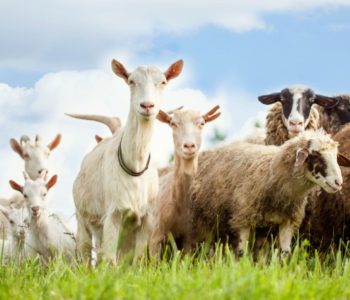
EU ruminant production outlook 2026: sharp declines in sheep and goats raise concerns
The outlook for ruminant production in the European Union is becoming increasingly challenging. According to the latest forecasts for 2026, production across key livestock sectors is expected to decline, with sheep and goats facing the steepest reductions.
Although bovine production is also projected to decrease, the scale of contraction in small ruminant systems highlights growing economic, regulatory, and structural pressures affecting these sectors across Europe.
Sheep and goat production in the European Union are projected to decline by more than 17% in 2026, signaling mounting pressure on small ruminant systems.
Bovine production shows moderate decline
Forecasts indicate that gross indigenous production (GIP) of bovine animals in the EU during the second half of 2026 will reach approximately 11.4 million head, representing a 4.2% decline compared with the same period in 2025.
Although less severe than the reductions projected for sheep and goats, this decline reflects ongoing pressures associated with:
- Rising production costs
- Environmental regulations
- Structural changes in farming systems
- Market uncertainty
- Labor and sustainability challenges
Bovine systems remain relatively more stable than small ruminant sectors, but the downward trend confirms broader pressures affecting EU livestock production.
Small ruminants face the sharpest decline
The most dramatic changes are expected within the small ruminant sector. Forecasts for 2026 indicate:
- Sheep production will decline by 17.8%, reaching approximately 12.2 million head
- Goat production will decline by 17.1%, dropping to approximately 1.9 million head
These figures reveal the increasing vulnerability of sheep and goat production systems to:
- Volatile markets
- Feed and input costs
- Environmental compliance requirements
- Changing consumer trends
- Reduced profitability in marginal regions
Many of these systems already operate under difficult economic conditions, particularly in mountainous and semi-arid areas where small ruminants play important ecological and rural development roles.
The projected contraction of sheep and goat production raises concerns about the long-term viability of small ruminant farming across Europe.
Regional dynamics across Europe
Despite the overall decline, regional differences remain highly important within the EU livestock landscape.
According to the outlook:
- France is expected to remain the largest bovine producer, accounting for 23.1% of EU production
- Germany is projected to experience a slight decline (-0.6%)
- Ireland may face a stronger reduction (-5.2%)
- Spain stands out as the only major producer expected to increase bovine output (+2.7%)
Within the small ruminant sector:
- Spain is expected to remain the leading sheep producer despite substantial projected declines
- Greece continues to lead goat production within the EU, although output is also expected to fall
Regional resilience varies significantly across Europe, highlighting the importance of localized production systems and tailored policy approaches.
Pig production moves in the opposite direction
Interestingly, while ruminant sectors face contraction, EU pig production is expected to grow in 2026.
Forecasts suggest that EU pig production could reach approximately 61.2 million head during the final quarter of 2026, representing a 3.2% increase compared with 2025.
Spain is projected to lead this growth, accounting for approximately 25.7% of total EU pig production, while Germany, Denmark, and France are also expected to increase output.
The contrasting trends between ruminants and pigs suggest an ongoing structural transformation within European livestock production systems.
Why small ruminants matter
Sheep and goat farming contribute far beyond meat and milk production alone. These systems play essential roles in:
- Maintaining rural economies
- Supporting biodiversity
- Preserving traditional landscapes
- Managing grazing ecosystems
- Reducing wildfire risks in some regions
- Supporting low-input production systems
The decline of small ruminant production could therefore have important environmental and socio-economic consequences, especially in vulnerable rural communities.
Small ruminant systems remain critical for rural sustainability, biodiversity management, and landscape preservation across Europe.
Future challenges and adaptation strategies
Maintaining the viability of EU ruminant systems will likely require significant adaptation efforts in the coming years.
Key priorities may include:
- Improved production efficiency
- Precision nutrition strategies
- Genetic improvement programs
- Targeted policy support
- Enhanced sustainability initiatives
- Climate resilience strategies
- Innovation in grazing and management systems
Balancing economic sustainability with environmental expectations and animal welfare standards will remain one of the sector’s greatest challenges.
The future resilience of EU ruminant systems will depend on innovation, targeted support policies, and the ability to adapt to evolving market and environmental pressures.
Conclusion
The 2026 outlook for EU ruminant production highlights growing structural pressures across livestock systems, with sheep and goats facing particularly sharp declines.
Although bovine systems appear relatively more resilient, the broader trend points toward ongoing transformation within European livestock agriculture.
As the sector evolves, maintaining competitiveness while supporting sustainability, rural livelihoods, and environmental stewardship will become increasingly important for the future of European ruminant farming.
The future of European ruminant production will depend on balancing economic viability, sustainability, innovation, and resilience in increasingly complex