


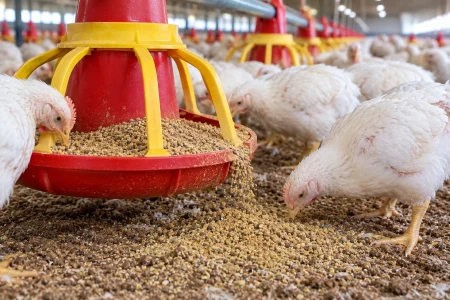
Walk into a broiler shed an hour after the morning feed. There are crumbs under the pans, feed pushed into the litter and perhaps a torn bag in the store with a trail leading towards a rat hole. Each loss looks minor. Added up across a large farm, they are anything but.
Feed is the largest expense in broiler production, accounting for an estimated 65-70% of total cost. It has also become more expensive. Industry reports cited for 2026 put broiler feed at around USD 0.48/kg (India situation), compared with about USD 0.42 earlier in the year, with maize and soybean meal among the ingredients under pressure.
Farmers monitor feed conversion ratio (FCR) and weight gain closely. But feed issued from the store is counted whether birds eat it or it ends up in the litter or a rodent’s stomach. Wastage can worsen recorded FCR even when the formula has not changed.
Genetics, chick quality, water, temperature and feed quality all influence performance. Many causes of feed wastage, however, can be corrected through everyday management.


Where feed is lost
[1] Poor feeder management
Feeders are a common source of loss. Pans set too low allow birds to flick feed into the litter; set too high, they are difficult for smaller birds to reach. Keep the feeder lip roughly level with the birds’ backs and adjust as they grow.
Overfilling is another mistake. Chicks scatter feed from brim-full pans, so smaller, frequent top-ups are preferable. Worn or cracked equipment leaks, too few feeders cause crowding, and unlevel automatic pans distribute feed unevenly.
Aviagen recommends adjusting feeder height to bird size and matching feed delivery to expected intake. Where appropriate, allowing birds to clear feeders briefly can help prevent fines from accumulating.
[2] Losses during brooding
The first days need particular care. Feed spread too thickly on paper or trays is trampled or fouled, and leftovers may be discarded with the brooding paper.
Keep feed accessible without offering more than chicks can use. Position feed and water near the brooding area, check feeder height and move chicks to proper feeders on time. Small, regular top-ups reduce waste.
[3] Storage and handling
Feed is lost before reaching the shed when bags tear, open vehicles spill feed or sacks absorb moisture from damp floors. Feed can fall during transfer, while leaking bin lids, damaged augers and worn outlets cause continuing losses.
Keep bags on pallets in a dry, secure store. Check bins and conveying equipment, and collect spillage at delivery points. In hot, humid conditions, feed stored too long may become musty and less acceptable to birds.
[4] Rats, mice, insects and wild birds
Rodents consume feed and contaminate more than they eat. Sparrows and crows take feed from open-sided sheds, while darkling beetles thrive in spilled feed and litter and may contribute to disease risks. Daily cleaning, secure storage, proofing and planned pest control are essential.
[5] Water leaks and wet feed
A leaking roof, rain entering through curtains or a dripping drinker line can turn feed into a wet mass that birds will not eat. Caked or moldy feed is often removed with the litter. Incorrect nipple-drinker height or pressure can wet both litter and nearby feed. Feed left in pans through hot hours may also become stale.
Inspect drinker lines and roofs, maintain suitable drinker settings and remove wet or spoiled feed promptly. Dry litter is not just a housekeeping goal; it is also a useful clue when investigating feed loss and flock performance.
[6] Crumble and pellet fines
Crumbles can break down into powder, and weak pellets may produce fines during transport and handling. Rough unloading and long drops into bins make the problem worse. Birds may leave the dust behind, while fine particles can collect at the bottom of feeders. Feed can also separate between the mill and the feeder, meaning the ration consumed may not be uniform.
Review feed quality with the supplier, reduce rough handling and inspect feed at delivery and in the pans. Discuss persistent fines with the mill.
[7] Records and accountability
Without reliable records, a farm cannot distinguish genuine consumption from spillage, unexplained shortages or weighing errors. A few missing bags may not be noticed until the batch FCR is calculated. This is especially important on contract farms, where the grower may not own the feed but still handles it daily.
Record deliveries, transfers and remaining stock. Assign responsibility for handling and investigate unexplained differences promptly.
Two less visible losses
[1] Micronutrients lost from mash
Mash feed can lose more than bulk ingredients. Vitamins, trace minerals and additives are included in a fine premix, and these small particles may separate from larger ingredients during transport, bagging and handling. Some can be lost as dust or remain in bags and bins.
Research from Penn State on laying hens found that mash can separate during delivery and that birds may select larger particles. As a result, the nutrients consumed may differ from the intended formula. The weight involved may be small, but the ingredients are valuable and their uneven intake can affect performance. Pellets and crumbles generally hold ingredients together better, so this concern is particularly relevant to mash.
Handle bags gently, empty them close to bins or feeders, control dust and use the fine material at the bottom of bags.
[2] Feed eaten but not digested
Feed may also be eaten but not properly digested or absorbed. This is different from physical wastage and is excluded from the cost estimates below.
Causes include poorly balanced formulations, high-fiber or anti-nutritional raw materials, uneven grinding and inadequate enzymes. Coccidiosis, necrotic enteritis and mycotoxins can damage the gut lining and reduce absorption.
Wet, sticky litter, whole grains in droppings and birds that eat well but gain weight slowly are warning signs. They justify reviewing feed formulation, quality and gut health with a veterinarian or nutritionist.


How to measure the loss
FCR alone cannot identify the cause of poor performance. A practical investigation combines stock accounting with direct checks.
- ✅ Start with a feed balance. Weigh deliveries and record the stock remaining in bins at the end of each week. Compare actual feed use with the breed’s expected intake for the flock’s live weight. Check scale calibration and delivery weights before drawing conclusions; errors can make FCR appear worse than it is. Weigh a sample of birds weekly and maintain daily records so batches can be compared fairly.
- ✅ Measure spillage directly. Place a clean sheet or tray beneath sample feeders for 24 hours, weigh the feed collected and estimate the shed’s loss. During brooding, collect feed from paper and the floor. This is a practical farm check, not a universal standard. Fines in feeder pans can be checked separately.
- ✅ Check mash uniformity. A mill or laboratory can compare samples taken at dispatch, at the farm and from feeders. Testing a trace mineral or other premix marker, alongside particle-size checks, may reveal separation during handling.
- ✅ Investigate digestion separately. Wet litter, whole grain and visible undigested material are initial warning signs. A laboratory may compare acid-insoluble ash in feed and droppings. The method is useful but not exact, so it is best used in a trial guided by a nutritionist.
- ✅ Read the checks together. A growing stock discrepancy with dry litter may point to spillage, pests or theft. A normal balance with wet litter and poor growth suggests checking digestion, formulation or health. No single sign gives the full answer.
What the numbers mean
Consider a broiler integrator placing 100,000 broiler chicks weekly across a network of contract or company farms. Assuming 3.6kg of feed per bird over the cycle—an FCR of about 1.65 at 2.2 kg live weight—feed use is 360 tons a week. At USD 0.48/kg, that costs about USD 174,645 weekly, or USD 9.06 million across 52 weeks.
There is no published national figure for physical feed wastage, and well-managed farms may perform better than the range used here. The following scenarios use assumed losses of 3%, 5% and 8% across an integrator’s total weekly placement of 100,000 birds, distributed among multiple farms. Dollar equivalents are calculated at Rs 95.05 per US dollar, the closing rate cited for 14 October 2026.


That amount matters when margins are narrow. The cited 2026 figures put farmgate broiler prices at around USD 1.04-1.45/kg and production cost near USD 1.16/kg. A few rupees per kilogram can decide whether a batch makes money. Reducing wastage from 5% to 3% would save about USD 180,957 a year across this placement network.
These are scenario calculations, not a claim that every farm loses this amount. Actual results depend on feed price, performance, placement, management and measured wastage.
Where to begin
Start with the records: know how much feed arrived, how much remains and how much the flock used. Then check feeder height and filling, leaks, wet patches, damaged pans, pests, feed dust and bag counts. Keep the store dry and secure.
None of these checks requires expensive technology. They require consistent attention and clear responsibility. On a farm spending around USD 174,645 on feed each week, even a small reduction in avoidable loss can make a substantial difference to the bottom line. Feed that never reaches the bird still appears on the bill. The task is to find it, measure it and stop paying for it.
Sources:
- Aviagen, Ross Technical Note on FCR (July 2011)
- Penn State study on feed segregation and commercial hens
- Review of acid-insoluble ash as a digestibility marker in the Journal of Animal and Feed Sciences
- Agrospectrum India reporting on 2026 broiler prices
- Industry reports on 2026 feed and production costs
- USD/INR closing rate cited for 14 October 2026.