


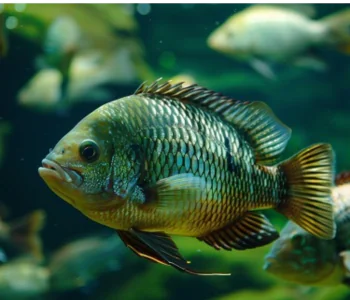
As aquaculture continues to expand, feed manufacturers are exploring ways to reduce reliance on conventional ingredients while maintaining fish health, growth and feed efficiency. One increasingly interesting approach involves transforming agricultural and food-processing by-products into ingredients suitable for aquafeed.
Vegetable residues, often discarded after harvesting, processing or marketing, contain nutrients and bioactive compounds that could potentially be recovered for animal nutrition. However, their variable composition, fiber content and antinutritional factors can limit their direct incorporation into fish diets.
A study published in Scientific Reports investigated whether solid-state fermentation could improve the nutritional value of vegetable by-products and support their inclusion in Nile tilapia diets.
The researchers found that fermented vegetable waste could be incorporated at levels of up to 30% of the experimental diets without significantly reducing growth performance or survival over 60 days. They also identified changes in intestinal morphology, amino acid composition and several physiological indicators.
KEY RESEARCH FINDING
Fermented vegetable by-products were included at 10%, 20% and 30% in Nile tilapia diets without significant differences in weight gain, specific growth rate or feed conversion ratio compared with the control. The 20% inclusion level produced particularly favorable intestinal morphological responses.
Turning vegetable residues into aquafeed ingredients
The aquaculture industry faces growing pressure to improve the sustainability and cost-effectiveness of feed formulations.
Conventional ingredients such as fishmeal and soybean meal remain important components of many aquafeeds, but interest in alternative raw materials is increasing as producers seek to diversify ingredient sourcing and improve resource utilization.
Vegetable by-products offer an opportunity to recover nutrients from materials that might otherwise be discarded.
These materials can contain protein, carbohydrates, fiber, minerals and plant-derived bioactive compounds. However, their nutritional characteristics vary depending on the original vegetable, processing conditions and composition of the waste stream.
Furthermore, some plant-derived ingredients contain antinutritional factors that can interfere with nutrient digestion and utilization.
For this reason, processing technologies are important when evaluating the suitability of vegetable residues for aquaculture nutrition.
How fermentation can improve ingredient quality
Solid-state fermentation is a biological processing technique in which microorganisms grow on moist solid materials with limited free water.
During fermentation, microbial activity can modify the chemical composition of plant substrates, potentially breaking down complex compounds and changing their nutritional properties.
Depending on the microorganisms and processing conditions, fermentation may also reduce certain antinutritional factors and influence nutrient availability.
In the study, researchers used two microorganisms:
Bacillus subtilis
A bacterium capable of producing extracellular enzymes involved in the breakdown of proteins and other organic compounds.
Saccharomyces cerevisiae
A yeast widely used in fermentation processes and investigated for its contribution to the transformation of agricultural substrates.
The combination was intended to improve the suitability of the vegetable residues as an ingredient for tilapia diets.
Fermentation increased the protein concentration of vegetable waste
The researchers prepared a vegetable by-product mixture consisting primarily of pea peels, alongside smaller quantities of potato, carrot, beetroot, okra and zucchini residues.
After drying and grinding, the material underwent solid-state fermentation with the selected microorganisms.
The process lasted five days at 37°C, after which the fermented material was dried and incorporated into experimental diets.
Analysis showed that fermentation increased the crude protein concentration of the vegetable material from 18.30% to 26.21%.
This represented an increase of approximately 43% relative to the original crude protein concentration.
WHAT DOES THE PROTEIN INCREASE MEAN?
The increase from 18.30% to 26.21% crude protein indicates a change in the composition of the fermented material. However, crude protein concentration alone does not establish greater digestible protein supply. Digestibility and nutrient availability must be evaluated separately.
The researchers also observed reductions in the fiber, lipid and ash concentrations of the fermented substrate.
These findings suggest that fermentation altered the nutritional composition of the vegetable mixture, supporting its further evaluation as an aquafeed ingredient.
How was the feeding trial conducted?
The experiment involved 360 Nile tilapia fingerlings, with an initial average weight of approximately 3.5 grams.
Fish were distributed across 12 tanks, with 30 fish per tank, and fed the experimental diets for 60 days.
Four diets were formulated with approximately 31% crude protein and different inclusion levels of fermented vegetable waste.
EXPERIMENTAL DIETS
| Treatment | Fermented vegetable waste inclusion |
|---|---|
| FVW0 | 0% (control) |
| FVW1 | 10% |
| FVW2 | 20% |
| FVW3 | 30% |
The study evaluated growth, feed intake, feed utilization, body composition, amino acid profiles, blood parameters, serum enzyme activities and intestinal histomorphology.
This combination of measurements allowed the researchers to investigate not only productive performance but also selected physiological responses to the fermented ingredient.
Growth and feed conversion remained comparable
One of the most relevant results was that increasing the inclusion of fermented vegetable waste did not significantly change weight gain or specific growth rate.
Feed conversion ratio and protein efficiency ratio also showed no statistically significant differences among dietary treatments.
All groups achieved 100% survival throughout the experiment.
However, feed intake was significantly higher in the groups receiving 20% and 30% fermented vegetable waste than in the control group.
Although the 10% inclusion treatment showed the numerically most favorable feed conversion ratio, this difference was not statistically significant.
Consequently, the results should not be interpreted as demonstrating improved feed efficiency.
The principal production finding was the maintenance of growth and feed utilization across the tested diets—not a statistically demonstrated improvement in growth rate or feed conversion.
Changes in the amino acid composition of fish
Beyond growth performance, the researchers examined the amino acid composition of the experimental fish.
Several essential amino acids, including lysine, leucine, threonine, methionine, arginine and histidine, were present at significantly higher concentrations in fish receiving fermented vegetable waste than in the control group.
The 10% inclusion group showed the highest numerical concentrations for several essential amino acids.
However, differences among the fermented vegetable waste treatments were generally not statistically significant.
These findings suggest that dietary inclusion of the fermented ingredient was associated with changes in fish amino acid composition.
Nevertheless, the results do not directly establish improved amino acid digestibility, protein retention or protein deposition rates.
Further research using direct nutrient digestibility and retention measurements would help clarify the underlying mechanisms.
Intestinal morphology improved, particularly at 20% inclusion
Some of the clearest responses were observed in the distal intestine.
Histological examinations revealed normal intestinal architecture across all treatments, with no lesions reported in the examined tissue sections.
At the same time, fish receiving fermented vegetable waste exhibited changes in intestinal structures associated with digestive and protective functions.
Villus length increased significantly in all supplemented groups compared with the control, with the greatest value observed at 20% inclusion.
INTESTINAL VILLUS LENGTH
| Diet | Villus length (µm) |
|---|---|
| Control | 125.80 |
| 10% FVW | 210.76 |
| 20% FVW | 254.26 |
| 30% FVW | 165.80 |
The 20% inclusion group also exhibited the highest goblet cell density and increased intestinal muscular layer thickness.
Goblet cells contribute to the production of mucus, which plays a protective role at the intestinal surface.
Longer villi may be associated with greater potential absorptive surface area, although the study did not directly measure intestinal nutrient absorption.
These findings indicate that 20% fermented vegetable waste produced particularly favorable structural responses in the intestine under the experimental conditions.
Blood parameters revealed a more complex physiological response
While several findings were favorable, not all physiological indicators changed in the same direction.
Fish receiving fermented vegetable waste showed significantly higher serum total protein and globulin concentrations than the control group.
The 20% inclusion group also had the highest white blood cell count.
These responses may be relevant to the physiological and immune status of the fish, but they do not independently demonstrate improved resistance to infection.
Importantly, the 10% inclusion group exhibited significantly lower hemoglobin and hematocrit values than some other treatments.
Researchers also observed changes in serum enzyme activities.
Aspartate aminotransferase (AST) was significantly higher at 20% and 30% inclusion, while alanine aminotransferase (ALT) was highest in the 30% group.
Alkaline phosphatase activity decreased significantly at the two highest inclusion levels.
WHY THESE RESULTS MATTER
Changes in blood cell counts and serum enzyme activities suggest that fermented vegetable waste influenced fish physiology. However, elevated liver-associated enzymes should not automatically be interpreted as beneficial, and the study did not establish whether these changes represented harmless adaptation or a potential concern requiring further investigation.
Digestive enzyme activity also changed
Dietary inclusion of fermented vegetable waste influenced the measured serum digestive enzyme activities.
Protease activity increased progressively as the proportion of fermented vegetable waste increased, reaching its highest value in the 30% inclusion group.
In contrast, lipase and amylase activities were significantly lower in supplemented fish than in the control group.
These changes may reflect differences in digestive or metabolic responses to the diets.
However, because the study measured enzyme activities in serum rather than directly determining nutrient digestion in the intestinal tract, these findings should be interpreted cautiously.
Direct digestibility measurements would be necessary to establish whether the observed enzyme responses translated into improved nutrient utilization.
What does this mean for sustainable aquafeed formulation?
The findings highlight the potential of fermentation as a processing strategy for transforming vegetable residues into ingredients that can be incorporated into fish feeds.
From a circular economy perspective, this approach could offer several opportunities.
Greater resource utilization
Recovering nutrients from vegetable by-products that might otherwise be discarded.
Ingredient diversification
Providing additional raw material options for aquafeed manufacturers.
Biological processing
Using selected microorganisms to modify the nutritional characteristics of plant-derived materials.
Potential functional benefits
Investigating effects on intestinal morphology and other physiological indicators beyond growth performance.
Nevertheless, these opportunities remain conditional on successful commercial implementation.
Fermentation requires controlled processing conditions, microbial management, drying and appropriate storage.
The energy requirements and operational costs of these steps must be considered when evaluating whether the resulting ingredient is economically and environmentally competitive.
The study did not include a complete cost analysis or life-cycle environmental assessment, so reduced feed costs or lower environmental impacts cannot yet be assumed.
Is 20% the optimal inclusion level?
Based on the combination of measured responses, the researchers highlighted 20–30% fermented vegetable waste inclusion as a promising range for Nile tilapia diets.
However, the 20% treatment produced the most pronounced improvements in several intestinal morphological measurements.
This distinction is important because the optimal inclusion level depends on which outcome is being prioritized.
If the objective is maintaining growth, the experiment showed no significant disadvantage at inclusion levels up to 30%.
If the objective is improving selected intestinal morphological indicators, the 20% treatment showed particularly favorable results.
Yet the physiological changes observed at different inclusion levels suggest that further research is needed before establishing a universal recommendation.
In addition, the experiment involved juvenile Nile tilapia over a 60-day period, using a specific mixture of vegetable residues and a defined fermentation process.
Results may differ with other ingredient combinations, microbial cultures, fish life stages or production conditions.
What further research is needed?
The study provides encouraging preliminary evidence, but several questions remain before fermented vegetable waste can be widely recommended as a commercial aquafeed ingredient.
Future investigations should assess apparent nutrient digestibility, long-term health, ingredient consistency, microbiological safety and economic feasibility.
Additional studies could also explore changes in intestinal microbiota and evaluate whether the observed morphological responses translate into improved nutrient absorption or disease resilience.
Importantly, direct comparisons between fermented and unfermented vegetable waste diets would help distinguish the benefits attributable to fermentation itself from those associated with the inclusion of vegetable by-products.
From vegetable waste to functional aquaculture ingredients
The study illustrates how biological processing may help expand the range of raw materials available for aquaculture nutrition.
By fermenting vegetable by-products with Bacillus subtilis and Saccharomyces cerevisiae, researchers produced an ingredient that could be included in Nile tilapia diets at levels of up to 30% without significantly compromising growth or survival during the experimental period.
The most notable findings involved changes in intestinal morphology and amino acid composition, alongside a series of physiological responses that warrant further investigation.
Fermentation could help transform vegetable by-products into useful aquafeed ingredients, but commercial adoption will depend on demonstrating consistent nutritional value, animal safety, processing feasibility and economic benefits.
For aquafeed manufacturers and nutritionists, the research reinforces the importance of evaluating alternative ingredients beyond crude protein content or growth performance alone.
A successful ingredient must contribute to a nutritionally balanced diet while supporting fish health and remaining practical for commercial production.
Source
Saleh, N. E., Sallam, A. E., Michael, F. R., Abdel-Mohsen, H. H., Almisherfi, H. M., & Wassef, E. A. (2026). Assessment of fermented vegetable wastes in Nile tilapia diets: impacts on fish performance, amino acids profile, health, and intestine histomorphology. Scientific Reports, 16, Article 18692.