


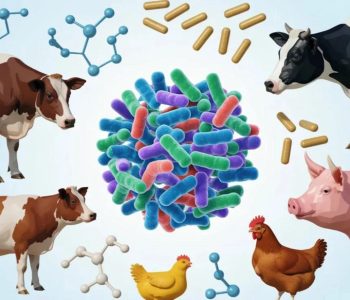
What if the next generation of feed additives could be designed not simply to modify the gut microbiome, but to direct its metabolic activity toward specific nutritional and productive outcomes?
The gastrointestinal microbiome has become a central focus of animal nutrition research. From improving feed utilization and supporting intestinal health to reducing environmental impacts, the microorganisms inhabiting the digestive tract represent an increasingly important component of modern livestock production.
However, despite significant advances in probiotics, prebiotics and functional feed ingredients, achieving consistent responses across animals and production systems remains a challenge.
A recent review by Ahmad et al. (2026), accepted for publication in Frontiers in Animal Science, explores an emerging framework that could help address this limitation: designing nutritional interventions around specific microbial functions rather than focusing primarily on microbial composition.
The next frontier in microbiome-based nutrition may lie not in determining which microorganisms are present, but in understanding what they do, how they interact and whether their activity delivers measurable benefits to the animal.
From microbiome modulation to microbiome engineering
For decades, nutritional strategies have sought to influence gastrointestinal microbial populations through dietary formulation, direct-fed microbials, organic acids, enzymes, phytogenic compounds and other feed additives.
These interventions have contributed to advances in digestive health and livestock management. Nevertheless, their effectiveness can depend on diet composition, animal age, genetics, physiological status, environmental conditions and the microbial communities already established within the gastrointestinal tract.
The complexity of these interactions helps explain why a feed additive that performs well under controlled experimental conditions may not generate an equivalent response on every commercial farm.
A 2024 review published in Poultry Science highlighted considerable variation among studies investigating associations between the intestinal microbiome and productive performance. The authors emphasized the importance of methodological standardization and the need to establish causal relationships between microbial characteristics and animal-level outcomes.
Increasing the abundance of a particular microorganism does not automatically translate into improved growth, feed efficiency or disease resistance.
Microbiome engineering seeks to address this challenge by starting with a defined biological objective and working backward to identify the microbial processes and nutritional conditions that could help achieve it.
Putting microbial function at the center of precision nutrition
Traditional microbiome research has frequently focused on characterizing bacterial populations and identifying microorganisms associated with favorable production traits.
While these observations remain valuable, two animals with different microbial communities may exhibit similar metabolic activities. Conversely, animals with apparently similar microbiomes may respond differently to the same nutritional intervention.
This phenomenon, known as functional redundancy, reflects the capacity of different microorganisms to perform comparable biochemical transformations.
Research on the chicken gastrointestinal microbiome has previously identified this characteristic, suggesting that taxonomically diverse microbial communities can possess overlapping metabolic capabilities (Oakley et al., 2014).
A function-oriented approach therefore places greater emphasis on measuring microbial activity and its relationship with host physiology.
What would a function-first intervention look like?
Before developing a microbial feed additive, researchers could define:
- The nutritional objective: What animal-level improvement is being targeted?
- The metabolic mechanism: Which microbial products or biochemical reactions could contribute to that improvement?
- The microbial community: Which microorganisms can perform the required functions?
- The dietary environment: Which feed substrates could sustain the desired activity?
- The evaluation criteria: Which biological and productive indicators would demonstrate success?
Integrating these elements could support the development of more targeted nutritional interventions and provide a clearer understanding of why certain formulations succeed or fail.
Microbial consortia: Working with the ecosystem rather than individual strains
The digestive tract is home to complex communities of microorganisms whose metabolic activities are interconnected.
Within these ecosystems, microorganisms compete for nutrients, produce metabolites, modify their surroundings and interact with both other microorganisms and the host animal.
One particularly important ecological process is microbial cross-feeding, in which compounds generated by one microorganism become substrates for another.
In the rumen, for example, the degradation of complex plant material involves coordinated activity among bacteria, anaerobic fungi and protozoa. Fermentation products subsequently participate in additional microbial processes involving other members of the community, including methanogenic archaea.
These interactions illustrate why gastrointestinal microbial ecosystems cannot always be understood by examining individual bacterial species in isolation.
Rather than relying exclusively on single-strain probiotics, researchers are exploring the possibility of developing rationally designed microbial consortia composed of microorganisms with complementary metabolic capabilities.
The objective is not necessarily to introduce more microorganisms into the digestive tract, but to identify combinations capable of carrying out complementary biological functions under realistic nutritional conditions.
However, developing these communities presents important challenges. Microorganisms that interact successfully in laboratory systems may behave differently when exposed to the complex ecological conditions of an animal’s digestive tract.
Precision substrates: Feeding the microbiome more strategically
Delivering selected microorganisms represents only one component of a microbiome-targeted nutritional strategy.
For microorganisms to remain metabolically active, the gastrointestinal environment must provide appropriate nutrients and physicochemical conditions.
Dietary fibers, resistant starches, oligosaccharides and other fermentable carbohydrates can influence microbial activity and the production of fermentation metabolites.
However, their effects are not interchangeable. Differences in chemical structure, digestibility and gastrointestinal availability influence how and where these ingredients are utilized.
The concept of precision substrates considers whether specific dietary compounds can be selected to support a predetermined microbial process.
This approach builds upon existing principles of prebiotic and synbiotic nutrition. Its potential contribution is to develop a more explicit understanding of the relationship between a dietary substrate, the microorganisms utilizing it and the resulting biological response.
An opportunity for feed formulation
Future nutritional strategies could increasingly integrate three complementary components:
Selected microorganisms + Compatible feed substrates + Favorable gastrointestinal conditions
The challenge will be demonstrating that these combinations generate a reproducible biological response and deliver meaningful value under commercial production conditions.
Ruminants: Linking microbial ecology with productivity and sustainability
Ruminants provide a particularly relevant example of the importance of microbial metabolism in animal nutrition.
The rumen microbiome enables cattle, sheep and goats to obtain energy from fibrous plant material that the host cannot efficiently digest through its own enzymatic machinery.
Microbial fermentation produces volatile fatty acids, particularly acetate, propionate and butyrate, which contribute substantially to the animal’s energy supply.
At the same time, microbial metabolism influences nitrogen utilization, microbial protein synthesis and enteric methane production.
Understanding how these processes interact is essential when developing nutritional strategies intended to improve productive and environmental efficiency.
What does the scientific evidence tell us?
A large study published in Science Advances by Wallace et al. (2019) investigated the rumen microbiome of approximately 1,000 dairy cows from four European countries.
The researchers identified a subset of 39 microbial community members involved in networks connecting host genetics, microbial ecology, metabolic characteristics, methane emissions and milk production efficiency.
~1,000 dairy cows
4 European countries | 39 microbial community members
The study illustrates the relationship between the rumen microbiome, host genetics and economically important production traits.
Source: Wallace et al. (2019), Science Advances.
Although these associations do not establish the effectiveness of particular microbiome-targeted additives, they highlight the potential value of integrating microbial information into nutritional and animal breeding research.
Among the most interesting research targets for ruminant nutrition are:
- Improving microbial degradation of dietary fiber.
- Optimizing fermentation pathways and energy recovery.
- Enhancing nitrogen utilization and microbial protein synthesis.
- Supporting ruminal stability during dietary transitions.
- Reducing methane emissions without compromising animal performance.
As highlighted by Huws et al. (2018), progress in these areas requires a greater understanding of microbial ecology, microbial interactions and the relationship between rumen function and agricultural sustainability.
Poultry: Connecting intestinal health, performance and food safety
In poultry production, the gastrointestinal microbiome interacts with dietary nutrients, intestinal tissues and immune mechanisms throughout the digestive tract.
The ceca represent an important site of microbial fermentation, where undigested dietary components can be converted into short-chain fatty acids.
These metabolites participate in interactions between intestinal microorganisms and the host, influencing the local gastrointestinal environment.
A recent review published in Veterinary Sciences in 2026 emphasizes the importance of considering the bird, its microbiome and the production environment together when developing nutritional management strategies.
Beyond productive performance, there is considerable interest in microbiome-related approaches for managing microorganisms associated with poultry disease and foodborne infections.
A 2024 systematic review published in Poultry Science evaluated 140 studies investigating nutritional interventions targeting gastrointestinal colonization by microorganisms such as Salmonella, Campylobacter, Escherichia coli and Clostridium perfringens.
The authors identified 197 interventions reported to be effective against at least one of the microorganisms investigated, encompassing several categories of feed additives and combinations.
Microbiome-targeted interventions in poultry: Research in numbers
140 studies
197 interventions reported as effective
- 80 probiotic interventions.
- 23 prebiotic interventions.
- 25 phytobiotic interventions.
- 12 synbiotic interventions.
- Other approaches involving enzymes, organic acids, essential oils and combined formulations.
Source: Poultry Science (2024), 103607. These findings describe interventions reported as effective in experimental studies and should not be interpreted as commercial efficacy rates.
Importantly, most of this evidence was generated under experimental conditions. The review also identified a lack of information establishing whether reductions in intestinal pathogen colonization consistently translate into improved poultry meat safety.
Nevertheless, these findings demonstrate the breadth of research investigating the potential of nutritional strategies to support intestinal microbial management.
Microbiome engineering and antimicrobial stewardship
The relationship between gastrointestinal microbial ecology and pathogen colonization also has implications for antimicrobial stewardship in livestock production.
Maintaining intestinal health and supporting appropriate microbial functions could form part of broader management programs aimed at preventing disease and reducing avoidable antimicrobial use.
However, microbiome-targeted feed additives should not be regarded as substitutes for appropriate veterinary treatment when bacterial disease requires antimicrobial therapy.
Vaccination, biosecurity, hygiene, adequate nutrition, environmental management and responsible antimicrobial use remain essential components of sustainable livestock production.
Safety assessment is equally important when developing novel microbial formulations.
In addition to evaluating their nutritional effects, developers must consider strain identity, potential pathogenicity and the presence of transferable antimicrobial resistance determinants.
Next-generation microbial feed additives must be evaluated not only for their ability to improve animal performance, but also for their microbiological safety and compatibility with responsible antimicrobial stewardship.
Multi-omics: Understanding what the microbiome actually does
Advances in sequencing and analytical technologies are creating new opportunities to investigate gastrointestinal microbial function.
Conventional microbial profiling techniques provide information about community composition, but the presence of a microorganism or a metabolic gene does not necessarily indicate that it is actively contributing to a particular biological process.
Integrating multiple biological datasets could provide a more comprehensive understanding of microbial activity.
The multi-omics toolbox
Metagenomics: Identifies microbial genetic material and provides information about potential metabolic capabilities.
Metatranscriptomics: Investigates gene expression to help identify microbial processes active under specific conditions.
Metaproteomics: Examines expressed proteins, including enzymes involved in microbial metabolism.
Metabolomics: Characterizes small molecules and metabolic products that can reflect interactions among the diet, microbiome and host.
Research reviewing the application of omics technologies to rumen microbial function has highlighted the potential of these approaches to move beyond descriptive microbial profiling (Denman et al., 2018).
For the feed industry, such technologies could eventually support the identification of microbial pathways associated with desirable nutritional responses and help guide the selection of functional ingredients.
Nevertheless, multi-omics associations alone cannot establish which animals will benefit from a particular intervention. Predictive biomarkers must first be validated prospectively.
From laboratory innovation to commercial feed production
The translation of microbiome engineering into practical animal nutrition will require more than identifying promising microorganisms and substrates.
Commercial formulations must withstand the challenges of feed manufacturing, transportation, storage and administration while maintaining the biological characteristics required for their intended activity.
Microorganisms must also remain functional within the targeted gastrointestinal environment, where competition with resident communities, dietary changes and host-specific factors may influence their activity.
For feed manufacturers, researchers and animal nutritionists, several questions will need to be addressed:
- Can the formulation maintain its stability during processing and storage?
- Does microbial activity persist under different dietary conditions?
- Can the intended metabolic response be demonstrated directly?
- Does that response translate into meaningful improvements in animal health or performance?
- Are the effects reproducible across farms and production systems?
- Does the economic benefit justify the cost of supplementation?
Answering these questions will require controlled animal studies, mechanistic investigations and independent commercial-scale evaluations.
Key considerations for the animal nutrition industry
- Microbial functionality may be more informative than microbial abundance alone.
- Feed formulation and microbial supplementation should be evaluated together.
- Microbiome responses are influenced by animal physiology, diet and production conditions.
- Microbial biomarkers should complement, rather than replace, conventional performance indicators.
- Commercial adoption requires evidence of efficacy, safety, consistency and economic viability.
The future of precision animal nutrition
The increasing integration of microbial ecology, nutritional sciences and molecular technologies is expanding the possibilities for livestock feeding strategies.
Rather than viewing the gastrointestinal microbiome simply as a population of microorganisms that can be altered through supplementation, researchers are increasingly investigating it as a dynamic biological system that responds to dietary inputs and host physiology.
This perspective could influence how feed additives are developed, how nutritional interventions are evaluated and how future feeding programs are tailored to different production objectives.
However, microbiome engineering should be regarded as an emerging scientific framework rather than an established capacity to program animal metabolism.
The ultimate measure of success will not be the ability to modify the microbiome, but the ability to demonstrate that these modifications consistently improve animal health, productive efficiency or sustainability.
Achieving this objective will require continued collaboration among animal nutritionists, microbiologists, veterinarians, feed manufacturers and livestock producers.
Scientific sources and further reading
- Ahmad, N., et al. (2026). Toward Engineering Ruminant and Poultry Gut Microbiomes: An Emerging Function-First Framework for Rationally Designed Microbial Consortia and Precision Substrates. Frontiers in Animal Science. https://doi.org/10.3389/fanim.2026.2010217. Accepted manuscript abstract.
- Huws, S. A., et al. (2018). Addressing Global Ruminant Agricultural Challenges Through Understanding the Rumen Microbiome: Past, Present, and Future. Frontiers in Microbiology, 9, 2161. Read the study.
- Wallace, R. J., et al. (2019). A heritable subset of the core rumen microbiome dictates dairy cow productivity and emissions. Science Advances, 5(7), eaav8391. Read the study.
- Oakley, B. B., et al. (2014). The chicken gastrointestinal microbiome. FEMS Microbiology Letters, 360(2), 100–112. Read the review.
- Pan, D., & Yu, Z. (2014). Intestinal microbiome of poultry and its interaction with host and diet. Gut Microbes, 5(1), 108–119. Read the review.
- Systematic review on microbiome-related nutritional interventions interfering with the colonization of foodborne pathogens in broiler gut to prevent contamination of poultry meat (2024). Poultry Science, 103(5), 103607. Read the systematic review.
- Are there consistent effects of gut microbiota composition on performance, productivity and condition in poultry? (2024). Poultry Science, 103752. Read the review.
- Denman, S. E., Morgavi, D. P., & McSweeney, C. S. (2018). Review: The application of omics to rumen microbiota function. Animal, 12(S2), s233–s245. Read the review.
- From Gut to Gain: The Microbiome’s Contribution to Broiler Health and Productivity (2026). Veterinary Sciences, 13(7), 633. Read the review.
Editorial content developed from multiple scientific publications. Proposed microbiome engineering strategies remain subject to further experimental and commercial validation.