


The modern hyper-prolific sow is a marvel of genetic progress, but her high productivity comes with severe physiological demands. As litter sizes grow, issues like sow anemia and variable piglet robustness have become systemic challenges for swine producers worldwide.
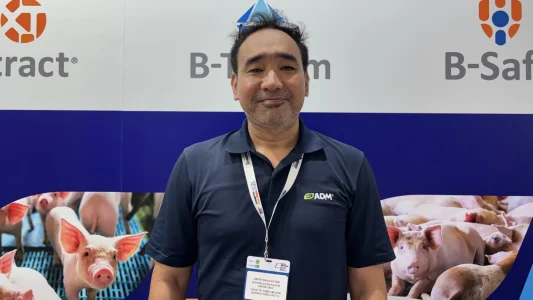
At the 28th International Pig Veterinary Society (IPVS) 2026 Congress, Ermin Magtagnob, Technical Manager – Swine Asia at ADM Animal Nutrition, presented a groundbreaking two-cycle study demonstrating how precise micronutrient supplementation in sows can break the cycle of anemia and fundamentally improve offspring performance through all life stages.
The following is the Q&A of porciNews Asia and nutriNews Asia with Mr Magtagnob:
Could you briefly introduce the research presented at IPVS 2026 and the motivation behind this study?
Our research was a comprehensive, two-cycle study tracking sows through multiple parities.
The core motivation stemmed from a critical question: What are the real-world implications of internal physiological deficiencies, specifically sow anemia – on the development of the litter?
Historically, the industry has viewed piglet anemia as an isolated issue managed post-birth. We wanted to understand whether maternal anemia directly undermines piglet robustness and long-term growth performance, and whether we could prevent this by intervening one generation earlier.
Why are micronutrients particularly important during the sow production cycle?
Modern sows produce an incredible volume of milk and support larger litters than ever before. While micronutrients, such as specific vitamins and trace minerals, are required in seemingly small quantities, they play a disproportionately vital role in sustaining this massive biological output.
They are the biochemical engines driving blood formation, immune function, milk synthesis, and embryonic development. Without adequate micronutrient support, the sow’s system quickly becomes depleted and potentially affecting piglet vitality and long-term growth performance.
What were the main objectives and experimental design of the study?
The primary objective was to evaluate the impact of supplementing sows with a specialized blend of organic trace minerals and elevated vitamin levels on maternal hemoglobin concentrations and subsequent piglet performance.
We designed a two-cycle study where sows were monitored continuously from gestation through lactation. We strictly measured and tracked their hemoglobin concentrations to establish a clear physiological profile.
Crucially, we did not stop at weaning; we followed the piglets generated from these treatments all the way through the finishing stage to evaluate the long-term carryover effects of the maternal diet.
What were the most significant findings regarding sow performance and productivity?
The results were highly compelling. Sows supplemented with our organic trace mineral and vitamin blend successfully maintained optimal hematological concentrations, staying above the critical threshold of 10 g/dL of hemoglobin. In stark contrast, the control group fell below this threshold, remaining in a sub-clinical anemic state.
Furthermore, the benefits extended far beyond blood profiles. When we evaluated the progeny at marketing, the pigs coming from the micronutrient-supplemented maternal line exhibited significantly better carcass leanness compared to the control group. This indicates that maternal nutrition imprints a lasting effect on muscle development and final carcass value.
Did the supplementation have any impact on piglet health, growth, or survivability?
Yes, absolutely. One of our key observations was a distinct improvement in early growth rates among piglets from the supplemented sows. This higher initial growth velocity is a direct indicator of enhanced piglet robustness.
By improving the maternal physiological status, the piglets are born with better reserves, receive higher-quality colostrum and milk, and are far better equipped to overcome early life challenges, resulting in more uniform and resilient litters.
What practical implications do these findings have for commercial swine producers, and what recommendations would you provide to improve performance?
The major takeaway here is a necessary paradigm shift for commercial producers. In the past, when producers encountered weak or anemic piglets, the immediate reaction was to treat the piglets post-farrowing.
Our research proves that with today’s hyper-prolific lines, we must look back one generation earlier. Micronutrient supplementation should not be viewed as a baseline cost, but as a strategic investment.
Upgrading from standard inorganic minerals to a highly bioavailable organic blend combined with elevated vitamins pays off by securing sow health, driving early piglet robustness, and ultimately capturing higher financial returns through superior carcass quality at the packing plant.
What message would you like to share with livestock producers at IPVS 2026, and what future innovations should the industry watch for from ADM?
IPVS 2026 is a phenomenal venue for interaction. My message to stakeholders is that solving the complex challenges of modern swine production requires deep collaboration, not just among feed additive suppliers, but a synchronized effort connecting commercial farmers, researchers, and universities.
Looking ahead, ADM is heavily focused on integrating digital innovation and intelligence into swine production. The industry should watch for upcoming developments in optimizing pig production systems, refining precise nutrition, and maximizing the volume of high-quality meat we can sustainably bring to the global dinner table.