


A trailer just dropped for ‘World Without Cows’. India’s dairy farmers have been living the question for years.
Five years, 22 countries and one unresolved question: Does the planet need cattle? The new documentary’s global tour won’t reach Asia for a while, but the debate it’s chasing is already playing out on Indian dairy farms.
Picture a dairy farmer in rural Haryana, up before dawn, moving her cows between a shrinking patch of grazing land and a shed built for milking. She has likely never heard of ‘World Without Cows’.
But the question the film spent five years chasing halfway around the world, whether cattle are an asset to the planet or a liability, is one her own herd answers every single day, in milk yield, in fodder cost, and in the methane that rises quietly off every animal she owns.
That collision, between a glossy new documentary and a much older, dustier reality, is worth paying attention to.
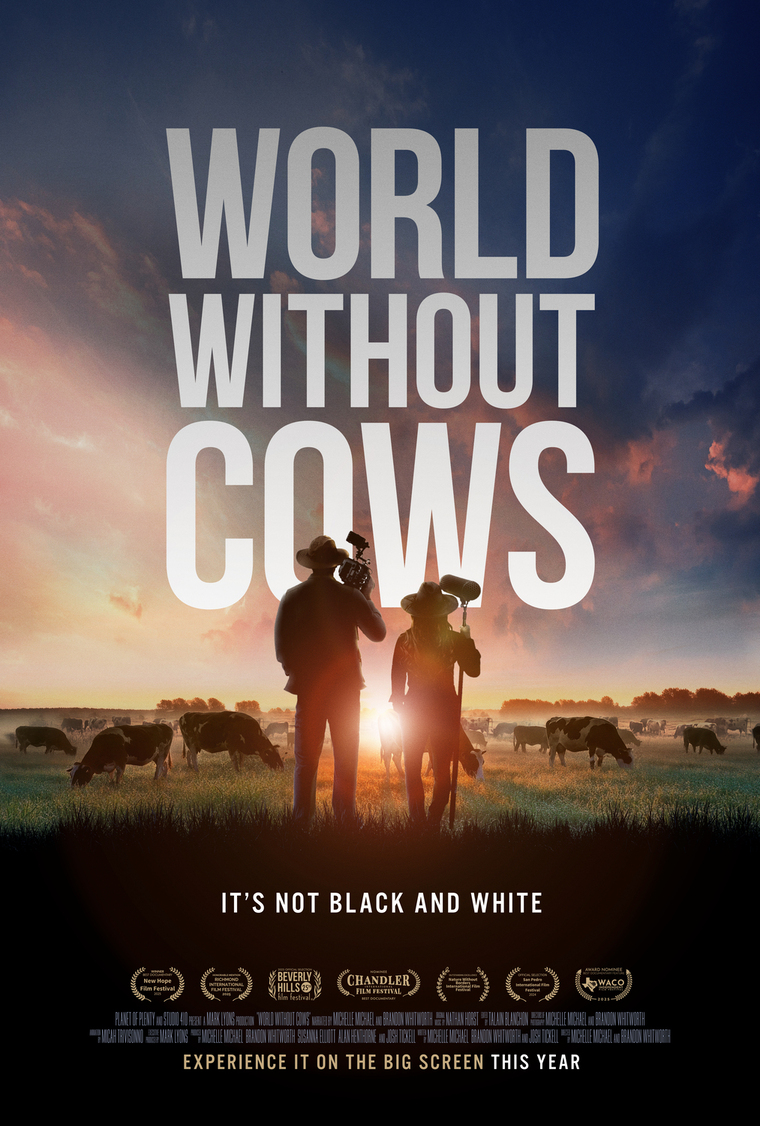
On September 8, the team behind ‘World Without Cows’ released the film’s official trailer and announced a global theatrical tour.
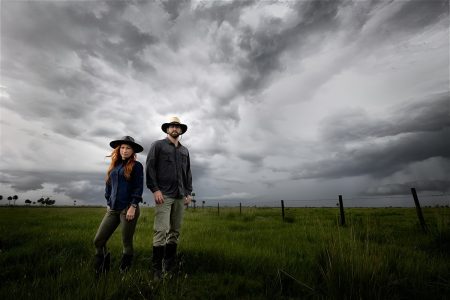
It opens with premieres in Dublin, London, Los Angeles and New York over the following 10 days, with Directors Michelle Michael and Brandon Whitworth and Executive Producer Dr Mark Lyons attending each one.

The pitch
The film asks a single question and spends 85 minutes refusing to answer it neatly: Are we better off in a world without cows?
Ms Michael and Mr Whitworth, both former agricultural journalists, spent roughly three years filming in more than 40 locations across five continents, from the American heartland to Kenya’s grasslands, India’s cattle-crowded streets and Brazil’s ranch country.
It has already picked up a Best Documentary award at the New Hope Film Festival in Pennsylvania and, according to farmshine.news, which followed the film’s festival run last year, has screened at 13 festivals and close to 200 private industry showings.
That count comes from a single trade outlet and hasn’t been independently verified elsewhere, though the film’s steady presence on agricultural event calendars since, including a slot at the Pennsylvania Dairy Summit in February, suggests it has been quietly working the industry circuit for close to a year before this month’s public push.
What’s actually new this month isn’t the film. It’s the audience.
After the four premiere cities, the tour heads into North America in October, including a run through the American heartland, before expanding into South America, Europe, Africa and Asia. No Asia dates have been set yet.
The film has been prepared in more than 25 languages, and through a partnership with the screening platform Gathr, any community, including one in India, can request its own local screening rather than wait for the tour to arrive.
Not an answer, an argument for sitting with the question
Mr Whitworth has said plainly that the film “wasn’t made to be an echo chamber.”
Ms Michael has described five years of filming as leaving her with the opposite of a clean conclusion, arguing that audiences don’t actually want simple answers so much as a better sense of how global food systems actually work.
A farmshine.news reviewer who watched the finished film last year put it more bluntly, describing it as carrying “a river of science running through it.”
Read the film’s own backstory closely, though, and it leans somewhere. Ms Michael and Mr Whitworth say the project grew out of earlier travel they did for an animal nutrition company, and a retired senior dairy-industry executive has spoken publicly in support of the film since.
That doesn’t make the nuance claim false. It does mean the fairest way to describe ‘World Without Cows’ is as a pushback against an oversimplified anti-cattle narrative, not as a coin flip between two equally weighted outcomes.
The numbers India is already sitting with
India holds the world’s largest livestock population, more than 536 million animals, and produces roughly a quarter of the world’s milk. Livestock accounts for an estimated 58% of the country’s agricultural methane, per India’s most recent Biennial Update Report.
That single statistic explains why this debate lands differently here than in Dublin or Los Angeles. Buffalo, which now supply more than half of India’s milk, emit more methane per liter than cattle do, and chronic shortages of green fodder push many smallholders toward crop residue that raises emissions further while cutting yield, according to reporting by Down To Earth.
The picture isn’t settled even within India’s own research community. An earlier Down To Earth analysis argued that older methane emission factors overstated Indian cattle’s contribution in the first place, because they weren’t calibrated to local feeding and metabolism patterns.
None of that resolves the question ‘World Without Cows’ is putting in front of audiences in Dublin this week. But it does mean the dairy farmer in Haryana, and millions like her across India’s dairy belt, isn’t a bystander to this conversation.
She’s one of the reasons it exists. India was one of the 22 countries the filmmakers actually visited while building their case that the honest answer is not black and white, and its own scientists have been arguing about the same tradeoffs, feed cost against methane, livelihoods against land use, for years before this trailer gave the debate a marquee.
The trailer is live on YouTube now. For readers who don’t want to wait for a tour date that hasn’t been set, requesting a local screening through Gathr is the one concrete way to see the film sooner rather than later.
Watch the trailer here.