


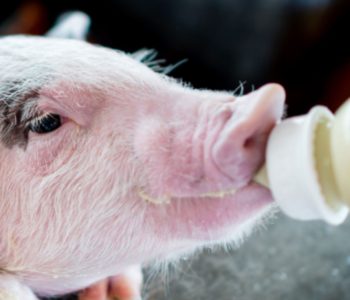
Liquid milk replacers in modern pig systems: when do they pay off?
Liquid milk replacers are increasingly used in intensive pig production to support large litters, low-birthweight piglets and sows with limited milk yield. However, these products are an expensive nutritional tool, and their economic return depends heavily on how, when and where they are applied.
Milk replacers tend to create the most value when they solve a defined biological problem—insufficient sow milk, excessive litter size or vulnerable piglets—rather than when they are supplied indiscriminately to every litter.
Why milk replacers are used
Modern genetics and management have increased litter size, but sow milk production has not risen at the same rate. In many systems, the number of functional teats and the total milk output of the sow become limiting factors for piglet growth and survival, especially in the second and third weeks of lactation.
Liquid milk replacers are designed to:
- Provide additional energy and amino acids to piglets when sow milk is insufficient.
- Support runt and low-birthweight piglets that struggle to compete at the udder.
- Help maintain growth during periods of heat stress, disease challenge or when sows have reduced feed intake.
Industry guidance also highlights situations involving very large litters, inadequate lactation, orphaned piglets and weak offspring as some of the clearest scenarios in which milk replacer can fill a meaningful nutritional gap.
The nutritional problem is straightforward: when the number or requirements of piglets exceed the sow’s effective milk supply, some animals will inevitably receive less energy and protein unless another source is provided.
Colostrum still comes first
Milk replacer should not be confused with colostrum. The first milk produced by the sow provides concentrated immunoglobulins, growth factors and other biologically active components that artificial replacers cannot fully reproduce.
The Lima Biotech technical guidance specifically notes that milk replacer cannot completely replace the immune value of colostrum. Its primary role is therefore nutritional support after adequate colostrum intake or in situations where sow milk becomes insufficient.
Milk replacer can replace nutrients. It cannot fully replace the passive immunity delivered by adequate colostrum intake immediately after birth.
The economic question: weight gain alone is not enough
The main constraint is cost. Liquid milk replacers commonly rely on dairy proteins, whey ingredients, lactose, added fat and highly digestible specialty ingredients. This makes them considerably more expensive than conventional sow feed and generally more expensive than creep feed.
For that reason, evaluating milk replacer only on the basis of additional kilograms gained before weaning can be misleading. The more important economic question is whether supplementation produces value through several outcomes simultaneously:
If milk replacer only adds a small amount of pre-weaning weight to piglets that were already thriving, the return may be limited. If it prevents deaths or converts low-value runts into viable weaned pigs, the economic calculation changes substantially.
Why blanket use is difficult to justify
This is why blanket use across every litter or every piglet is rarely the most efficient strategy.
The most consistent opportunities are likely to be in:
- Very large litters where piglet number exceeds the sow’s functional teat capacity.
- Litters showing clear evidence of inadequate milk supply or poor growth.
- Low-birthweight and weak piglets that cannot compete effectively at the udder.
- Orphaned piglets or cases of severe lactation failure.
- Post-fostering groups needing short-term nutritional stabilization.
Technical guidance similarly identifies high-prolificacy sows, inadequate lactation and low-birthweight offspring as core applications for supplementary milk feeding.
Targeting turns milk replacer from an expensive feed into a management tool: the goal is to place the highest-cost nutrition where the biological response is most valuable.
Alternatives and complementary strategies
Because of the cost, milk replacer should normally be considered within a broader lactation and piglet-management program rather than as an isolated intervention.
Optimizing sow nutrition
Optimizing sow nutrition in late gestation and lactation remains the first line of nutritional support. Adequate energy, amino acids, fiber and especially water intake are essential for maintaining feed intake, body condition and milk production.
If poor lactation is caused by inadequate sow feeding or water availability, addressing those limitations may produce a better return than compensating indefinitely with expensive piglet milk.
Sow-side supplementation
Sow-side nutritional strategies may also support colostrum and milk production. These can include omega-3 fatty acids, antioxidant nutrients, functional amino acids and other feed additives designed to support metabolic and reproductive performance during late gestation and lactation.
Early creep feeding
Early creep feeding with simple, highly palatable diets can complement milk intake while preparing the gastrointestinal tract for the transition to solid feed.
Milk replacer should therefore not delay the introduction of creep feed. The two strategies serve different purposes: milk provides highly digestible nutrients during lactation, while creep feeding helps develop feeding behavior and adaptation to post-weaning diets.
The strongest programs usually combine good sow nutrition, adequate colostrum, strategic milk supplementation and early exposure to solid feed rather than asking one intervention to solve every problem.
Colostrum-based supplements
Targeted use of bovine colostrum or colostrum-derived products is another option being explored for vulnerable piglets. These products are of particular interest because of their potential effects on gut development, digestive function and early resilience.
When milk replacers are most likely to pay
Liquid milk replacers are most likely to be economically justified when they:
Improve survival.
In high-mortality situations, each additional pig reaching weaning has a clear financial value.
Increase weaning weight and uniformity.
This can be particularly valuable in systems where light pigs create downstream performance problems or where uniform batches are commercially rewarded.
Support high-prolificacy management.
Milk supplementation may allow farms to manage litters that exceed natural teat capacity without relying exclusively on extensive cross-fostering.
Industry guidance reports that supplementary milk feeding can help narrow the weight gap between strong and weak piglets and improve average weaning weight and litter uniformity when sow milk is insufficient.
The best economic response often comes from saving or rehabilitating the piglets most likely to be lost—not from adding the same volume of milk to animals that already have adequate access to the sow.
Hygiene can determine whether the strategy succeeds
Liquid feeding creates its own management risks. Milk-based products provide an excellent substrate for bacterial growth, particularly when they remain warm in lines, cups or troughs.
For that reason, successful milk-replacer programs depend on:
- Regular cleaning of tanks, lines, cups and delivery equipment
- Correct mixing concentration
- Control of water temperature and quality
- Preventing stale milk from remaining in the system
- Monitoring intake and refusals
- Correct storage of the dry product
A nutritionally excellent milk replacer can become a health liability if liquid-feed hygiene is poor.
Milk replacer should complement creep feed
Supplemental milk should complement, not replace, the gradual introduction of solid feed.
Piglets need time before weaning to learn how to consume dry feed and adapt their digestive system to plant-based ingredients. A program that maximizes liquid intake but leaves piglets poorly adapted to solid feed may simply shift the nutritional challenge from lactation to the nursery.
The target is not maximum milk consumption. It is a smooth progression from colostrum to sow milk, supplemental milk where needed, creep feed and finally a successful post-weaning diet.
Measure the response, not just the amount fed
Farms using milk replacer should monitor whether the intervention is actually creating value.
Useful indicators include:
- Pre-weaning mortality
- Average weaning weight
- Litter coefficient of variation or another measure of uniformity
- Number of low-weight pigs at weaning
- Milk replacer cost per pig weaned
- Sow body-condition loss
- Creep-feed intake
- Early nursery performance
This allows producers to identify which litter types and production situations respond sufficiently to justify continued supplementation.
A milk-replacer program should be evaluated per pig successfully weaned—not simply per kilogram of powder purchased or litres of milk delivered.
Outlook
Liquid milk replacers are a valuable tool in modern pig production, but they are not a universal solution. Their high cost means they should be used strategically, as part of a broader approach that includes optimized sow nutrition, targeted supplementation, early creep feeding and good farrowing-house management.
In systems where piglet survival and quality are already high, the marginal benefit of widespread milk-replacer use may be limited. In contrast, in high-performing but high-pressure systems with very large litters, recurring lactation limitations or vulnerable piglets, carefully targeted supplementation can help unlock additional value from each sow and each litter.
Liquid milk replacer pays when it solves a problem worth more than the milk itself. The key is targeting: the right piglets, the right litters and the right period of lactation, supported by excellent hygiene and clear performance monitoring.
Sources and references
- Industry and technical guidance on milk-replacer use in high-prolificacy sows, low-birthweight piglets and cases of insufficient lactation.
- Research and technical literature on sow nutrition, colostrum production and piglet survival.
- Research on creep feeding and nutritional preparation for weaning.
- Studies evaluating bovine colostrum and other nutritional interventions for intestinal development and early piglet performance.
- Practical guidance on liquid feeding, hygiene and piglet management in intensive farrowing systems.