


Through the Alltech Harvest Analysis program, thousands of samples undergo comprehensive mycotoxin testing not just to check for mycotoxin contamination, but to identify contamination trends, regional risk patterns and potential health effects and impacts on animal performance.
By combining advanced mycotoxin detection methods with expert interpretation and regional insights, producers can transform complex data into targeted action.
The first results from this year’s initial harvesting of crops are providing an early view of the challenges shaping feed quality and animal performance in the months ahead.

Key takeaways
- ✅ Early 2026 harvest results indicate moderate-to-high-risk mycotoxin pressure in several regions.
- ✅ Weather extremes continue to influence contamination patterns across major crop-growing areas.
- ✅ Multiple mycotoxins remain the primary challenge, with co-contamination common across feed ingredients.
- ✅ Risk profiles vary significantly by region, feedstuff and production system.
- ✅ As more samples are analyzed, additional insights will emerge through the Alltech 2026 Harvest Analysis.
Why understanding mycotoxin risk matters
Mycotoxins are toxic compounds produced by molds that can contaminate grains and forages. When present in animal feeds, they may impact feed efficiency, reproduction, immunity and overall performance. Multiple mycotoxin contamination can amplify these effects.
Mycotoxin risk is quickly evolving, with changing weather patterns impacting crop-growing conditions globally. This is increasing pressure on producers to make informed decisions and take bold action on risk mitigation.
Industry expectations and regulations are constantly shifting as well. In 2026, the EU reduced its recommended levels for the mycotoxin deoxynivalenol (DON) in several feed materials and complete feeds.
Because mycotoxin contamination is invisible, routine mycotoxin testing is essential to meeting this growing challenge on every front.
Unlocking early insights: The Alltech 2026 Harvest Analysis
The Alltech Harvest Analysis analyzes thousands of new-crop and forage samples each year, creating one of the industry’s largest datasets on global mycotoxin prevalence.
This analysis helps to identify emerging mycotoxin risks, captures regional contamination trends, and enables robust data comparisons across years and regions.
Alltech’s independently accredited Alltech 37+™ laboratory network tests most samples included in the program. The program also includes collaborators like SGS, based in Europe, and Stratford Agri Analysis and Masterfeeds, both based in Canada.
These collaborations provide a diverse pool of internal and external data sources, ensuring a representative snapshot of the global grain trade.
In combination with day-to-day monitoring through Alltech® RAPIREAD™ testing and analysis, the Alltech Harvest Analysis program empowers producers to stay on top of the evolving risk.
Early mycotoxin risk across Europe, the US and Canada
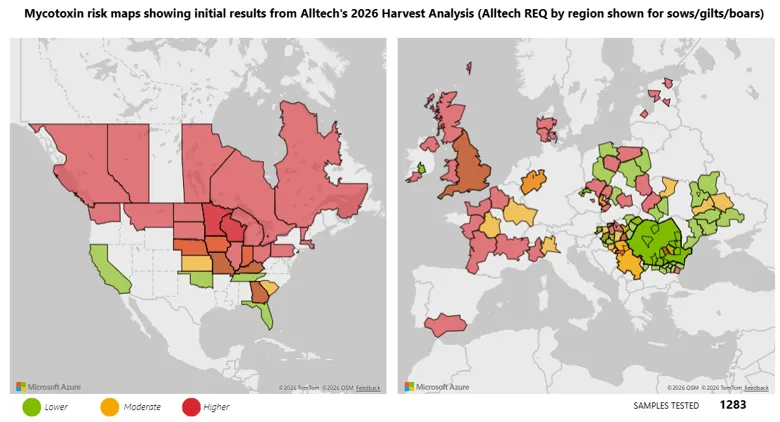

Mycotoxin risk map displaying initial results from the Alltech 2026 Harvest Analysis. The map illustrates Alltech REQ* (Risk Equivalent Quantity) levels by region for sows, gilts and boars, highlighting varying mycotoxin exposure risks across different areas. *REQ is a measure that combines the effects of multiple mycotoxins into one value, indicating the overall risk to animal health, with higher values showing greater risk.
Europe
The 2026 growing season in Europe was shaped by widespread heat and drought, particularly across the Western and Central regions. Early analysis indicates a moderate-to-high overall mycotoxin risk.
- ✅ In corn samples, aflatoxin remains the dominant risk, with many samples exceeding the EU feed limit. As this risk grows, aflatoxin transfer into milk is an emerging issue.
- ✅ Significant regional hot spots for ochratoxin A (OTA) are also evident, while fumonisins, DON, zearalenone (ZEA) and T2-HT2 appear more localized but still noteworthy.
- ✅ Further west and north, type B trichothecenes, particularly DON, remain the most prevalent, alongside emerging mycotoxins.
While risk varied among raw materials, multiple mycotoxins were commonly detected, highlighting the need for continued monitoring.
United States
Across the US, weather variability and late-season rainfall created risky conditions in many corn-growing areas. Early results from corn silage samples show widespread mycotoxin contamination, usually with multiple toxins detected.
- ✅ Fusarium-derived mycotoxins, including fusaric acid, type B trichothecenes and fumonisins, continue to drive risk.
- ✅ Early samples of corn indicate DON, ZEA and T2-HT2 as the main mycotoxins of concern.
- ✅ For dairy producers, corn silage risk is currently classified as moderate, but the presence of high-risk samples reinforces the importance of ongoing testing and mitigation.
- ✅ While typically a lower-risk ingredient, soybean meal could see challenges due to wet weather, later harvest and increased levels of sprouting and ear rot.
Canada
Many locations had favorable growing conditions, but some had the highest levels of rainfall in over 50 years, while others (such as British Columbia) had extreme heat and drought. Initial results have revealed a few key trends:
- ✅ Wheat and barley in Ontario currently appear to be at lower risk.
- ✅ Manitoba is reporting greater risk, especially from DON.
- ✅ Initial samples of corn silage from Quebec and British Columbia are showing higher risk, with prevalence of DON, T2-HT2 toxins and ZEA.
For a more detailed snapshot of the mycotoxin risk for your species, region or ingredient, please contact your local Alltech representative.
Looking ahead to further insights
While these early findings provide important direction, the 2026 mycotoxin story is still unfolding. Continued monitoring and analysis will help producers identify emerging risks and make informed feed management decisions throughout the harvest season.
The Alltech 2026 Harvest Analysis program will continue to deliver these new insights, with detailed regional reports, expert analysis and species-specific recommendations.