


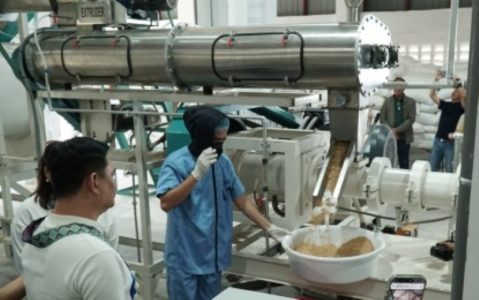
A newly inaugurated feed mill in Iloilo will strengthen aquaculture in Western Visayas, providing affordable feeds, training, and innovation for thousands of fish farmers. The facility sits inside the Southeast Asian Fisheries Development Center Aquaculture Department (SEAFDEC/AQD) complex in Tigbauan, Iloilo Province.
The project, initiated through a 2003 agreement between the Department of Agriculture–Bureau of Fisheries and Aquatic Resources (DA-BFAR) and SEAFDEC/AQD, is designed to boost aquaculture productivity in the region.
The plant has a daily production capacity of 5 tons of aquafeeds, expandable to 8 tons. It will primarily support cost-effective feed development for species such as milkfish.
Direct benefits for fisherfolk
BFAR Western Visayas Regional Director Remia Aparri emphasized that the facility will benefit over 6000 fisherfolk annually, representing nearly half of the region’s aquaculture workers. She noted that the project’s reach extends beyond Western Visayas, serving backyard farmers and commercial producers in neighboring regions.
The facility will function not only as a feed production center but also as a hub for innovation, training, and technology transfer. It will strengthen knowledge-sharing across the aquaculture sector.
Bridging research and practice
SEAFDEC/AQD Chief Dan Baliao highlighted the plant’s role in connecting research with practical application. He described the facility as a symbol of commitment to stakeholders and a driver of sustainable aquaculture growth.
“With each pellet produced, we contribute to food security and sustainable aquaculture,” Mr Baliao said during the inauguration.
Tackling feed cost challenges
DA-BFAR Assistant Director Zaldy Perez underscored that feed costs remain a major constraint, accounting for 60–70% of aquaculture production expenses. He explained that the new facility will help stabilize supply and reduce costs, improving profitability for fish farmers.
Mr Perez added that the project aligns with national goals to increase productivity, assure food security, and raise fisherfolk incomes.
The Iloilo feedmill is expected to serve as a steady resource for aquaculture communities. By combining production capacity with training and research, it aims to support long-term growth in the fisheries sector.