


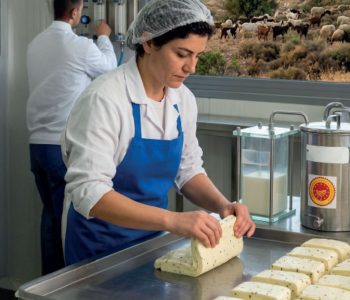
Optimizing nutrition for dairy goat and sheep productivity in Cyprus
Cyprus’s dairy industry is expanding, focusing on strengthening the halloumi value chain. Right now, the main obstacle for halloumi producers is not having enough sheep and goat milk to keep up with growing global demand and new regulations associated with halloumi cheese having gained Protected Designation of Origin (PDO) status.
To resolve this, several initiatives are currently under way to increase efficiency and productivity in the sheep and goat sector to respond effectively to increased milk requirements. :contentReference[oaicite:0]{index=0}
Optimizing nutrition is one of the most effective strategies to improve production efficiency in dairy sheep and goat flocks in Cyprus.
Feeding efficiency and halloumi production
Feeding constitutes the main cost driver, exceeding 60% in both efficient and inefficient sheep and goat farms. However, in a recent study carried out in Cyprus, efficient farms achieved 51% higher revenues than inefficient farms, which was attributed to the high milk yields of efficient farms.
On top of that, not all dairy sheep and goat breeds used in Cyprus are well-adapted to the prevailing hot climate. In order to help them thrive, both management and diet need to be adjusted so they can handle heat more effectively.
Higher productivity in small ruminant farms depends not only on genetics, but also on nutrition, heat stress management, and efficient resource use.
Meeting demands for regulations in halloumi production
Maintaining a consistent and sustainable supply of milk from small ruminants is essential for supporting the ongoing expansion and viability of the halloumi cheese market, which belongs to Cyprus’ top exports.
By 2029, regulations demand that a minimum of 50% of the milk utilized in halloumi production must be obtained from sheep and goats in Cyprus.
Cyprus is taking significant steps to strengthen its sheep and goat farming industry and has introduced a new approach to subsidies and production goals. As part of the government’s strategy to increase milk production, subsidies are now based on productivity rather than the number of animals on a farm.
The target productivity is 300 L of milk per animal, with farms expected to reach 250 L/animal in 2026 and 300 L/animal in 2027 to be eligible for subsidies.
Dairy goat and sheep production in Cyprus
Zooarchaeological evidence indicates that Cyprus was among the earliest regions to receive sheep introductions. The sustained presence of sheep across the island for the past ten millennia underscores their significance to local communities in providing both dairy and meat products.
The increasing demand for halloumi cheese in international markets, requiring milk rich in fats and protein, has boosted the dairy sheep and goat sector in Cyprus.
- The dairy sheep population increased by 27% between 2004 and 2023.
- The goat sector declined by 43% during the same period.
- Productivity increased by 196% for goats and 206% for sheep.
- In 2024, there were 213,720 lactating ewes and 140,880 lactating does.
Rapid intensification has increased productivity, reduced the number of animal holdings, and increased flock size across the sheep and goat sector.
The majority of sheep are crossbred, mostly between the Cyprus Chios and Cyprus Fat-tailed breeds. The most dominant goat breed is the Cyprus Damascus, also known as Shami goat, and crossbreeds with Damascus genetics.
Heat stress effects on productivity and milk quality
Increased thermal stress may result in reduced productivity by lowering milk production, feed efficiency, and reproduction rates. Heat stress also affects the animals’ immune system, making them more susceptible to disease and stress.
Goats demonstrate resilience and adaptive advantages over sheep in mitigating heat stress effects. Especially indigenous goat breeds in Mediterranean and subtropical regions display adaptive responses to heat stress.
Heat stress can reduce milk yield, alter milk composition, impair immune function, and negatively affect cheesemaking properties in dairy sheep and goats.
Reduction in dry matter intake in heat-stressed animals is the main cause of reduced milk yield. Water stress can also contribute to production losses.
Several studies have reported negative effects of heat stress on milk yield and composition and on the cheesemaking properties of milk in dairy sheep. Sheep milk is almost entirely processed into cheese, making coagulation properties especially important for the dairy sheep industry.
Managing water intake
Water intake is a key aspect of dairy sheep and goat nutrition for optimal performance. Animals need access to an adequate supply of clean and fresh water at all times.
Water consumption can affect feed intake and is particularly critical for ewes and does in late gestation through lactation. This is especially important in Cyprus, where water requirements increase under hot weather conditions.
- On average, sheep and goats drink 4–7.5 L of water per day.
- Temperature and lactation status increase water requirements.
- Milk yield is closely related to water intake.
- Water shortage is generally associated with reduced milk yield.
Water availability is a nutritional priority, particularly for high-producing breeds that are less adapted to heat and water stress.
Managing feed intakes
- Ensure animals receive high-quality feed to support optimal nutrient intake while minimizing unnecessary heat generation.
- Schedule feeding during early morning or evening hours when ambient temperatures are reduced.
- Adjust ration composition by modifying dietary fiber content, incorporating high-quality fiber forage, and increasing energy density through protected fat supplements.
Feeding strategies during hot weather should aim to maintain dry matter intake, reduce heat load, and preserve milk yield and composition.
Mineral and vitamin nutrition
Mineral formulations play an essential role in achieving optimal nutrition for health, reproduction, and milk production in dairy sheep and goats.
Optimizing the composition, bioavailability, and balance of minerals and vitamins is critical for improving metabolic stability. Essential macro-elements and trace elements, together with vitamins, support mineral homeostasis, energy metabolism, antioxidant defense, and immune function.
Mineral and vitamin nutrition plays an even greater role in hot climates such as Cyprus, especially for breeds adapted to more temperate environments.
A meta-analysis reported that heat stress leads to oxidative stress in sheep and goats, and antioxidant and mineral supplementation can help protect animals from this effect. Antioxidants such as vitamins C and E and certain trace elements safeguard the body against excessive free radical generation during heat stress.
Extra care during critical production stages
The transition from late pregnancy to early lactation represents an important period in the life of dairy animals, marked by significant alterations in metabolic and immune functions. These changes increase susceptibility to metabolic and infectious diseases, which can be exacerbated under heat stress.
Carefully formulated late pregnancy diets for sheep and goats are essential. Adequate nutritional preparation ensures that animals enter lactation with optimal body condition, reduces the risk of metabolic disorders, and improves milk yield and composition.
During the last third of gestation, inadequate nutrition increases the risk of smaller, less vigorous offspring and serious metabolic disorders such as pregnancy toxaemia.
During the last 60 days of pregnancy, the foetus or foetuses begin to grow and can limit the amount of forage a pregnant animal can eat. This means dietary nutrient density must be adjusted to compensate for declining feed intake.
Pregnancy toxaemia, also known as twin-kid disease or ketosis, affects ewes and does in the last month of pregnancy and is a serious metabolic condition that is fatal in about 80% of cases.
For Cyprus’ dairy sheep and goat sector, improved nutrition, water access, mineral balance, and heat stress mitigation are central to achieving sustainable productivity and supporting the future of halloumi production.