


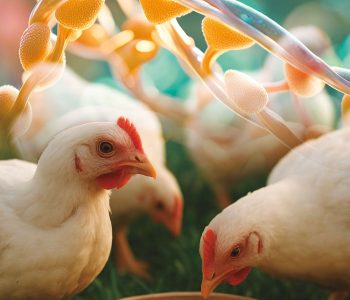
The importance of low-protein diets in poultry
Low-protein diets (LPDs) are transforming poultry nutrition by improving sustainability, reducing costs, and maintaining production performance.
Introduction
Protein is one of the most critical nutrients in poultry diets, influencing growth, development, reproduction, and overall health.
Traditionally, poultry diets have been formulated with high protein content to maximize production performance. However, increasing awareness of economic, environmental, and physiological considerations has led to growing interest in low-protein diets (LPDs).
Key Concept
Poultry do not have a specific requirement for crude protein itself — they require essential amino acids such as lysine, methionine, threonine, tryptophan, and valine.
Nutritional Foundations of Poultry Diets
Protein plays a key role in:
- Muscle development
- Enzyme and hormone synthesis
- Immune function
- Feather development
Traditional high-protein formulations often rely heavily on soybean meal and fish meal. While effective for growth, this strategy can result in:
- Excess nitrogen excretion
- Higher feed costs
- Environmental pollution
- Metabolic burden on birds
By focusing on the precise amino acid composition rather than crude protein percentages, nutritionists can formulate more efficient and balanced diets.
Precision Nutrition
Supplementing LPDs with synthetic amino acids allows producers to meet birds’ nutritional requirements while reducing excess protein intake.
Efficiency and Precision in Nutrient Utilization
One of the major advantages of LPDs is the improved efficiency of dietary nitrogen utilization.
High-protein diets often provide more protein than birds actually require, leading to amino acid catabolism and unnecessary nitrogen excretion.
Research shows that birds fed properly balanced LPDs can achieve:
- Comparable growth rates
- Similar feed conversion ratios (FCR)
- Equivalent carcass yields
- Reduced metabolic waste
“LPDs promote better nutrient utilization while reducing metabolic stress on the liver and kidneys.”
Economic Implications
Feed represents approximately 60–70% of total poultry production costs, with protein ingredients being among the most expensive components.
Reducing dietary crude protein can:
- Lower feed costs
- Reduce dependency on expensive protein ingredients
- Improve economic sustainability
- Optimize nutrient efficiency
The growing availability of crystalline amino acids such as DL-methionine and L-lysine has made precision LPD formulation increasingly feasible and cost-effective.
Environmental Impact
One of the strongest arguments for adopting LPDs is their positive environmental impact.
Excess dietary protein not utilized by birds is excreted as nitrogen, contributing to:
- Ammonia emissions
- Poor air quality in poultry houses
- Water pollution
- Eutrophication and algal blooms
Environmental Benefit
Research indicates that every 1% reduction in dietary protein may reduce nitrogen excretion by approximately 10%.
Health and Welfare Benefits
High protein intake, particularly when poorly balanced with energy or amino acids, may predispose birds to metabolic disorders such as:
- Ascites syndrome
- Gout
- Kidney stress
- Liver overload
Birds fed optimized LPDs often show:
- Improved gut health
- Better immune responses
- Reduced metabolic stress
- Enhanced welfare conditions
Carcass Quality and Meat Composition
Contrary to common concerns, research suggests that well-balanced LPDs do not compromise:
- Carcass yield
- Muscle deposition
- Production performance
In fact, LPDs may improve meat quality by:
- Reducing fat deposition
- Improving meat texture
- Enhancing nutrient composition
- Improving water-holding capacity
Implementation Challenges
Successful implementation of LPDs requires:
- Accurate amino acid profiling
- Effective feed formulation software
- Access to synthetic amino acids
- Knowledge of breed and production-stage requirements
- Gut health management strategies
Future Outlook
As global demand for poultry products continues to rise, sustainable production strategies will become increasingly important.
Future innovations may include:
- Precision amino acid nutrition
- Phase feeding systems
- Gut health optimization technologies
- Alternative protein sources such as insect and microbial proteins
- Digital monitoring and precision feeding tools
Conclusion
Low-protein diets represent a major shift toward
precision amino acid nutrition, offering a sustainable pathway for modern poultry production by reducing costs, improving bird health, and minimizing environmental impact.