


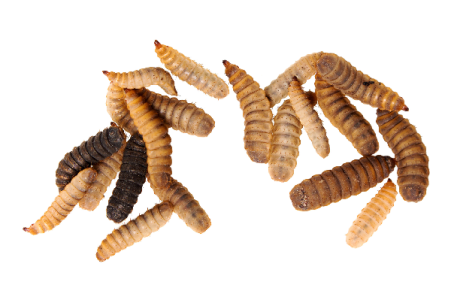
Poultry processing facilities generate large volumes of wastewater that typically require costly treatment and disposal. New research suggests this by-product may instead become a useful ingredient in producing alternative protein, by serving as part of the diet for black soldier fly larvae.
As aquaculture and livestock producers search for sustainable substitutes for fishmeal, black soldier fly larvae have gained attention for their ability to convert organic waste into nutrient-dense biomass. Their role in circular farming systems makes them especially attractive for industries looking to reduce waste while creating value.
Researchers at Purdue University explored whether sludge recovered from egg-washing and poultry-slaughtering wastewater could function as the moisture component in a standard larvae feed mix. The solid feed portion followed the well-known Gainesville Diet, made up of wheat bran, alfalfa meal and corn meal, while the treated sludge replaced water in the formulation.
Before being used, the wastewater underwent electrocoagulation and flocculation treatments to remove contaminants. Electrocoagulation with aluminium and iron electrodes proved highly effective. In egg-washing wastewater, aluminium electrodes removed most organic debris along with significant portions of ammonia and phosphate, while iron electrodes performed similarly and were particularly effective at ammonia removal. Even stronger results were observed in duck-slaughtering wastewater, where aluminium electrodes removed nearly all organic debris and both electrode types removed virtually all phosphate under optimised conditions.
These treatments produced sludges with varying physical characteristics. Iron-treated duck-slaughtering sludge, for example, contained the greatest concentration of total and inorganic solids. When incorporated into larvae feed, both electrocoagulated and flocculated sludges supported substantial growth. Larvae increased their weight between five and eight times, with the strongest performance seen in those fed electrocoagulated duck-slaughtering sludge.
Beyond growth rates, the team also tracked larval development. Sludge source and treatment method appeared to influence maturation, as larvae fed sludge from aluminium-treated duck-slaughtering wastewater showed the lowest pupation rate over a 15-day period.
The findings point to the possibility of transforming poultry wastewater from a disposal challenge into a resource for insect-based protein production. With further study, including pairing electrocoagulation with anaerobic digestion to recover biogas, this approach could contribute to more efficient waste management and more sustainable feed options for aquaculture worldwide.