


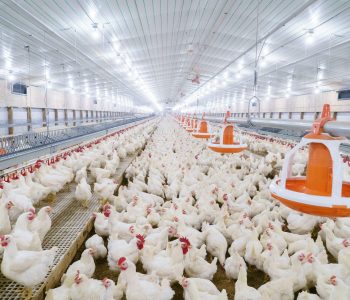
POULTRY INDUSTRY | MARKET TRENDS | BROILER PRODUCTION
U.S. Poultry Market Shows Mixed Signals as Breast Meat Prices Rebound and USDA Cuts Production Outlook
The U.S. poultry industry is navigating an uneven wholesale market, with chicken breast prices recovering after several weeks of declines while thigh meat remains under pressure. At the same time, revised USDA forecasts point to slower broiler production growth and greater reliance on domestic demand in 2027.
The latest developments in the U.S. poultry market highlight the complex relationship between wholesale prices, production volumes, feed costs and consumer demand.
According to the Poultry Producer Intelligence Executive Brief published on November 16, 2026, boneless, skinless chicken breast prices increased during the trading week of November 9–13, ending a four-week downward trend.
However, the recovery was not consistent across all poultry cuts. While breast meat and drumsticks strengthened, boneless thigh meat experienced a notable decline, illustrating the uneven conditions facing processors and producers.
Meanwhile, the U.S. Department of Agriculture (USDA) has revised its broiler production forecasts downward for both 2026 and 2027, although total output is still expected to increase next year.
Together, these developments suggest that the poultry industry is entering a period in which market balance, processing efficiency and feed cost management will be increasingly important for profitability.
U.S. POULTRY MARKET AT A GLANCE
113.67¢/lb
Wholesale boneless, skinless chicken breast price during November 9–13, 2026.
Weekly change: +3.33¢/lb
2027 broiler production forecast: 50.0 billion lb
2027 export forecast: 6.62 billion lb
Chicken breast prices recover after four consecutive weeks of declines
One of the most significant developments in the latest poultry market report was the recovery in boneless, skinless chicken breast prices.
During the week of November 9–13, the U.S. wholesale benchmark increased by 3.33 cents per pound, reaching 113.67 cents per pound.
This represented an increase of approximately 3% compared with the previous week.
The improvement followed four consecutive weeks of falling prices, during which the benchmark declined from 118.68 cents per pound on October 9 to 110.34 cents per pound on November 6.
Although the latest increase recovered approximately 40% of the preceding four-week decline, breast meat remained 5.01 cents per pound below its early October level.
Consequently, the rebound represents an encouraging signal, but it does not yet confirm a sustained recovery in market demand.
Wholesale poultry prices are influenced by multiple factors, including available supply, processing volumes, product specifications, inventories and purchasing patterns.
For processors, the next important indicator will be whether breast meat prices stabilize or continue improving as seasonal purchasing activity develops.
Market insight: The recovery in chicken breast prices is a positive development, but one week of higher prices is insufficient to establish a broader market turnaround.
Wholesale chicken prices reveal an uneven market
The latest USDA Agricultural Marketing Service data illustrate the differences between poultry product categories.
While breast meat and drumsticks recorded price increases, boneless thigh meat experienced the largest weekly decline among the seven benchmarks monitored in the original report.
| Poultry product | Price (¢/lb) | Weekly change (¢/lb) |
|---|---|---|
| Whole-bird composite | 118.27 | +0.32 |
| Boneless, skinless breast | 113.67 | +3.33 |
| Whole wings | 106.73 | −0.24 |
| Boneless, skinless thigh | 165.08 | −5.33 |
| Tenderloins | 112.61 | −0.03 |
| Bulk leg quarters | 53.20 | +0.01 |
| Drumsticks | 58.55 | +2.17 |
Source: Poultry Producer Intelligence, November 16, 2026, using USDA Agricultural Marketing Service weighted averages for November 9–13. Prices are in U.S. cents per pound. Whole-bird prices are delivered quotations; chicken parts are FOB plant.
The whole-bird composite increased modestly to 118.27 cents per pound, while drumsticks rose by 2.17 cents to 58.55 cents per pound.
In contrast, boneless thigh meat declined by 5.33 cents to 165.08 cents per pound.
Whole wings, tenderloins and bulk leg quarters remained comparatively stable, with weekly movements of less than a quarter cent.
These differences are particularly relevant for poultry processing companies because the economic value of a carcass depends on the combination of products sold.
A stronger price for one cut may not fully compensate for weaker returns from another, especially when production costs and customer contracts vary across product categories.
USDA lowers broiler production forecasts for 2026 and 2027
Beyond short-term price movements, changes in production expectations are shaping the industry’s outlook.
The USDA’s November forecasts reduced projected federally inspected broiler production by 245 million pounds for 2026 and 150 million pounds for 2027 compared with the October estimates.
The revised outlook places U.S. broiler production at approximately 49.475 billion pounds in 2026 and 50 billion pounds in 2027.
Despite these downward revisions, production is still expected to increase by approximately 1.1% next year.
The USDA’s November 17 Livestock, Dairy, and Poultry Outlook attributes the 2026 revision to recent production indicators, including lower slaughter volumes and live weights compared with the previous year.
For 2027, higher anticipated input costs contributed to reduced production expectations during the second half of the year.
| USDA forecast | 2026 | 2027 |
|---|---|---|
| Broiler production (billion lb) | 49.475 | 50.000 |
| Broiler exports (billion lb) | 6.759 | 6.620 |
Source: USDA Economic Research Service, Livestock, Dairy, and Poultry Outlook, November 17, 2026.
The revisions suggest that poultry production will continue expanding, although at a more moderate pace than previously anticipated.
For integrated poultry companies, this creates a need to coordinate hatchery activity, flock placement, processing capacity and market demand.
Hatchery activity points to continued growth in broiler supply
Despite the reduced annual production forecasts, U.S. hatchery indicators continue to show modest expansion compared with the previous year.
According to the November 16 market brief, U.S. hatcheries set approximately 244 million broiler eggs during the week ending November 7.
This represented a slight decline compared with the corresponding week in 2025.
However, chick placements reached approximately 188 million birds, an increase of 2% year over year.
Cumulative chick placements reached approximately 8.59 billion birds, also 2% higher than the previous year.
These figures provide an early indication of the number of birds entering the production system.
However, chick placements do not translate directly into equivalent increases in meat production.
Final output also depends on factors such as flock liveability, growth rate, market weight, processing schedules and production efficiency.
BROILER PRODUCTION PIPELINE
188 million chicks
Placed during the week ending November 7, 2026, representing a 2% year-over-year increase.
Export forecasts suggest greater dependence on domestic demand
International trade is another important component of the U.S. poultry market outlook.
According to the USDA, broiler exports are projected to reach approximately 6.759 billion pounds in 2026.
This represents an upward revision of 61 million pounds compared with the previous forecast, supported by stronger demand from international markets, particularly the Caribbean.
In September 2026, U.S. broiler exports reached approximately 601.1 million pounds, an increase of 10.3% compared with September 2025.
Mexico remained the largest destination for U.S. broiler exports, while shipments to Cuba also contributed to export activity.
However, the USDA expects exports to decline to 6.620 billion pounds in 2027, approximately 2.1% below the 2026 forecast.
The agency identifies strong international competition as one factor influencing the outlook.
With production expected to increase while exports decline, domestic distribution channels may need to absorb a greater proportion of U.S. poultry output.
This could place additional importance on retail demand, foodservice purchasing and the ability of processors to adjust their product mix to changing market conditions.
Market implication: If the USDA’s forecasts materialize, domestic demand will become increasingly important in balancing additional U.S. broiler production during 2027.
Feed costs remain a critical factor for poultry profitability
While wholesale poultry prices influence revenues, feed costs remain among the most important determinants of production profitability.
Corn and soybean meal are major ingredients in commercial poultry diets, making their market prices particularly relevant for integrated poultry operations and feed manufacturers.
The USDA’s November crop outlook lowered the projected U.S. season-average corn price for 2026/27 by 10 cents to US$4.60 per bushel.
The soybean meal price forecast remained unchanged at US$340 per short ton.
Although these figures provide useful market benchmarks, the actual costs faced by poultry producers depend on regional supply conditions, transportation, local basis and purchasing arrangements.
Changes in feed ingredient prices can also influence production decisions and the economic feasibility of expanding poultry output.
For this reason, feed manufacturers and nutritionists must continue balancing ingredient costs with nutritional adequacy and animal performance.
Optimizing dietary energy, amino acid supply and nutrient digestibility remains important for maintaining efficient growth and feed conversion.
However, reducing formulation costs should not compromise bird health, growth performance or carcass quality.
Thanksgiving demand influences turkey and egg markets
Seasonal purchasing patterns are also influencing U.S. poultry and egg markets as Thanksgiving approaches.
The November 16 market report indicated that turkey products were receiving greater promotional attention from retailers.
Fresh conventional whole turkey hens weighing between 8 and 16 pounds averaged approximately US$1.8407 per pound, representing a modest weekly increase.
Frozen basted hens in the same weight range increased to approximately US$1.8208 per pound, while frozen basted toms weighing 16–24 pounds declined slightly to US$1.8810 per pound.
The egg market also recorded an increase in wholesale prices.
The national wholesale truckload price for graded loose Large white shell eggs increased by 27 cents to US$0.73 per dozen.
The USDA has also raised its egg production forecasts for both 2026 and 2027, reflecting a growing laying flock and improvements in productivity.
However, higher production could influence price conditions as additional eggs become available.
These developments demonstrate how seasonal consumption patterns, promotional activity and supply expectations can affect different segments of the poultry industry.
What do these trends mean for poultry producers and nutritionists?
The current market environment presents several operational considerations for poultry businesses.
For integrated companies, changes in wholesale prices can influence processing margins and decisions related to product allocation, customer contracts and inventory management.
For contract growers, wholesale market movements do not necessarily translate directly into changes in compensation.
Instead, flock performance indicators remain central to operational efficiency.
These include feed conversion ratio, liveability, daily weight gain, uniformity and the achievement of target market weights.
Key priorities for poultry operations
- Feed efficiency: Maintain effective nutrient utilization and monitor feed conversion as ingredient costs change.
- Flock health: Protect liveability through appropriate biosecurity, health management and environmental conditions.
- Growth performance: Monitor body weight, uniformity and processing targets to support production planning.
- Market flexibility: Account for differences in demand and pricing across poultry cuts.
- Feed procurement: Monitor corn, soybean meal and regional ingredient prices when developing purchasing strategies.
- Supply planning: Coordinate chick placements, production schedules and processing requirements with expected demand.
These priorities illustrate why poultry profitability cannot be evaluated using wholesale meat prices alone.
Efficient production depends on the interaction between nutrition, animal health, processing performance and market conditions.
An uneven market heading into 2027
The latest U.S. poultry market developments point to a mixed but evolving outlook.
Chicken breast prices have recovered after several weeks of declines, while thigh meat remains under pressure and other product categories show relatively limited movement.
At the same time, the USDA expects broiler production to continue increasing in 2027, although at a slower pace than previously projected.
With exports forecast to decline slightly, domestic demand will play an increasingly important role in determining market balance.
Feed ingredient costs, hatchery activity and seasonal purchasing trends will also remain important factors to monitor.
For poultry producers and feed manufacturers, the central challenge will be maintaining efficient production while responding to changing market conditions.
As the industry approaches 2027, profitability will increasingly depend on combining strong flock performance, effective feed cost management and the ability to adapt to evolving demand across poultry markets.
Sources and further reading
Poultry Producer. November 16, 2026.
Poultry Producer Intelligence: The Poultry Markets & Executive Brief — November 16, 2026.
USDA Economic Research Service. November 17, 2026.
Livestock, Dairy, and Poultry Outlook: November 2026.
USDA Economic Research Service.
Poultry & Eggs: Market Outlook.
USDA Agricultural Marketing Service.
Livestock, Poultry and Grain Market News.
Fastmarkets. November 16, 2026.
US Poultry By-product Meal and Pet Food Weakens Despite Lower Broiler Slaughter.
Wholesale prices refer to the U.S. trading week of November 9–13, 2026. USDA production and export figures are forecasts and may be revised. The article combines information from the original Poultry Producer market brief with subsequent USDA reporting and additional editorial analysis.