


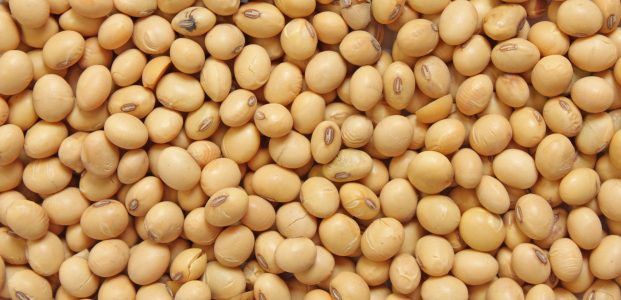
Brazil is the world’s largest soybean exporter, while China is its biggest buyer—importing over 100 million tons annually, more than 60% of global trade, according to a new report by CPG‘s Maria Heloisa Barbosa Borges.
With the tariff dispute between the US and China pushing the Chinese away from American soybeans, Brazilian exports hit a historic record in 2025.
Brazilian soybeans have never traveled so much or so fast. More than 70% of Brazil’s soybean output now heads to China, a market that consumes colossal volumes to feed livestock and supply the oilseed processing industry.
In 2025, Brazil set a historic export record, fueled by the US–China tariff war, competitive pricing, and decades of agricultural innovation that made it a global soybean leader.
The real significance lies in the geopolitics behind the numbers. The trade dispute between the world’s two largest economies weakened Chinese demand for US soybeans.
With high tariffs inflating the cost of North American soybeans, China turned to Brazil—whose scale, infrastructure, and pricing absorbed the demand—sending record grain volumes from Brazilian ports to Asia.
How Brazil became China’s breadbasket
Brazil’s transformation into the world’s largest soybean exporter was no accident. In the 1960s and 1970s, many coffee farms shifted to soybeans, driven by market forces and new varieties adapted to tropical climates.
Centuries‑old farms like the Bautello family’s in Paraná illustrate the shift: a 200‑year‑old property that replaced coffee with soybeans and now runs a fully mechanized, high‑tech operation.
China’s entry into the global soybean market in the 1990s sparked what Brazilian producers describe as a revolution in the production system. From the 2000s onwards, Chinese demand grew rapidly, and Brazil reorganized its production chain to serve a buyer with seemingly insatiable appetite.
New planting areas were opened, yields increased through genetic research and better management, and outflow logistics continue to expand.
The tariff war that pushed China towards Brazil
The US–China trade dispute reshaped the global soybean market. Chinese tariffs made American soybeans costly, boosting Brazil’s price advantage despite distance. For Brazilian producers, the conflict translated into stronger demand and better prices.
Soybean prices on the Chicago exchange mirror US–China negotiations like a real‑time gauge. Brazilian traders say the volatility makes deals difficult, as clashes between the two largest economies ripple through global agriculture—from farmers in Paraná to importers in Shanghai.
A risk that Brazilian producers do not ignore
Despite short‑term gains, Brazilian soybean producers see the tariff war as no lasting guarantee. A US–China deal could shift Chinese demand back to American soybeans, cutting Brazil’s share of global trade.
Producers like Hodof Bautello admit the situation is risky. China could diversify suppliers or even return to US soybeans—sometimes paying more, as it has in past periods.
At the same time, producers argue that Brazil has proven itself a competitive global supplier. China recognizes Brazil’s capacity to deliver larger volumes at lower prices than the US, backed by strong ties with exporters and ports.
Even if a US–China agreement temporarily reduces demand for Brazilian soybeans, the country’s position as a strategic supplier to China will likely not be erased.
Brazilian ports race to keep up with soybean demand
Paraná’s Port of Paranaguá, Brazil’s second‑largest by cargo volume, is a key gateway for soybeans bound for China. With over 70% of shipments headed to the Chinese market, its infrastructure has become a strategic bottleneck in the export chain.
Large investments are underway to build new railway unloading structures, including a conveyor complex that will transfer grain from trains to silos and directly onto ships.
Port expansion is not confined to Paraná. Other producing states are also investing in terminals and logistics corridors to support the expected surge in soybean exports in the coming years.
The challenge is that Brazil’s production capacity has outpaced its transport network, creating costly bottlenecks in highways, railways, and ports. Each day of port queues or stalled trucks adds expenses that erode producers’ margins and weaken grain competitiveness.
China as a client and as a risk variable
Brazil’s dependence on the Chinese soybean market is both its greatest strength and vulnerability. With China importing over 100 million tons annually—more than 60% of global trade—any policy shift in Beijing instantly reverberates through Brazilian fields and ports.
A slowdown in China’s economy, shifts in dietary habits, or renewed trade ties with the US could quickly disrupt the balance that now favors Brazil.
For Brazilian producers and exporters, the prudent strategy is to sustain price and quality competitiveness while diversifying markets. China remains the priority, but expanding soybean sales across Asia, the Middle East, and Europe helps reduce exposure to political shifts beyond farmers’ control.
Soybeans from Paraná, Mato Grosso, and Goiás must reach markets on multiple continents so Brazil’s 2025 record does not hinge solely on Washington–Beijing geopolitics.
Record in 2025, uncertainty in 2026
Brazilian soybeans are enjoying record export volumes, but the future hinges on forces beyond producers’ control. The US–China tariff war redirected Chinese buyers to Brazilian ports, infrastructure investments are expanding outflow capacity, and national production keeps breaking records. Yet the same geopolitics that fueled Brazil’s rise could shift at any moment.