


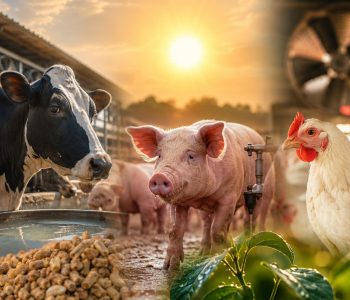
Managing heat stress through nutrition: strategies to protect livestock performance and resilience
Heat stress has become one of the most significant challenges facing modern livestock production systems. Rising global temperatures, prolonged heat waves, and increasing climate variability are affecting animal performance, health, reproductive efficiency, and overall farm profitability across multiple species.
For producers, the consequences can be severe: reduced feed intake, lower growth rates, poorer feed efficiency, declines in milk production, reproductive disruption, immune suppression, and increased mortality risk. In intensive production systems, even moderate increases in environmental temperature can negatively impact animal physiology and productivity.
Although environmental management remains essential, nutrition is increasingly recognized as one of the most effective and scalable tools for helping animals cope with heat stress.
Nutrition is no longer only about maximizing performance — it is also a key strategy for improving resilience, metabolic stability, and animal welfare during periods of thermal stress.
Why heat stress is so damaging
Heat stress occurs when animals are unable to effectively dissipate excess body heat and maintain thermal balance. Once environmental temperature and humidity exceed the animal’s comfort zone, physiological mechanisms are activated to reduce heat load.
Common physiological responses include:
- Reduced feed intake
- Increased water consumption
- Panting and elevated respiration rate
- Changes in blood flow distribution
- Altered endocrine and metabolic activity
- Lower physical activity
These physiological adaptations are necessary for survival, but they come at a significant biological cost. Nutrients and energy that would normally support growth, milk production, reproduction, or muscle deposition are instead redirected toward thermoregulation and maintenance.
One of the earliest and most important responses to heat stress is a reduction in feed intake, which directly compromises nutrient supply and productive performance.
The metabolic cost of heat stress
The effects of heat stress extend far beyond reduced appetite. Animals under thermal stress experience important metabolic and physiological alterations that can disrupt nutrient utilization and overall health.
Heat stress can contribute to:
- Greater oxidative stress and cellular damage
- Reduced intestinal integrity
- Altered immune responses
- Changes in rumen or gut fermentation patterns
- Lower nutrient digestibility
- Hormonal imbalance and reproductive disruption
In dairy cattle, heat stress often results in lower milk yield and poorer milk components. In broilers and swine, growth performance and feed conversion may decline substantially. Reproductive performance is also highly sensitive to thermal stress across species.
Heat stress affects nearly every major physiological system involved in production, health, and reproduction.
Reformulating diets during heat stress
One of the primary nutritional objectives during heat stress is maintaining nutrient intake despite reduced feed consumption. This requires careful reformulation strategies focused on nutrient density, digestibility, and metabolic efficiency.
Key nutritional adjustments may include:
- Increasing dietary energy density using highly digestible ingredients and dietary fats
- Optimizing amino acid balance to improve protein utilization efficiency
- Reducing excess crude protein to minimize heat increment from protein metabolism
- Improving ingredient digestibility to lower digestive heat production
- Adjusting fiber levels carefully depending on species and production system
Dietary fat is particularly valuable during hot periods because it provides concentrated energy with a relatively low heat increment compared with fiber or excess protein fermentation.
Highly digestible diets with optimized nutrient density can help compensate for lower feed intake and improve resilience during heat stress.
Gut health becomes increasingly important
Heat stress can negatively affect intestinal integrity and digestive function. Blood flow is redirected away from the gastrointestinal tract toward peripheral tissues to facilitate heat dissipation, potentially reducing oxygen and nutrient delivery to the intestine.
This may compromise intestinal barrier function, increase gut permeability, and impair nutrient absorption. As a result, supporting gut health has become a major focus of nutritional heat stress management.
Common nutritional approaches include:
- Probiotics and prebiotics
- Organic acids
- Functional fibers
- Phytogenic additives
- Yeast-derived products
- Antioxidant-supportive nutrients
Maintaining intestinal integrity is critical for preserving nutrient absorption, immune function, and animal performance under thermal stress.
Oxidative stress and antioxidant nutrition
One of the most important biological consequences of heat stress is the increase in oxidative stress. Elevated temperatures promote the formation of reactive oxygen species (ROS), which can damage lipids, proteins, DNA, and cellular structures when antioxidant defenses become overwhelmed.
Antioxidant nutrition therefore plays a major role in heat stress mitigation.
Nutrients commonly associated with antioxidant support include:
- Vitamin E
- Vitamin C
- Selenium
- Methionine
- Plant-derived polyphenols and phytogenics
These nutrients can help support antioxidant systems and improve the animal’s ability to cope with oxidative challenges associated with thermal stress.
Oxidative stress is one of the hidden drivers of performance losses during heat stress.
Hydration and electrolyte balance
Water intake increases substantially during heat stress, making hydration management essential for maintaining physiological function and thermoregulation.
Electrolyte losses associated with panting and altered metabolism may disrupt acid-base balance and reduce performance. Nutritional electrolyte strategies may therefore help support:
- Hydration status
- Acid-base equilibrium
- Feed intake
- Thermoregulatory capacity
Dietary electrolyte balance (DEB) is particularly important in poultry and swine systems during periods of elevated temperature.
Hydration and electrolyte balance are essential components of any heat stress nutritional strategy.
Species-specific challenges
Different livestock species respond differently to heat stress.
- Dairy cattle often experience reduced milk yield, poorer fertility, and metabolic stress.
- Broilers are highly sensitive because of their rapid growth rate and limited heat dissipation capacity.
- Swine typically reduce feed intake dramatically during hot weather, directly affecting growth performance.
- Laying hens may experience lower egg production and shell quality.
Because of these differences, nutritional programs should be adapted to species, production stage, and local environmental conditions.
There is no universal heat stress solution — nutritional strategies must be tailored to each production system.
Nutrition as part of a complete heat stress program
Although nutrition is critical, the most successful heat stress mitigation programs combine multiple interventions, including:
- Ventilation and cooling systems
- Water availability and quality management
- Feeding time adjustments
- Stocking density management
- Precision feeding strategies
- Health monitoring and stress reduction
The most effective heat stress mitigation programs integrate environmental management with precision nutrition and animal health support.
Conclusion
Heat stress will continue to challenge livestock production worldwide as environmental temperatures rise and production systems intensify.
Nutrition provides one of the most practical and scalable tools available to help animals maintain productivity, resilience, and welfare during thermal stress.
By focusing on nutrient density, digestibility, antioxidant support, gut health, electrolyte balance, and precision formulation, producers can better protect animal performance while improving the sustainability and resilience of modern livestock systems.
As heat stress becomes an increasingly important challenge for global animal production, targeted nutritional strategies will play a central role in protecting animal health, productivity, and farm sustainability.