


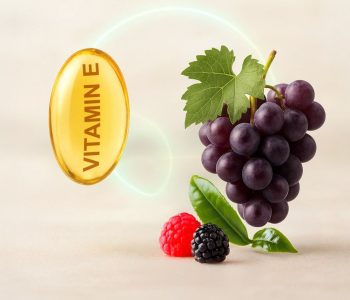
Vitamin E and polyphenols: complementary compounds, not substitutes
As interest in natural antioxidants continues growing in animal nutrition, polyphenols have increasingly been promoted as potential alternatives to vitamin E. Rising vitamin E prices in recent years accelerated this trend, encouraging the commercialization of numerous plant-derived antioxidant products for livestock feeding programs.
However, despite sharing certain antioxidant-related properties, vitamin E and polyphenols differ substantially in their metabolism, biological activity, tissue deposition, and physiological roles.
Polyphenols may support antioxidant activity and gut health, but they cannot fully replace the cellular antioxidant and non-antioxidant functions of vitamin E.
Understanding vitamin E
Vitamin E is a family of fat-soluble compounds that includes:
- Tocopherols
- Tocotrienols
- Alpha, beta, gamma, and delta isoforms
Among these, alpha-tocopherol is considered the biologically most active form in animal tissues. Vitamin E has been extensively studied for more than a century across multiple animal species, and its metabolism and physiological roles are well understood.
Its digestion and absorption resemble those of other fat-soluble compounds, with absorption rates generally ranging between 15% and 45%.
Vitamin E is considered the most potent lipid-soluble antioxidant within animal cells and membranes.
Vitamin E: more than an antioxidant
Although vitamin E is widely recognized for its antioxidant activity, its biological importance extends far beyond free radical scavenging.
Vitamin E plays critical roles in:
- Cell membrane stabilization
- Cell signaling
- Gene expression
- Immune regulation
- Enzyme activity modulation
- Angiogenesis and vasculogenesis
It is especially important for maintaining membrane integrity in red blood cells, platelets, and tissues rich in polyunsaturated fatty acids.
Vitamin E contributes to immune function, fertility, hatchability, oxidative stability of meat and eggs, and resilience against heat and immunological stress.
Free radicals and the antioxidant system
All animal cells continuously produce free radicals during normal metabolic activity. Under conditions such as:
- Environmental stress
- Heat stress
- Disease challenges
- Inflammation
- High production demands
Free radical production increases substantially, creating oxidative stress that can damage:
- Cell membranes
- DNA
- Proteins and enzymes
- Ion transport systems
- Cell signaling pathways
This ultimately contributes to reduced animal performance, tissue damage, subclinical disease, and deterioration of milk, meat, and egg quality.
Oxidative stress affects animal health, productivity, reproduction, and product quality across livestock systems.
The antioxidant network
The antioxidant system is highly complex and involves numerous endogenous and exogenous compounds working together across different cellular compartments.
Vitamin E interacts closely with:
- Vitamin C
- Glutathione systems
- Selenium-dependent enzymes
- Superoxide dismutase (SOD)
- Other trace minerals
Together, these compounds help maintain cellular redox balance and protect tissues against lipid peroxidation and ferroptosis.
No single antioxidant compound can independently perform all antioxidant functions within animal tissues.
What are polyphenols?
Polyphenols are plant-derived compounds naturally present in fruits, vegetables, tea, grapes, medicinal plants, and numerous botanical extracts.
More than 8,000 different polyphenolic compounds have been identified and classified into categories such as:
- Phenolic acids
- Flavonoids
- Stilbenes
- Lignans
- Tannins
Flavonoids are among the most abundant and widely studied groups.
Polyphenols represent a highly diverse group of plant compounds with variable biological activity and metabolism.
Can polyphenols replace vitamin E?
Current scientific evidence does not support the idea that polyphenols can fully replace vitamin E.
Although some polyphenols may:
- Support antioxidant responses
- Reduce inflammation
- Improve insulin sensitivity
- Modulate gut microbiota
- Influence metabolic pathways
Their activity is generally transient due to low plasma concentrations and limited tissue deposition. Most antioxidant claims are largely based on in vitro studies rather than strong in vivo evidence.
Polyphenols may complement antioxidant strategies, but they cannot substitute the essential cellular functions of vitamin E.
Conclusion
Vitamin E remains a well-established nutrient with clearly defined metabolism, tissue deposition, antioxidant activity, and non-antioxidant biological functions.
Polyphenols, on the other hand, are highly diverse plant compounds with complex metabolism, limited absorption, and mainly gastrointestinal effects.
While certain polyphenols may support antioxidant and metabolic responses, current evidence indicates they should be viewed as complementary compounds rather than substitutes for vitamin E in animal nutrition.
Vitamin E and polyphenols may work together within nutritional strategies, but they perform fundamentally different biological roles within animal systems.