 22 Mar 2024
Assessing Mazzaella japonica as a Solution for Methane Reduction in Beef Cattle
 Addressing global greenhouse gas concerns requires mitigating enteric methane (CH4) emissions from ruminant livestock. While bromoform-containing seaweeds like Asparagopsis spp. show promise as effective CH4 inhibitors, alternatives are sought due to regulatory challenges and production constraints.
Study Objective and Methodology

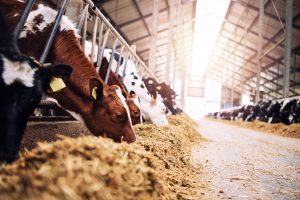
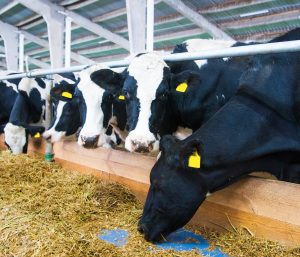
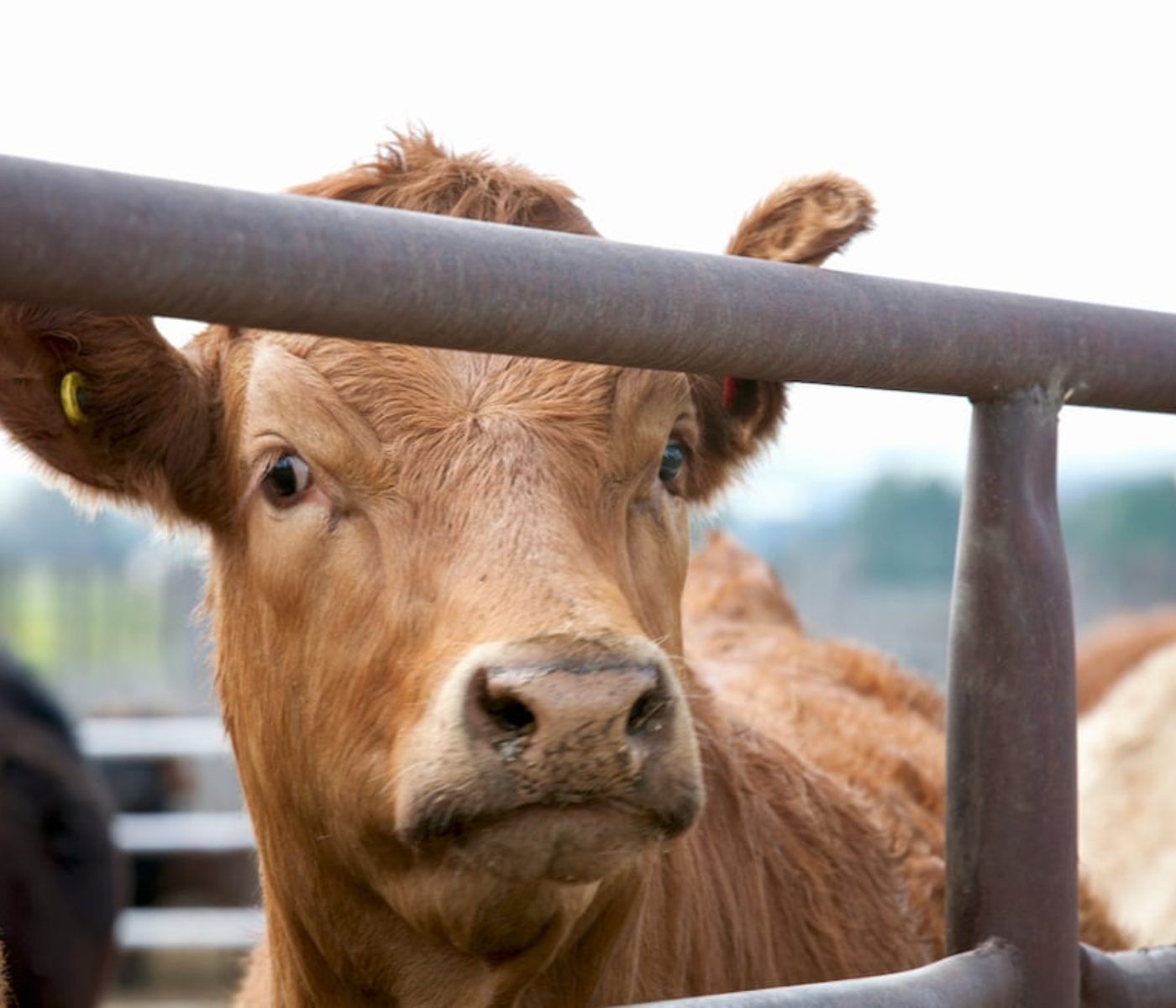
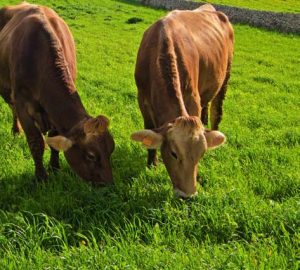
A study conducted at the Beef Cattle Metabolism Facility of Agriculture and Agri-Food Canada, Lethbridge Research and Development Centre (Lethbridge, AB), aimed to investigate the effects of incorporating Mazzaella japonica, a red seaweed, in beef cattle diets. Six mature heifers were subjected to a double 3 × 3 Latin square design over 35-day periods. Dietary treatments included 0% (control), 1%, and 2% M. japonica inclusion on a dry matter basis.
Results


An increase in dry matter intake (DMI) was observed with M. japonica inclusion, with heifers consuming 1% exhibiting significantly higher intake compared to controls. However, apparent 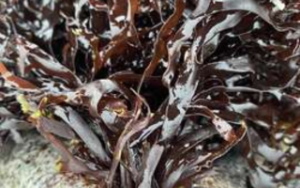 total-tract digestibility of dry matter decreased linearly with M. japonica inclusion, attributed to its relatively high inorganic fraction. While nitrogen intake and fecal nitrogen excretion increased with M. japonica supplementation, nitrogen utilization and retention did not improve. Rumen fermentation parameters remained unaffected, but a decrease in methane production was observed, although CH4 yield per unit of DMI did not differ significantly among treatments.
Discussion
Supplementing forage-based diets with M. japonica failed to mitigate enteric CH4 yield in beef cattle, despite a slight decrease in daily CH4 production at higher inclusion rates. This highlights the importance of further research into alternative seaweeds for methane mitigation and emphasizes the complex interactions between dietary components and methane production in ruminants.
Conclusions
While M. japonica can contribute to meeting cattle’s protein requirements, its high inorganic fraction, particularly elevated sulfur content, may limit inclusion rates. Thus, at levels up to 2% of the diet, M. japonica cannot be recommended as a CH4 inhibitor for beef cattle fed high-forage diets.

Subscribe now to the technical magazine of animal nutrition
AUTHORS

From 2025 Data to 2026 Decisions: Managing Mycotoxin Risk in a Changing Climate

Alterion® NE Celebrates 10 Years of Poultry Gut Health Innovation
The Science Behind Kolin Plus: Beyond Choline Replacement

Summer Infertility in Sows: Managing Heat Stress and Reproductive Performance
AO-Biotics® Amaferm®: Supporting Livestock Digestion and Performance

Interview with Güner Gövenç
Güner Gövenç,
Net Energy and Precision Feeding Shape the Future of Poultry Nutrition
Edgar Oviedo
Mycotoxins in Swine: Health Risks and Nutritional Solutions
Giuseppe Carcò
Mycotoxins and Piglet Ear Necrosis: Cause, Cofactor or Coincidence?
Alberto Morillo
How Mycotoxins Affect Intestinal Health in Pigs and Poultry
Marcos Rostagno
From Antibiotics to Functional Feeds in Aquaculture
Babatunde Saliu
Peas as an Alternative to Soybean Meal in Beef Cattle Finishing Diets
Daniel Villalba Mata,
Improving Egg Yolk Pigmentation Through Better Nutrient Transport

Aquaculture and Aquaponics Nutrition: How Fish Shape the Growth of Greens
Trenton Corby
Consistency in Soybean Meal Drives Performance and Sustainability