Calcium, phosphorus, and phytase optimization in broiler diets
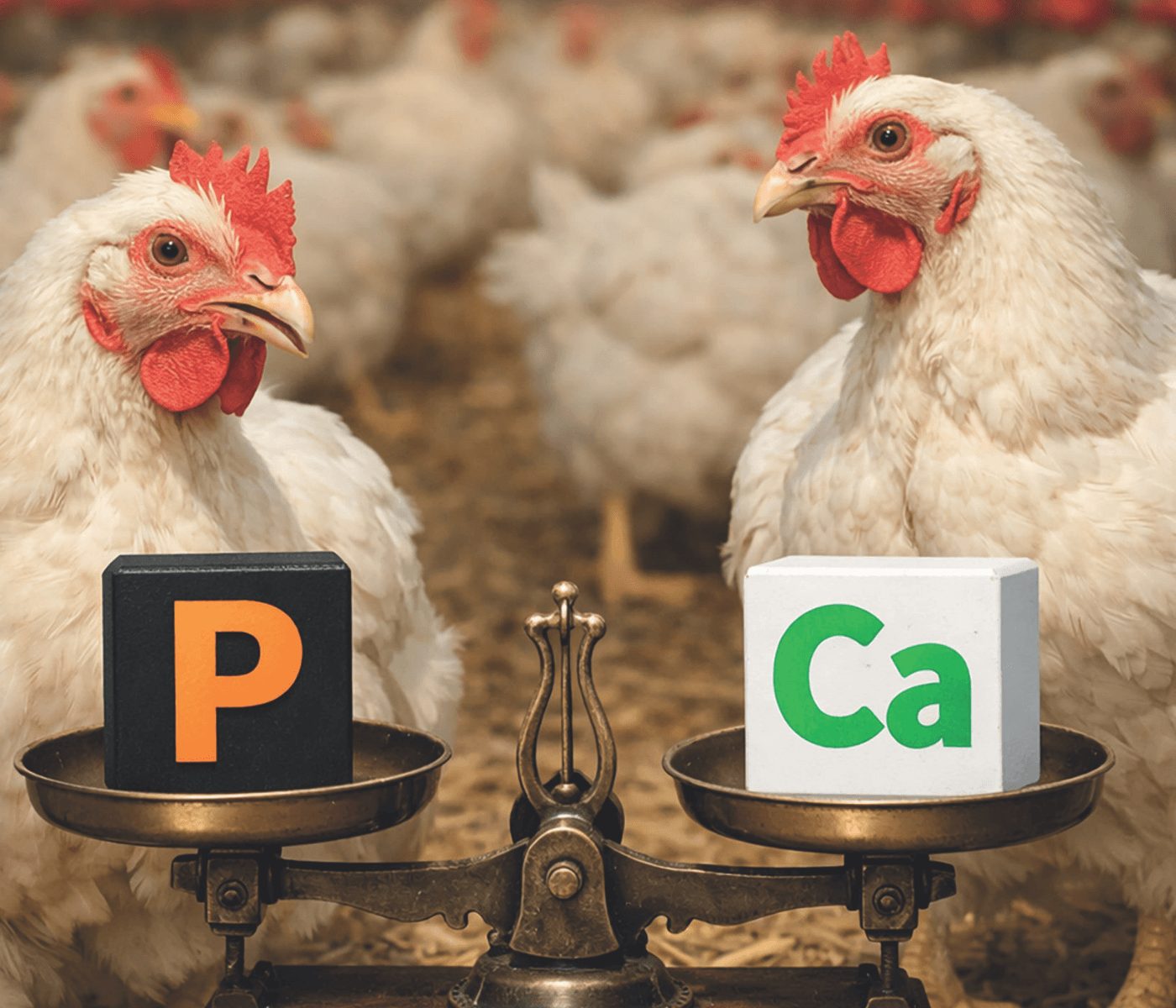
Calcium (Ca) and phosphorus (P) are essential minerals in broiler nutrition, playing critical roles in bone development, metabolic activity, growth performance, and overall bird welfare. However, balancing these minerals efficiently remains one of the major nutritional challenges in poultry production.
While calcium is generally considered inexpensive and readily available, phosphorus is significantly more costly and limited in feed formulation. In addition, excessive phosphorus excretion contributes to environmental contamination and increases production costs. :contentReference[oaicite:1]{index=1}
Accurate estimation of calcium and phosphorus requirements is essential to maximize broiler productivity while improving sustainability.
The role of phytate and phytase
In poultry diets, a large proportion of phosphorus contained in plant ingredients is bound as phytic acid, a molecule that poultry cannot efficiently hydrolyze. As a result, much of the phosphorus remains biologically unavailable.
The inclusion of exogenous phytase promotes phytate hydrolysis, releasing previously unavailable phosphorus and other associated nutrients. This improves nutrient utilization and reduces the need for inorganic phosphorus supplementation.
Phytase improves phosphorus availability and can help reduce the inclusion of costly inorganic phosphorus sources in poultry diets.
However, phytase efficacy depends on several factors, including dietary phytate concentration and supplemental calcium levels. Excess calcium may form complexes with phytate and inhibit phytase activity, reducing phosphorus release efficiency.
Therefore, optimizing the interaction between calcium, phosphorus, and phytase is critical for improving both productive efficiency and environmental sustainability in broiler production.
The objective of the study was to evaluate calcium and phosphorus levels combined with phytase inclusion rates and their effects on productive performance, nutrient excretion, and bone mineralization.
Experimental design
The study was conducted at the Nial experimental farm (bonÀrea Agrupa, Guissona) using 2,857 Ross 308 broilers from day one to 36 days of age. Birds were housed in 24 pens under controlled environmental conditions.
Researchers used a 2 × 2 factorial design comparing:
- High vs. low calcium and phosphorus levels (based on Aviagen 2014 vs. 2022 recommendations)
- High vs. low phytase inclusion (2,000 vs. 1,500 FYT/kg)
Birds were fed four feeding phases: pre-starter, starter, grower, and finisher diets.
The study compared modern lower Ca/P recommendations with previous higher recommendations while evaluating different phytase concentrations.
Improved productive performance with lower Ca and P
After 36 days, broilers receiving diets with lower calcium and phosphorus levels showed significantly higher final body weight and average daily gain, together with improved feed conversion ratio compared with birds receiving higher mineral levels.
Regarding slaughter performance, birds receiving lower Ca and P diets tended to present:
- Higher carcass weight
- Lower carcass condemnation percentage
At the same time, diets containing the higher phytase concentration tended to improve carcass yield.
A moderate reduction of dietary calcium (17%) and phosphorus (7.5%) improved broiler growth performance and carcass results.
Bone mineralization remained unaffected
One of the most important findings was that reducing dietary calcium and phosphorus did not negatively affect bone health. Tibia ash content, used as an indicator of bone mineralization, was not influenced by either mineral level or phytase dose. :contentReference[oaicite:9]{index=9}
These results suggest that properly balanced diets may allow lower mineral inclusion without compromising skeletal integrity.
Reducing calcium and phosphorus levels did not compromise bone mineralization when diets were properly balanced.
Reduced mineral excretion and environmental impact
As expected, fecal calcium and phosphorus excretion were significantly higher in birds fed the high-mineral diets. :contentReference[oaicite:10]{index=10}
Additionally, phosphorus excretion was higher in birds receiving the lower phytase concentration, suggesting reduced phytate phosphorus utilization and lower phosphorus release.
Lower dietary calcium and phosphorus levels reduced mineral excretion, helping minimize environmental contamination from poultry production.
Practical implications for poultry nutrition
The findings reinforce the importance of revisiting traditional mineral recommendations in modern broiler nutrition. Advances in genetics, ingredient quality, enzyme technology, and precision nutrition may allow producers to formulate diets with lower calcium and phosphorus inclusion while maintaining or even improving productive performance.
At the same time, optimized phytase inclusion can contribute to:
- Improved phosphorus utilization
- Lower feed costs
- Reduced mineral excretion
- Better sustainability
- Enhanced carcass performance
Optimizing calcium, phosphorus, and phytase balance can improve broiler performance, reduce mineral waste, and support more sustainable poultry production systems.
Conclusion
The study demonstrated that moderate reductions in dietary calcium and phosphorus improved productive and slaughter performance without negatively affecting bone mineralization. Furthermore, higher phytase inclusion tended to improve carcass parameters while helping reduce phosphorus excretion.
🔒 Contenido exclusivo para usuarios registrados.
Regístrate gratis para acceder a este post y a muchos más contenidos especializados. Solo te llevará un minuto y tendrás acceso inmediato.
Iniciar sesiónRegístrate en nutriNews
REGISTRARME