Home » Combining 3-Phytase and 6-Phytase Improves Mineral Digestibility in Pigs
 01 Sep 2026
Combining 3-Phytase and 6-Phytase Improves Mineral Digestibility in Pigs
Combining 3-Phytase and 6-Phytase Improves Phosphorus and Calcium Digestibility in Growing Pigs
A new study in Animal Bioscience reports that simultaneously supplementing swine diets with two different phytase enzymes—3-phytase and 6-phytase—can enhance the digestibility of phosphorus (P) and calcium (Ca) in growing pigs more effectively than using either enzyme alone.
The findings suggest that multi-enzyme strategies may help nutritionists reduce inorganic P and Ca supplementation while maintaining or improving mineral utilization and supporting bone development.
KEY FINDING
The simultaneous use of 3-phytase and 6-phytase improved phosphorus and calcium digestibility more than either enzyme alone, suggesting that phytases with different modes of action may provide complementary effects on phytate degradation.
Why phytase matters in pig diets
Most phosphorus in plant feed ingredients (such as corn, soybean meal and other cereals and oilseeds) is bound in phytate (phytic acid), a form that pigs cannot efficiently digest because they lack sufficient endogenous phytase activity.
- A large proportion of dietary P is excreted in manure, contributing to environmental phosphorus loading.
- Phytate also binds minerals (including Ca, Zn, Fe) and amino acids, reducing their availability.
- To meet requirements, diets are typically supplemented with inorganic P sources (e.g. monocalcium phosphate, dicalcium phosphate) and additional Ca, increasing feed cost and mineral excretion.
Microbial phytases are widely used to hydrolyze phytate, releasing P and other nutrients. Standard phytase products are generally classified by their site of initial attack on the phytate molecule:
3-PHYTASE
Initiates dephosphorylation at the 3-position of the phytate ring.
6-PHYTASE
Initiates dephosphorylation at the 6-position of the phytate ring.
Because these enzymes generate different intermediate products and may differ in pH stability and activity profiles, there is a theoretical basis for combining them to achieve more complete phytate degradation across the gastrointestinal tract.
Study overview: simultaneous 3- and 6-phytase supplementation
In the study by Do and Kim (2026), growing pigs were fed diets supplemented with:
- A basal level of phytase activity (representing typical commercial use), and
- Additional inclusion of 3-phytase, 6-phytase, or a combination of both, in a controlled experimental design.
The researchers measured:
- Apparent total tract digestibility (ATTD) of phosphorus and calcium.
- Indicators of bone mineralization and growth performance (in some trials).
- Potential interactions between P and Ca digestibility when both enzymes were used together.
WHAT DID THE STUDY FIND?
While the full experimental details (dose levels, basal diet composition, duration) are in the original paper, the key outcome reported is that combined supplementation of 3-phytase and 6-phytase improved P and Ca digestibility more than either enzyme alone, indicating a complementary or synergistic effect.
Key findings and implications
Enhanced phosphorus digestibility
Consistent with the known mode of action of phytase, all enzyme treatments increased P digestibility compared with unsupplemented or low-phytase controls. However:
- The combination of 3- and 6-phytase yielded the highest ATTD of phosphorus, suggesting more complete phytate dephosphorylation and greater release of absorbable inorganic P.
- This implies that, for a given total phytase activity, splitting the activity between two enzymes with different cleavage sites may be more effective than using a single type.
Improved calcium utilization
Phytate binds Ca, forming insoluble complexes that reduce Ca availability. By breaking down phytate:
- Phytase not only releases P but also frees Ca and other minerals.
- The study found that Ca digestibility was also improved when both 3- and 6-phytase were used together, beyond the improvement seen with single-enzyme treatments.
Why does this matter?
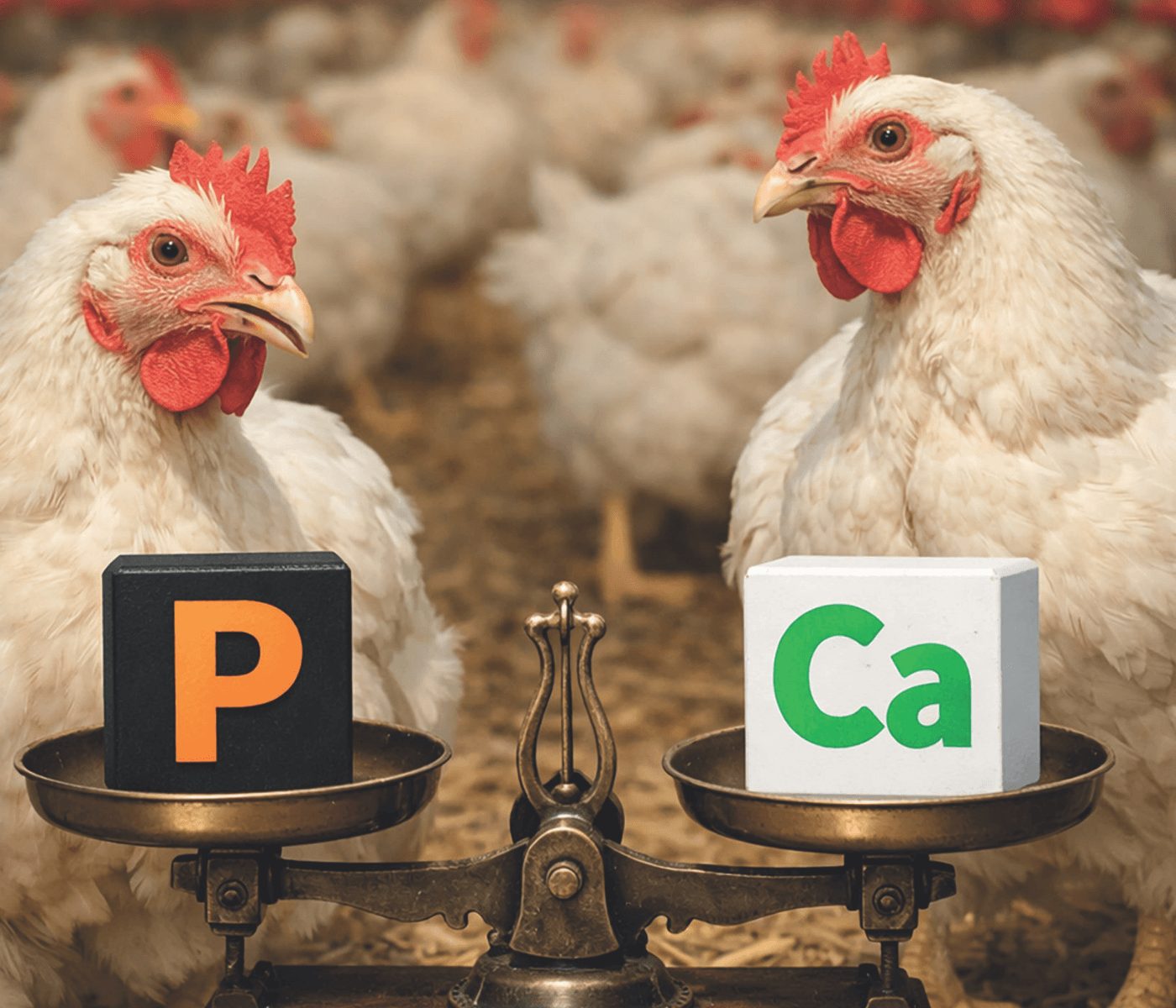
Ca and P must be supplied in an appropriate ratio for optimal bone growth and metabolic function. Better synchronization of Ca and P release from phytate may help avoid imbalances that can impair skeletal development.
Potential to reduce inorganic mineral supplementation
If confirmed in larger and longer trials, these results suggest that:
- Diet formulators may be able to reduce inorganic P and Ca inclusion while maintaining or improving mineral digestibility.
- This could lower feed costs, reduce phosphorus excretion in manure, and support more sustainable pig production.
The environmental benefit is particularly relevant, as reducing fecal P excretion is a key goal in many regions with strict nutrient management regulations.
How this fits with existing knowledge
The concept of using multiple enzymes to target different substrates or different sites on the same substrate is well established in animal nutrition:
- In poultry, high-dose or “super-dosing” phytase strategies have shown benefits beyond P release, including improved energy and amino acid utilization, likely due to more extensive phytate breakdown and reduced anti-nutritional effects.
- In pigs, previous work has demonstrated that phytase can improve apparent digestibility of Ca and P, support bone mineralization and, in some cases, enhance growth performance, especially in low-P diets.
The Do and Kim (2026) study extends this by showing that enzyme source and mode of action matter: combining 3- and 6-phytase appears to harness complementary activities to achieve more complete phytate degradation than either enzyme alone.
Practical considerations for swine nutritionists
While the study is promising, several practical points should be considered before changing formulations:
Dose and activity units
Commercial phytase products differ in activity units, stability and optimal pH. Any multi-enzyme strategy must be based on standardized activity measures and validated under practical feed manufacturing and pelleting conditions.
Diet composition
The magnitude of response to phytase depends on basal phytate content, Ca:P ratio, vitamin D status and the presence of other enzymes (e.g. proteases, xylanases) that may interact with phytate–protein–mineral complexes.
Stage of production
Growing pigs may respond differently than weanling piglets or finishing pigs, depending on gut development, baseline mineral status and diet complexity. Additional trials in different production stages would help define optimal strategies.
Economic evaluation
The cost of adding two phytase products must be weighed against savings from reduced inorganic P and Ca, potential improvements in growth and feed efficiency, and any environmental compliance benefits.
FROM RESEARCH TO FORMULATION
The potential advantage of combining phytases must ultimately be evaluated within the complete formulation. Enzyme activity, phytate concentration, mineral ratios, feed processing conditions, production stage and economics can all influence the practical response.
Limitations and future research
As with any single study, there are limitations:
- The trial was conducted under specific dietary and management conditions; responses may vary with different ingredient profiles, phytase sources and production systems.
- Long-term effects on bone strength, lameness, reproductive performance and carcass quality were not fully addressed in the initial report and would require extended studies.
- The interaction with other feed additives (e.g. organic acids, probiotics, vitamin D3) and with different Ca:P ratios deserves further investigation to optimize practical recommendations.
Future work could explore:
- Different ratios of 3- to 6-phytase activity to identify the most cost-effective combination.
- Multi-enzyme packages that include phytase plus carbohydrases and proteases to further improve overall nutrient utilization.
- Field trials under commercial conditions to validate performance and economic outcomes.
Bottom line
The study by Do and Kim (2026) provides evidence that simultaneous supplementation of 3-phytase and 6-phytase can enhance phosphorus and calcium digestibility in growing pigs more effectively than using either enzyme alone. This supports the concept that enzyme selection and combination strategy matter, not just total phytase activity.
For swine nutritionists, the findings suggest a potential path to:
- Improve mineral utilization from plant-based diets,
- Reduce reliance on inorganic P and Ca supplements, and
- Lower phosphorus excretion, contributing to more sustainable pig production.
Combining phytases with different modes of action could offer nutritionists another tool to improve mineral efficiency—but further research and practical trials will be essential to define optimal dosing, enzyme combinations and economic benefits under commercial conditions.
Source
Do H, Kim BG. Effects of simultaneous supplementation of 3-phytase and 6-phytase on phosphorus and calcium digestibility in growing pigs. Animal Bioscience. 2026;39(5):250775.
DOI: https://doi.org/10.5713/ab.250775