Home » EU Ban on Brazilian Beef and Poultry: What It Means for Global Trade
 26 Aug 2026
EU Ban on Brazilian Beef and Poultry: What It Means for Global Trade
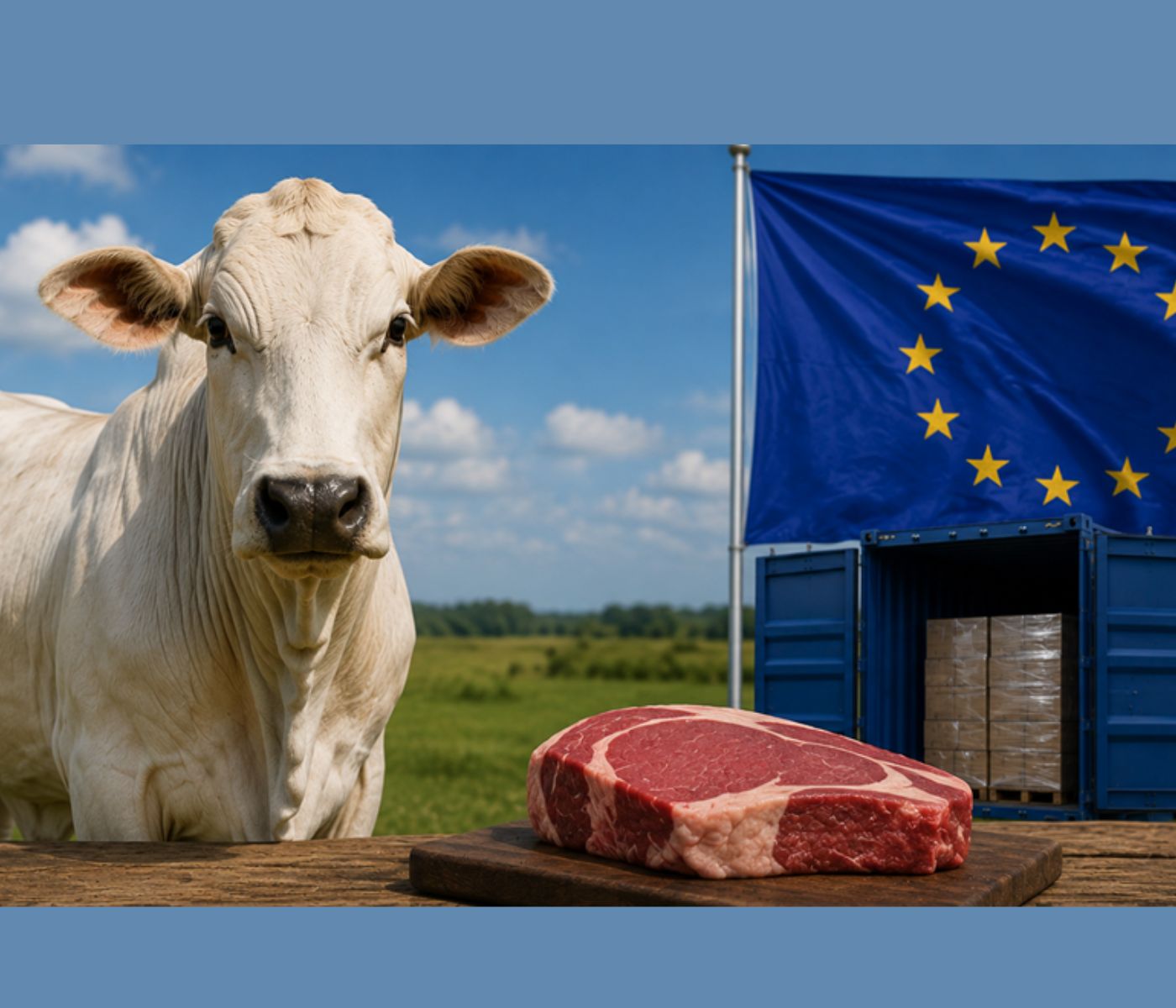
From 3 September 2026, the European Union will no longer authorize imports of several categories of animal products from Brazil, including beef, poultry, aquaculture products, honey and certain offal. The move is not a response to a specific contamination event, but a regulatory decision: Brussels has concluded that Brazil has not provided sufficient guarantees that its livestock production complies with EU rules on the use of antimicrobials, particularly restrictions on growth promoters and on antibiotics reserved for human medicine.
The ban is set to take effect as scheduled, despite diplomatic efforts from Brazil to delay or soften the measure. It marks one of the most significant trade frictions between the EU and Brazil in recent years and has immediate implications for EU meat markets, Brazilian exporters and competing suppliers such as Uruguay and other South American producers.
KEY POINT
The EU measure is based on regulatory compliance with antimicrobial-use requirements rather than a specific food-safety contamination event. From September 2026, third-country suppliers must demonstrate controls equivalent to EU restrictions on antimicrobial growth promotion and antibiotics reserved for human medicine.
Why the EU is imposing the ban
The ban stems from new EU requirements on antimicrobial use in animal production. Under EU law, it is prohibited to use antibiotics to promote growth or increase yield in livestock, and certain antimicrobials considered critical for human health must be reserved and not used routinely in animals. These rules have applied to EU producers since 2022 and, from 3 September 2026, extend to all third-country exports of animals and animal products intended for human consumption.
To continue exporting to the EU, third countries must be listed as having equivalent controls and guarantees on antimicrobial use. On 12 May 2026, an EU committee decided to remove Brazil from that list for specific categories, after assessing that Brazil had not demonstrated adequate compliance with EU standards on antimicrobial growth promoters and traceability of restricted drugs throughout the production chain.
EU officials emphasize that the issue is regulatory rather than sanitary: there is no finding that all Brazilian shipments are contaminated, but rather that Brazil could not provide the level of assurance required by EU law that banned substances are kept out of production in a verifiable way.
What products are affected
The suspension covers several categories of Brazilian products previously authorized for export to the EU:
- Beef and bovine animals (including cattle for slaughter and breeding)
- Poultry meat and poultry products
- Aquaculture products (fish and other farmed aquatic animals)
- Honey
- Certain offal and intestines
- Equines (horses and related animals)
Eggs and some other animal-origin products are also referenced in broader descriptions of the measure, though the core commercial impact is on beef and poultry, which together represent the bulk of Brazil’s animal-product exports to the EU.
Consignments for which the official veterinary health certificate was signed and issued before 3 September 2026 will generally still be accepted at EU border control posts, even if they arrive after that date. This transitional arrangement is intended to avoid abrupt disruption for shipments already in the pipeline.
WHAT CHANGES ON 3 SEPTEMBER?
The measure affects much more than beef. Poultry, aquaculture products, honey, certain offal and other animal-origin categories are also included, increasing the potential impact across several European supply chains.
Scale of trade at stake
Brazil is a major global exporter of beef and poultry, but the EU is a relatively small destination in volume terms compared with markets in Asia and the Middle East. Even so, the affected trade is economically significant:
- Brazilian officials and industry sources estimate that exports of meat, chicken, eggs and other animal products to the EU are worth around US$1.8 billion per year (approximately €1.55 billion).
- In the beef sector alone, the EU has been an important high-value market for certain cuts and quality segments, even if total volumes are modest compared with Brazil’s shipments to China and other Asian buyers.
For poultry, the EU has been a notable outlet for Brazilian chicken meat, and imports have risen sharply in recent years. The sudden cutoff will therefore be felt both by Brazilian exporters and by EU importers who have come to rely on Brazilian supply for specific product lines and price points.
Reactions from Brazil and EU stakeholders
Brazilian authorities and industry groups have strongly contested the ban. President Luiz Inácio Lula da Silva has personally appealed to Brussels to keep Brazilian chicken on the EU’s authorized list, at least provisionally, pending further audits or negotiations. Brazilian officials argue that their antimicrobial controls are robust and that the EU’s demands are excessive or misaligned with international standards.
Within the EU, farmer organizations and some member states support the measure as necessary to protect the integrity of EU rules on antimicrobial resistance (AMR) and ensure a level playing field for European producers, who have been subject to strict antimicrobial restrictions since 2022. The Irish Farmers’ Association (IFA), for example, has welcomed the decision, citing earlier investigations that highlighted weak controls on antibiotic sales and use in parts of Brazil’s livestock sector.
At the same time, some traders and processors warn of short-term supply tightness and price volatility, particularly in the poultry sector, where EU production has not fully kept pace with demand and where Brazilian imports have filled part of the gap.
Market implications: who gains and who loses?
EU market effects
In the EU, the ban is expected to:
- Tighten poultry supply and support higher broiler meat prices, at least in the short to medium term, as one major source of imports is removed.
- Reduce beef availability in certain niches, although the overall impact on EU beef supply is more limited because Brazil’s share of total EU beef imports is smaller than for poultry.
- Shift sourcing to alternative suppliers, including South American countries such as Uruguay, Argentina and potentially others that can meet EU antimicrobial and sanitary requirements.
Uruguay, in particular, is already benefiting. Its beef exports to Europe rose by around 50% in 2025 to about 52,000 tonnes, a 10-year high, as buyers front-loaded purchases ahead of the Brazilian suspension. Industry analysts expect Uruguay and other compliant exporters to capture a larger share of EU demand once the ban takes full effect.
TRADE WATCH
A suspension of Brazilian supply does not necessarily mean lower overall EU imports. Instead, it could trigger a reorganization of sourcing, with Uruguay, Argentina and other eligible suppliers competing to fill gaps left by Brazilian beef and poultry.
Implications for Brazil
For Brazil, the ban:
- Closes a high-value market for certain beef and poultry products, even if the volume share is modest relative to global exports.
- Increases pressure to align antimicrobial policies with EU expectations if Brazilian exporters wish to regain access, potentially requiring changes in regulation, monitoring and traceability systems.
- Redirects trade flows toward other markets, which may accept different standards but often at lower price levels than the EU, affecting margins for some producers.
There are also broader diplomatic ramifications. The ban has been framed by some commentators as a stress test for the EU–MERCOSUR trade relationship, with critics arguing that it undermines trust and complicates ongoing negotiations on a wider trade agreement between the blocs.
Is the ban permanent?
The current measure is a suspension based on Brazil’s absence from the EU’s list of approved third countries for specific categories. It is not necessarily permanent.
- Brazil can seek to be re-listed if it provides additional guarantees, adjusts its regulatory framework or demonstrates compliance in a way that satisfies EU auditors.
- The EU has indicated that an audit or review process may offer a path back to authorization, though timing and conditions remain uncertain.
Until such changes are made and formally recognized in EU law, the ban will remain in force for the affected product categories.
WHY THIS MATTERS BEYOND BRAZIL
The decision illustrates how antimicrobial stewardship is increasingly becoming a condition of international market access. Exporters may need to demonstrate not only food safety, but also that production practices meet the regulatory expectations of destination markets.
Outlook
The EU’s decision to block Brazilian beef, poultry and related animal products from 3 September 2026 underscores the growing importance of antimicrobial stewardship and regulatory equivalence in global food trade. For the EU, it reinforces the message that internal rules on antibiotic use will be mirrored in import requirements, even at the cost of short-term market disruption. For Brazil, it highlights the need to align production standards and documentation with the expectations of high-value markets if it wishes to maintain or expand access.
In the near term, EU importers will adjust supply chains, competing exporters will seek to fill the gap, and prices in some segments—especially poultry—are likely to firm. Over the longer term, the episode may accelerate convergence on antimicrobial policies between major trading partners, or entrench a more fragmented landscape where different regions apply different standards and accept different suppliers.