Take-home message:
Effective creep feeding improves weight gain, reduces weaning stress, supports earlier weaning, and helps producers maximize profitability and herd performance.



Read more content on nutriNews International September 2025
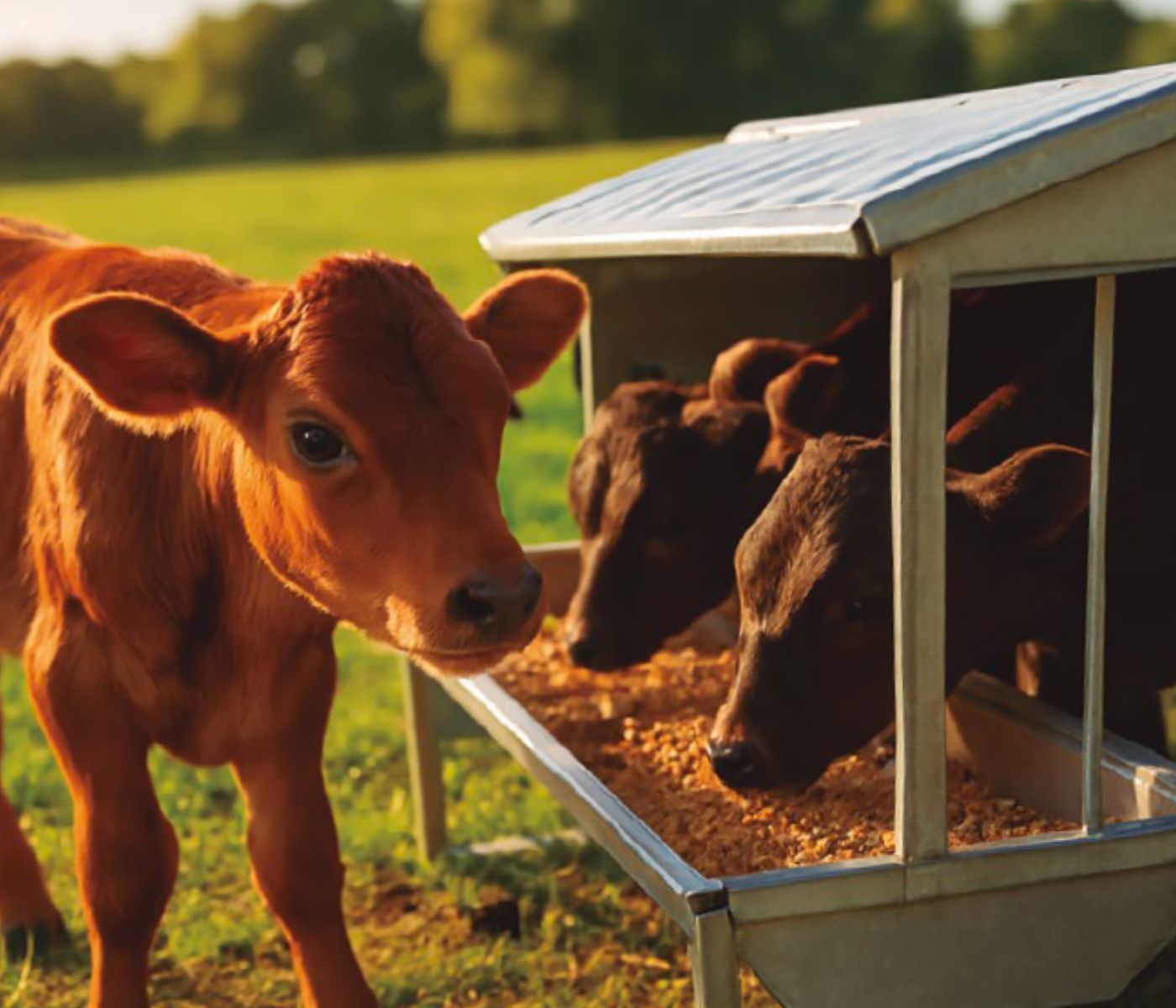
Creep feeding is a strategic livestock management tool that involves providing supplemental feed to calves while they are still receiving milk from their dams. This practice supports growth, health, and overall development, contributing directly to the profitability of beef production systems.
Although commonly used in calves, creep feeding can also be successfully applied to lambs and goat kids, helping young animals achieve stronger early performance.
Take-home message:
Effective creep feeding improves weight gain, reduces weaning stress, supports earlier weaning, and helps producers maximize profitability and herd performance.
Rapidly growing calves have high nutritional demands that maternal milk alone may not fully satisfy. Providing supplemental feed ensures these requirements are met, supporting stronger growth and better development.
This results in heavier calves at weaning, improved market weights, and potentially higher sale prices.
Main benefit:
Supplemental feeding helps meet the nutritional needs of young calves during critical growth stages, resulting in increased weight gain and improved physical development.
Creep-fed calves can often be weaned earlier without sacrificing health or growth performance. Early weaning may improve reproductive performance in cows and help optimize pasture and forage management.
Earlier weaning supports both calf development and better cow reproductive efficiency.
Calves that are already familiar with consuming solid feed experience a smoother transition away from maternal milk. This reduces stress during weaning and lowers the risk of reduced feed intake or health problems.
Creep feeding promotes more uniform growth across the calf crop. Less variation in weight makes management easier, especially for grouping animals for marketing or implementing health protocols.
The ideal time to begin creep feeding depends on factors such as forage availability, herd management, and the nutritional needs of the calves.
Most producers start creep feeding when calves are between 2 and 4 months of age, once the rumen has developed enough to assist in feed breakdown.
For best results, creep feeding should continue until weaning while adjusting the program according to calf performance and nutritional needs.
Before starting a creep feeding program, producers should evaluate the cost-benefit relationship carefully. The economic return depends mainly on:
In strong cattle markets, creep feeding can provide an excellent return on investment by increasing sale weights and improving overall herd efficiency.
Producers can maximize creep feeding results by including research-proven prebiotics such as AO-Biotics® Amaferm®.
This feed additive improves digestibility by stimulating beneficial bacteria and fungi in the rumen, enhancing rumen development and feed utilization.
Why it matters:
Young calves have developing rumens, making digestibility support especially valuable during early growth stages.
Creep feeding is a valuable management strategy that helps producers improve calf growth, reduce weaning stress, increase herd uniformity, and optimize beef production profitability.
By combining proper timing, nutritional management, and digestive support tools, producers can achieve stronger performance and better long-term herd results.
Final conclusion:
Creep feeding is far more than supplemental feeding—it is a strategic investment in calf development, herd efficiency, and the long-term profitability of beef production systems.
Visit Biozymeinc.com
MORE CONTENTS Biozyme International