 15 Jun 2022
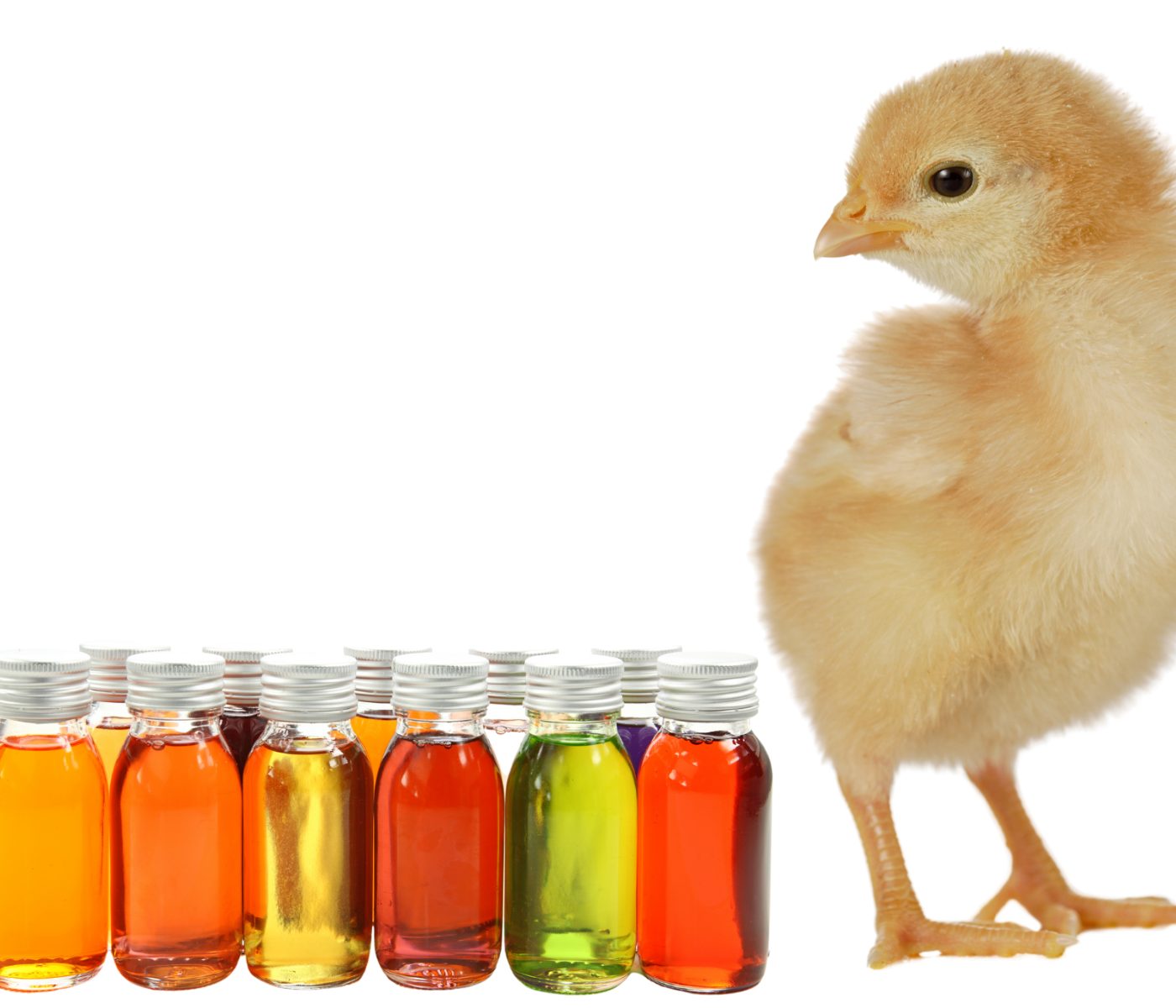
Essential oil nanoemulsions are more effective at improving broiler growth performance and health status, compared to the use of essential oils alone.
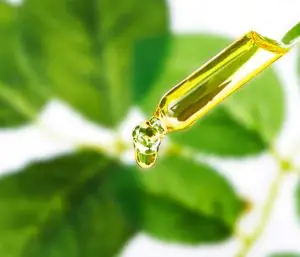
Essential oils (EO) can be used as an alternative to antibiotics within poultry production, due to their antimicrobial properties which benefit animal health and performance.
| However, essential oils are mainly composed of lipophilic and aromatic bioactive compounds which limits their use to a certain extent due to their low solubility and stability. |
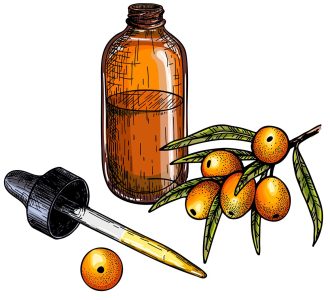
Nanoemulsions are a potential approach, for the effective administration of essential oils in poultry farming.
Essential oil nanoemulsions are carrier systems that can be used to overcome the volatile nature of essential oils (EOs) which limits their application. The encapsulation of EOs through nanoemulsions is an innovative technology that can help:
Due to their larger surface area, nanoemulsions stabilize and enhance the antimicrobial effects of oils in aqueous solutions.
Objective of the study
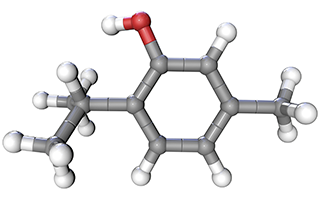
To make an in vivo assessment of the growth promoting effects of thymol and thymol essential oil nanoemulsion, while also determining their protective capacity against infections caused by Salmonella Typhimurium.
Materials and methods
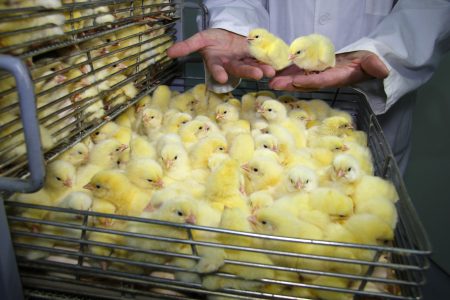
2400 one day-old chicks were randomly divided into eight groups
All experimental birds from the positive control groups, thymol and thymol nanoemulsion were challenged with an inoculum dose (1 mL of 3×10⁶ CFU/bird) of S. Typhimurium. The negative control group was the only group that was not exposed to the S. Typhimurium strain.
Discussion
Growth performance
The potential mechanism through which essential oils impact growth performance can be attributed to:
It is also known that phytogenic compounds have the capacity to regulate gene expression profiles of the ileal mucosa and stimulate digestive secretions to improve nutrient digestibility.
| Dietary thyme oil has been shown to increase digestive enzymes and improve nutrient utilization in broilers. |
The enhancing role of thymol nanoemulsion in broiler performance could be explained by an improved bioavailability and bioactivity of thymol
⇒ Thymol nanoemulsions allow a deeper tissue penetration and facilitate cellular uptake within the gastrointestinal tract. This in turn, leads to a more efficient gene regulation of digestive enzymes.
Intestinal integrity
mRNA expression of digestive enzyme genes was upregulated in response to dietary inclusion of higher thymol or thymol nanoemulsion levels, compared to the negative group before infection and the positive group after infection. The most significant effects were reported for the thymol nanoemulsion group.
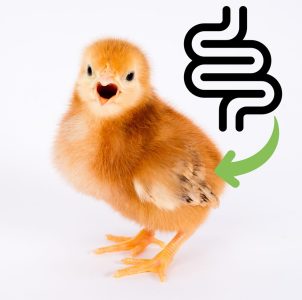
In addition, the group that was supplemented with 1% thymol nanoemulsion exhibited the most significant increase in mRNA expression for narrow-junction protein genes. A higher concentration (1%) of thymol nanoemulsion greatly increased the genes encoding occludin, zone occludens-1, claudins -1, JAM, MUC-2 and FABP2, controlling barrier functions even after experimental infection, and was better than thymol.
| Therefore, dietary supplementation with thymol nanoemulsion was shown to improve intestinal integrity and reinforce mucosal barrier function. |
Protection against Salmonella Typhimurium
Salmonella Typhimurium is a common enteropathogenic bacteria that causes serious economic losses within the poultry sector. In addition to these economic losses, reducing Salmonella populations in chickens could potentially reduce the contamination of meat and its by-products.
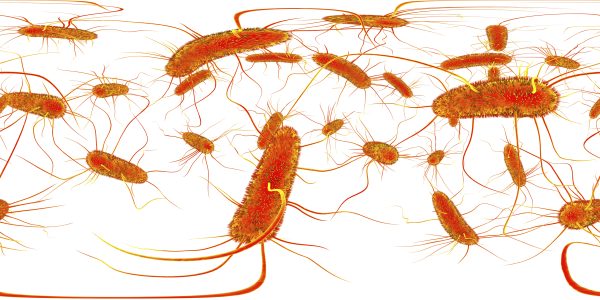
14 days post infection, 1% thymol and 0.5% and 1% thymol nanoemulsion supplementation significantly reduced Salmonella counts compared to the positive control group.
The most striking result was that of 1% thymol nanoemulsion, which reduced Salmonella counts by a significant measure of 2.27 log10 CFU/g.
Conclusion

Administration of 1% thymol essential oil nanoemulsion produced positive transcriptional modifications in broiler digestive enzymes.
The integrity of the intestinal barrier (Tight Junction = TJ) was positively maintained, which was evidenced by the upregulation of the MUC-2 and IgA genes and the downregulation of the IL-2 and IL-6 genes, suggesting a suppression of the inflammatory reaction induced by S. Typhimurium.
 Based on the obtained results, the use of 1% thymol nanoemulsions is recommended as a promising feed additive alternative, containing growth-promoting properties and antimicrobial activity to help control S. Typhimurium infection. Offering an additional benefit that contributes to safeguard consumer health.
| TJ = Tight Junctions form the continuous intercellular barrier between epithelial cells, which is necessary for separating tissue spaces and regulating the selective movement of solutes through the epithelium. |
Subscribe now to the technical magazine of animal nutrition
AUTHORS
From 2025 Data to 2026 Decisions: Managing Mycotoxin Risk in a Changing Climate
Alterion® NE Celebrates 10 Years of Poultry Gut Health Innovation
The Science Behind Kolin Plus: Beyond Choline Replacement
Summer Infertility in Sows: Managing Heat Stress and Reproductive Performance
AO-Biotics® Amaferm®: Supporting Livestock Digestion and Performance

Interview with Güner Gövenç
Güner Gövenç,
Net Energy and Precision Feeding Shape the Future of Poultry Nutrition
Edgar Oviedo
Mycotoxins in Swine: Health Risks and Nutritional Solutions
Giuseppe Carcò
Mycotoxins and Piglet Ear Necrosis: Cause, Cofactor or Coincidence?
Alberto Morillo
How Mycotoxins Affect Intestinal Health in Pigs and Poultry
Marcos Rostagno
From Antibiotics to Functional Feeds in Aquaculture
Babatunde Saliu
Peas as an Alternative to Soybean Meal in Beef Cattle Finishing Diets
Daniel Villalba Mata,
Improving Egg Yolk Pigmentation Through Better Nutrient Transport

Aquaculture and Aquaponics Nutrition: How Fish Shape the Growth of Greens
Trenton Corby
Consistency in Soybean Meal Drives Performance and Sustainability