



Home » How AI Is Reshaping Australia’s Dog Food Industry
04 Sep 2026
How AI Is Reshaping Australia’s Dog Food Industry
Artificial intelligence is moving from buzzword to boardroom in Australia’s pet food sector, with brands, retailers and startups using AI to personalize nutrition, optimize formulations, improve quality control and engage owners in new ways.
In a market where dogs are treated as family members and spending on premium, functional and fresh diets is rising, AI is becoming a key enabler of differentiation, efficiency and trust.
FROM PERSONALIZATION TO PRODUCTION
AI is increasingly influencing the entire dog food value chain—from personalized feeding recommendations and formulation to manufacturing quality, compliance, product discovery and customer engagement.
Why AI matters now in Australian pet food
Several converging trends are driving adoption:
- High pet ownership and spend: Australia has one of the highest pet ownership rates globally, with dogs in a large share of households. Owners are increasingly willing to pay for premium, health-focused products and services.
- Wellness and data culture: Australians are rapidly adopting digital health tools, wearables and AI-driven advice for their own health—and are extending that mindset to pets. Recent surveys show nearly two-thirds of Australians now use AI before consulting a healthcare professional, signaling comfort with algorithmic guidance that is now spilling into pet care.
- Competitive, innovation-led market: The pet food category is crowded, with global incumbents, local premium brands, fresh-food startups and e-commerce giants all vying for share. AI offers a way to stand out through personalization, faster product development and tighter quality systems.
Where AI is being used today
1. Personalized nutrition and feeding recommendations
One of the most visible applications is AI-powered personalization for dog owners:
- Apps and platforms now let owners input details such as breed, age, weight, activity level, health conditions and even genetic data, then receive tailored feeding plans, portion guidance and product recommendations.
- Some solutions scan packaging barcodes or labels with a smartphone camera and use AI to interpret ingredient lists, nutrient profiles and allergens, then match products to a specific dog’s needs.
- Startups are building “digital twin” style health profiles that update over time, using owner inputs, vet records and device data (e.g. activity trackers) to refine dietary advice as the dog ages or its health status changes.
FROM STANDARD FEEDING GUIDES TO PERSONALIZED NUTRITION
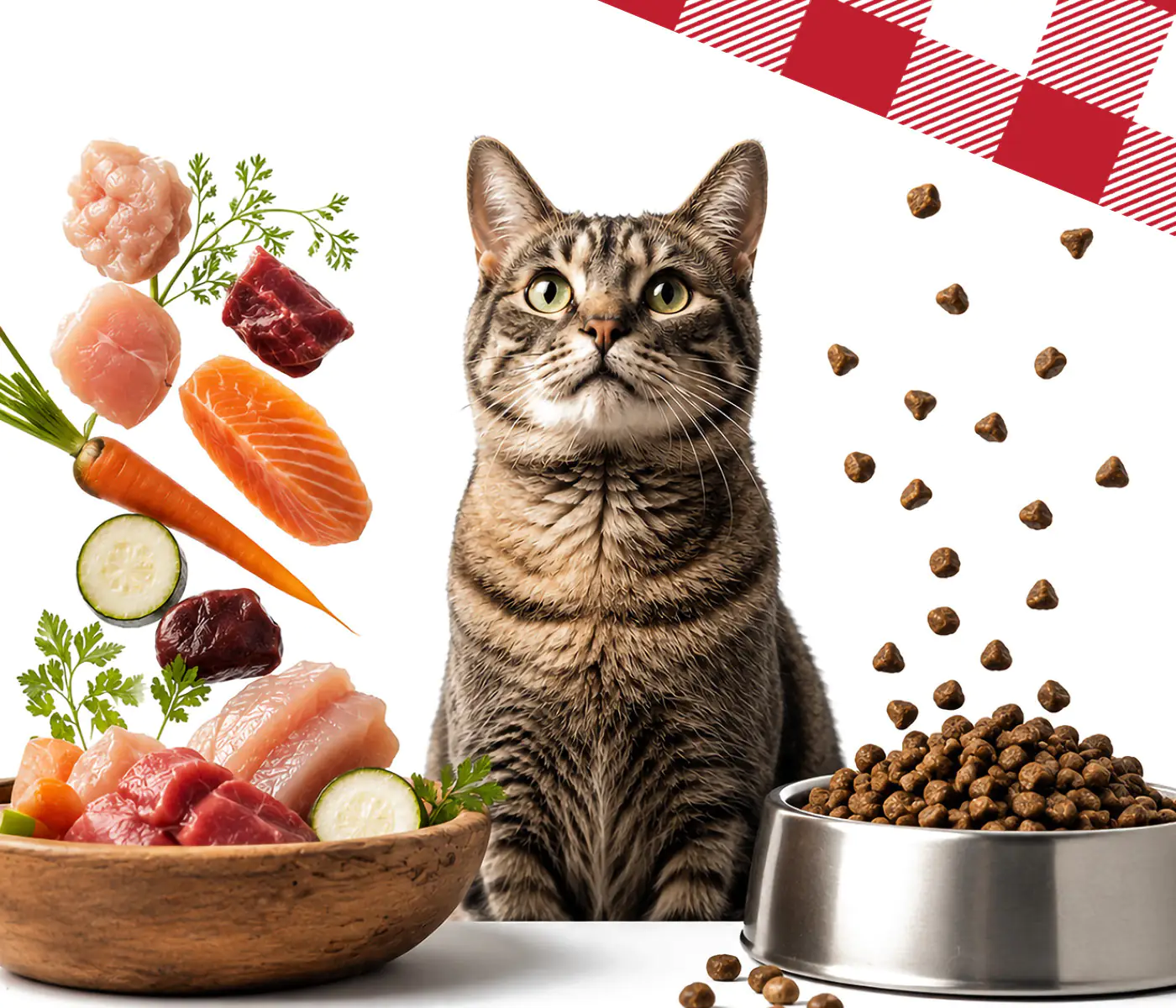
Rather than relying exclusively on broad recommendations based on weight or life stage, AI tools can potentially integrate multiple characteristics of the individual dog and update recommendations as those characteristics change.
In Australia, major online pet retailers are investing heavily in this space. For example, Pet Circle recently appointed a Director of Ventures & AI to lead development of AI-driven tools for product discovery, nutrition guidance and customer experience, signaling that personalization is now a core strategic priority.
2. Smarter formulation and R&D
Behind the scenes, AI is changing how new dog foods are created:
- Food-tech platforms now allow formulators to generate and evaluate hundreds of candidate recipes against constraints such as cost targets, nutrient specifications, ingredient restrictions and regulatory requirements. This compresses development cycles from months to weeks.
- AI models can predict how ingredient swaps or process changes will affect palatability, texture, nutrient retention and shelf life, helping teams optimize for both performance and cost before running physical trials.
- In Australia-linked research programs, AI-enabled tools are being developed to optimize hybrid and alternative-protein pet foods, including formulations that upcycle agri-food side streams into functional protein ingredients while meeting strict export-grade quality standards.
For Australian brands, this means faster time-to-market for specialized diets (e.g. weight management, senior, breed-specific, gut-health focused) and more agile responses to ingredient price volatility or supply disruptions.
AI-assisted formulation allows nutrition teams to evaluate far more potential combinations of ingredients, nutrient constraints and costs before moving into physical testing.
3. Quality control, safety and compliance
Pet food manufacturers are under intense scrutiny over safety, labeling accuracy and consistency. AI is being deployed to:
- Connect formulation, production and quality data so that real-time measurements (e.g. moisture, fat, protein) feed back directly into formulation adjustments and process controls, reducing batch-to-batch variability and raw material “giveaway”.
- Use computer vision and sensor data on production lines to detect anomalies (e.g. off-color, foreign material, inconsistent kibble size) and trigger automatic corrections or alerts.
- Automate document and certificate checks, linking supplier specs, lab results and regulatory requirements into a single intelligence layer that flags risks before they become recalls or compliance breaches.
For Australian exporters—particularly those targeting high-value markets in Asia and the Middle East—these capabilities support consistent, audit-ready quality systems and can be a selling point in negotiations with distributors and retailers.
4. Consumer engagement and decision support
AI is also reshaping how owners discover and choose dog food:
- Chatbots and virtual assistants on brand and retailer websites can answer questions about ingredients, suitability for specific breeds or conditions, and transition plans, reducing friction in the purchase journey.
- Recommendation engines analyze browsing and purchase history to suggest relevant products, bundles and subscriptions, improving conversion and retention for e-commerce players.
- Social media and content tools use AI to generate tailored educational content (e.g. feeding guides, condition-specific advice) that builds trust and positions brands as expert partners rather than just product suppliers.
Surveys suggest this is already influencing behavior: in some markets, a majority of AI-using pet owners report changing their pet’s care or feeding based on AI recommendations, and many trust AI at least as much as generic online advice.
Australian context: opportunities and constraints
Australia’s pet food industry has several characteristics that make it both fertile ground and a challenging testbed for AI:
- High digital adoption: Australian consumers and businesses are quick to adopt new digital tools, creating a receptive environment for AI-enabled apps, platforms and services.
- Strong regulatory framework: Tight regulations around animal feed, labeling and claims mean AI systems must be designed with robust data governance, traceability and compliance in mind—raising the bar but also creating a quality signal for export.
- Distance and supply chain complexity: Import dependence for some ingredients and long domestic supply chains increase the value of AI-driven forecasting, inventory optimization and risk management, especially for fresh and refrigerated dog food segments.
- Talent and ecosystem: Australia’s growing AI and food-tech ecosystem—spanning universities, CSIRO, startups and corporates—provides a base for co-development of specialized solutions, including joint projects on alternative proteins and hybrid pet foods with regional partners.
At the same time, the market is relatively small by global standards, so many Australian brands will need to design AI systems with export scalability in mind to justify investment.
Real-world examples and signals
While detailed case studies from Australian dog food brands are still emerging, several signals point to rapid movement:
- Pet Circle’s AI leadership: The appointment of a dedicated Director of Ventures & AI at Australia’s largest online pet retailer underscores the strategic importance of AI for product discovery, personalization and operational efficiency.
- Research collaborations: Australia-Thailand bilateral programs are explicitly funding AI-enabled development of hybrid pet foods that upcycle agri-food by-products, indicating public-sector support for AI as a tool for sustainable, high-value pet nutrition.
- Global platforms entering the space: International AI formulation and quality platforms are marketing directly to pet food manufacturers, including those in Australia, offering tools to accelerate R&D, reduce costs and strengthen compliance.
- Consumer-facing AI apps: A growing suite of apps allows owners to scan pet food labels, get AI-generated nutrition insights and receive personalized recommendations—tools that are equally relevant to Australian dog owners and are starting to shape expectations around transparency and personalization.
THE SHIFT IS HAPPENING ON BOTH SIDES OF THE INDUSTRY
AI is not limited to consumer-facing apps. Its applications increasingly extend from product discovery and personalized feeding to formulation, manufacturing, quality assurance and supply-chain decision-making.
Challenges and guardrails
As with any rapid technology shift, there are caveats:
Data quality and governance
AI is only as good as the data it’s trained on. In pet nutrition, incomplete or biased data on ingredients, health outcomes or breed differences can lead to misleading recommendations.
Robust data governance—clear rules on what data AI can access and how it’s used—is essential.
Over-reliance and misinformation
There is a risk that owners or even professionals may treat AI outputs as definitive medical or nutritional advice without appropriate vet or qualified nutritionist oversight. Clear disclaimers and human-in-the-loop designs are important.
The integration gap
Many manufacturers have rich data in separate systems—formulation, production and quality—that don’t talk to each other.
Simply bolting an AI model onto existing silos limits value; the biggest gains come from integrating data flows so that insights directly inform decisions.
Trust and transparency
Owners may be wary of “black box” algorithms making recommendations about their dog’s diet.
Explainable AI—where the reasoning behind a recommendation is clear and traceable to evidence—will be critical for adoption.
AI DOES NOT REMOVE THE NEED FOR EXPERTISE
The value of these technologies depends on reliable data, appropriate oversight and transparent decision-making. AI-generated nutritional recommendations should support—not replace—the expertise of veterinarians, qualified nutritionists, formulators and other professionals.
What this means for brands, manufacturers and retailers
For Australian players in the dog food value chain, AI is no longer optional if they want to compete at the premium end:
- Brands can use AI to develop targeted, condition-specific lines, back claims with data and engage owners with personalized content and feeding plans.
- Manufacturers can leverage AI to reduce formulation costs, improve consistency, minimize waste and strengthen quality and compliance systems—key advantages in a cost-sensitive, regulated environment.
- Retailers and e-commerce platforms can deploy AI to enhance search, recommendations, subscriptions and customer support, turning pet food from a commodity into a guided, ongoing service.
Early movers that combine strong data foundations with clear use cases—personalization, formulation efficiency, quality intelligence—are likely to build durable advantages in trust, cost structure and customer loyalty.
Outlook
Over the next 3–5 years, expect AI to become embedded across the Australian dog food industry:
- More personalized feeding platforms tied to subscriptions and vet-approved wellness plans.
- Wider use of AI-assisted formulation and quality systems, especially among mid-size and larger manufacturers.
- Growing convergence of pet food, health and tech, with AI bridging nutrition, diagnostics and monitoring to support proactive, data-driven care.
The end goal is not fully automated nutrition, but augmented decision-making: better tools for formulators, manufacturers, vets and owners to make more informed, evidence-based choices about what dogs eat—and to do so more efficiently and consistently than ever before.
Sources
- IMARC Group insight on AI technology shaping the dog food industry in Australia (topic framing).
- Australian consumer health and AI adoption trends (PwC Voice of the Consumer 2026).
- Pet Circle appointment of a Director of Ventures & AI, signaling strategic focus on AI in Australian pet retail.
- Australia-Thailand AI-enabled food innovation program including hybrid pet food and formulation optimization.
- Global examples of AI in pet food formulation, quality and compliance, including industry platforms and commentary.
- Consumer-facing AI tools for pet food scanning, personalized meal planning and genetic-informed wellness.
- Broader market context on AI in animal health and pet tech investment trends.