



Formulating milk substitutes for small ruminants requires an understanding of the nutritional content of the ingredients to fulfill the requirements of the pre-ruminant.
 22 Jan 2024
How to Select a Good Milk Replacer for Your Farm?
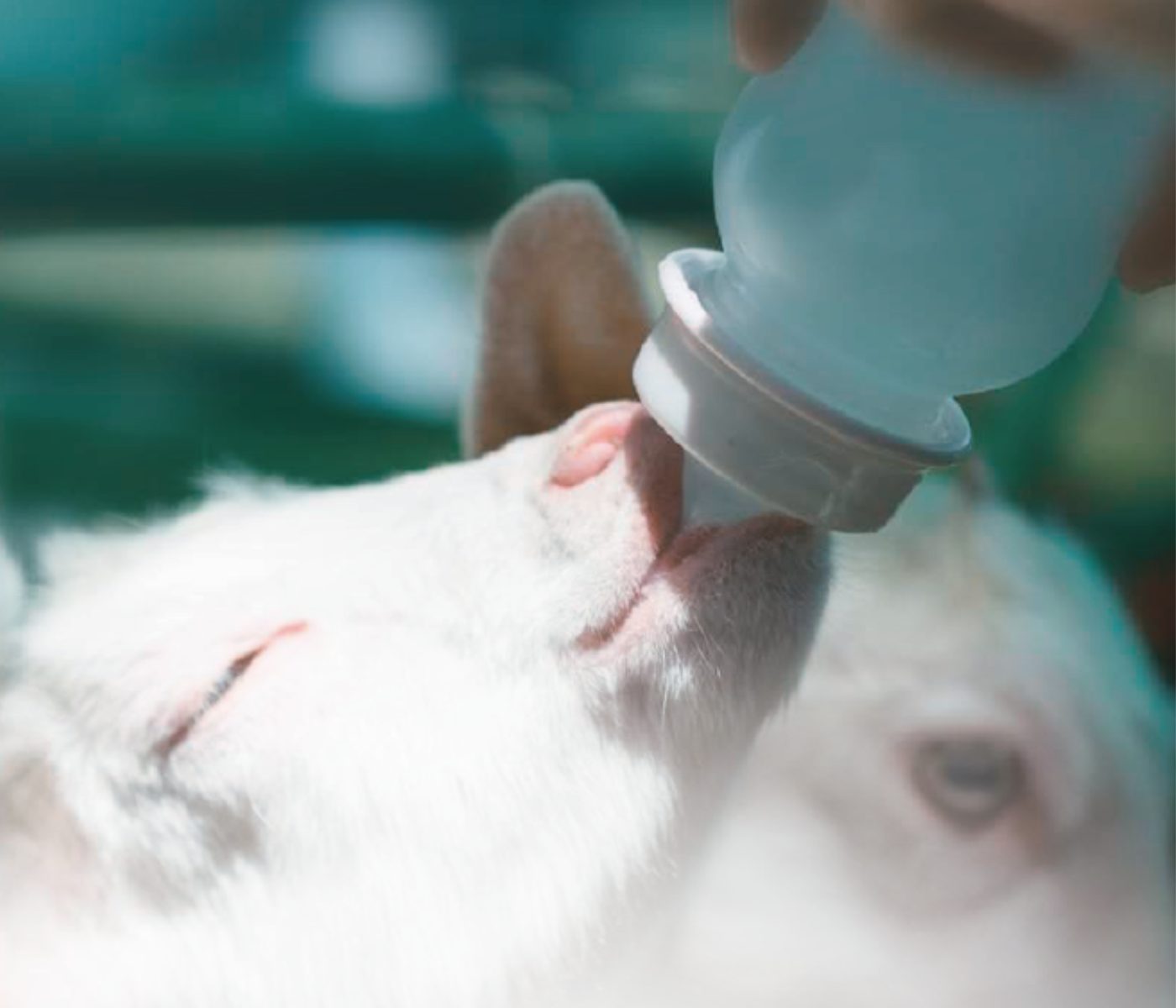
Typically, in highly focused dairy goat farms, the newborn is isolated from the doe immediately after birth and nourished with colostrum in the initial 24-48 hours. Subsequently, the kid is nurtured within an artificial lactation system, underscoring the crucial decision of selecting a high-quality milk substitute.
However, there is limited scientific literature that helps establish a real growth pattern for goats during the early stages.





Animals intended for future breeding, up to 3 months old, exhibit a growth rate within the range of 130-160 g/day during this period and receive supplementation with starter milk feeds.
The selection of the objective is determined by:
Sex
Genetic value
Time of the year
Prices are always better in summer and approaching Christmas (between 5.2-6 €/kg live weight).
Many farms take advantage of kidding in early summer and autumn to mainly send their animals to slaughter since they fetch a better price.
Therefore, they limit kidding in winter and spring to retain most of the rearing on the farm and sell the males for slaughter (between 2.5-4 €/kg live weight).
When choosing a milk replacer on a farm, it’s essential to consider that the product provides the necessary nutrients to achieve the target weight and conformation in the shortest time and at the lowest cost possible.
Various companies in the sector:
i) play with a mix of ingredients to create products with different qualities,
ii) use the information on the label as a tool to attract customers.
Management and facilities (Hernández-Castellano et al., 2015) are crucial for obtaining optimal performance on the farm.
You may also like to read: “
Subscribe now to the technical magazine of animal nutrition
AUTHORS

Consistency in Soybean Meal Drives Performance and Sustainability
Anna Cotcho
Kolin Plus FC: greener choline nutrition for poultry

Middle East conflicts disrupt global feed markets
Edgar Oviedo
Optimizing nutrition for dairy goat and sheep productivity in Cyprus
Carolina Kyriacou
pHix-up improves rumen stability in dairy cows
Subacute ruminal acidosis

Net energy and growth: keys to better prediction in swine production
Gabriela Martínez
How starch structure & protein reduction shape gut health in weaned pigs
Diana Luise
Astaxanthin supplementation in aquaculture
Babatunde Saliu
What is intestinal health?
Marcos Rostagno
Calcium, phosphorus, and phytase optimization in broiler diets
Anna Cotcho