The impacts of the Middle East conflicts on the global feedstuff and feed additive markets
Conflicts in the Middle East have had global repercussions for centuries. However, the attacks on Iran by the USA and Israel since February 28, 2026, have generated one of the most significant disruptions in energy, fertilizer, diesel, and feed commodity markets in modern history.
The ongoing conflict is reshaping global feed, fertilizer, transportation, and agricultural supply chains, with impacts extending far beyond the Middle East.
Local impacts and regional feed dependency
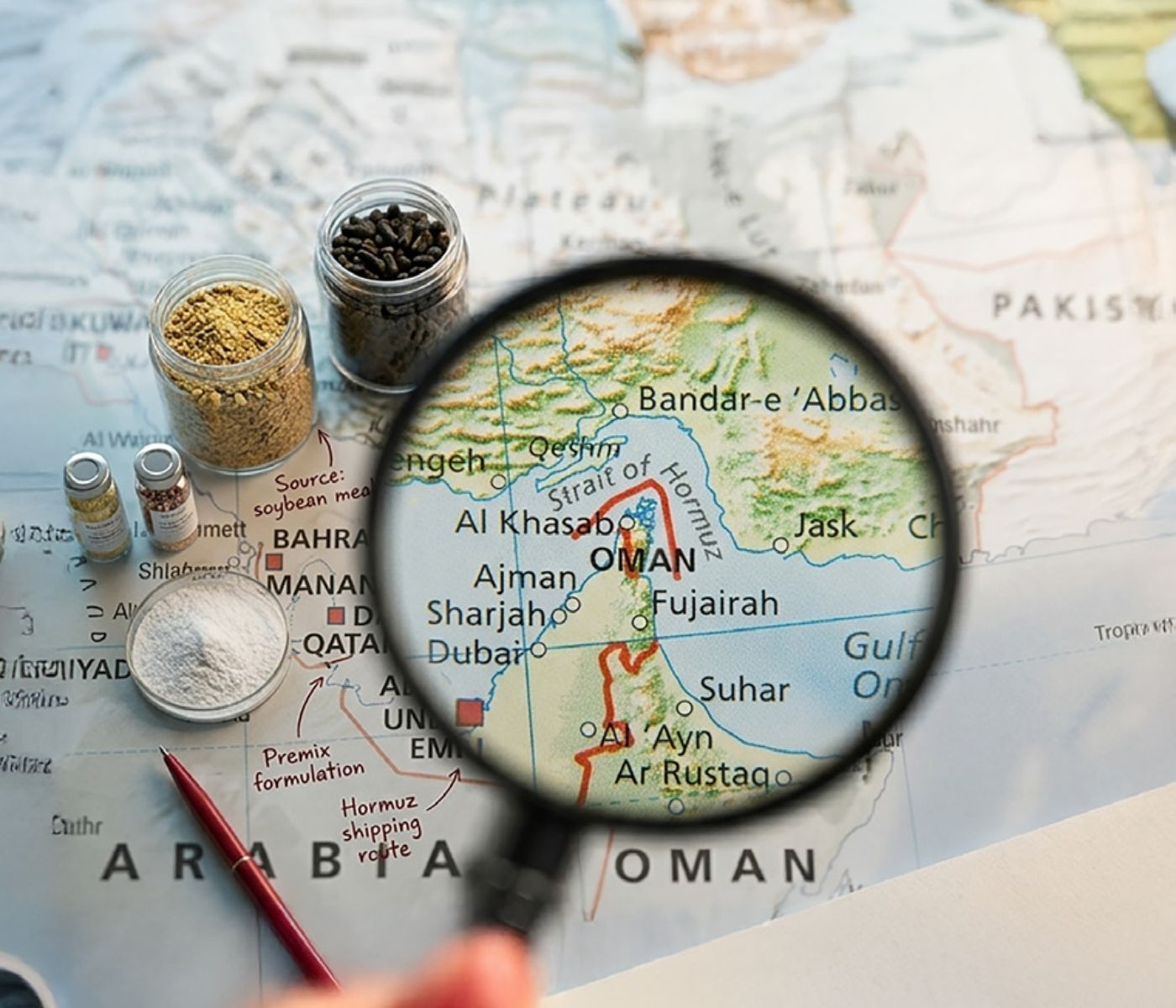
Escalating tensions have disrupted maritime and air transport routes, including the Strait of Hormuz and the Red Sea/Suez Canal. The rerouting of feed ingredients toward local and European feed markets has created immediate operational challenges and significantly increased logistics costs.
Feed consumption for livestock and pets in the Middle East and Africa reached 63 million tons in 2024, valued at approximately $53.2 billion, representing nearly 5.9% of global feed production.
The Middle East is the world’s largest importer of wheat and rice and the second-largest importer of corn, making regional disruptions highly influential on global feed prices.
The region remains heavily dependent on imports of feed and feedstuffs from Latin America, Eastern Europe, and South Asia. Consequently, changes in Middle Eastern import demand directly influence prices in exporting countries.
Global feed supply impacts
The war is not only affecting regional feed supply but also disrupting the future production of feedstuffs and feed additives worldwide. Rising costs of oil, gas, and shipping have driven sharp increases in fertilizer prices and feed additive costs globally.
Countries in South Asia, East Asia, and Africa are especially vulnerable because they rely heavily on Gulf energy and fertilizer inputs.
Higher energy and shipping costs are creating cascading effects across the global agricultural and livestock production system.
Additional long-term impacts include:
- Higher interest rates
- Inflationary pressures
- Currency fluctuations
- Increased biofuel demand
- Reduced availability of corn and palm oil
- Greater production of DDGS and soybean meal
Fertilizer markets under pressure
Gulf countries are among the largest exporters of urea, ammonia, DAP, and MAP fertilizers. The region also accounts for nearly 50% of global sulfur trade, a critical component in fertilizer production.
Between 2023 and 2025, Gulf countries accounted for:
- 29% of global ammonia exports
- 36% of global urea exports
- 26% of global DAP exports
- 13% of global MAP exports
European urea prices have increased by approximately 55% compared to pre-war levels.
The conflict is also affecting global liquified natural gas (LNG) supply, which is essential for fertilizer production in countries such as India, Pakistan, Bangladesh, and Türkiye.
Some producers may shift fertilizer production toward coal-based technologies instead of LNG, although this could significantly increase the carbon footprint of fertilizer manufacturing.
Feed commodity market volatility
Commodity prices typically rise during geopolitical conflicts due to uncertainty and market speculation. Corn and soybean prices increased when the conflict began, although excellent harvests in Brazil and Argentina partially mitigated the impact.
By March 13, prices declined again due to delays in China-US negotiations and uncertainty regarding export demand.
Even when commodity prices stabilize, higher transportation and fuel costs continue increasing the total cost of feed production worldwide.
In response to higher fertilizer prices, US farmers are adjusting production strategies. Approximately 3 million acres previously planted with corn may shift toward soybeans because soybeans require less nitrogen fertilizer.
Feed additives: one of the most vulnerable sectors
Feed additives represent approximately 1% of feed volume but nearly 10% of total feed cost. This segment includes:
- Crystalline amino acids
- Vitamins
- Trace minerals
- Enzymes
- Organic acids
- Probiotics
- Phytogenics
- Carotenoids
Many feed additives rely on petrochemical raw materials, making them highly vulnerable to oil and energy market disruptions.
DL-methionine and methionine hydroxy analogs are produced exclusively from petrochemical raw materials such as propene and methanol. Choline chloride and betaine production also depend heavily on petrochemical derivatives.
Transportation disruptions are further intensifying supply chain issues. Most amino acids and vitamins A, D3, E, and B-complex are produced in China and transported through the Red Sea toward Europe and the Middle East.
Container shipping costs from China to Europe have increased by 250% to 500% since the conflict began.
As a consequence:
- Amino acid prices increased by 25–60%
- Vitamin prices increased by 15–40%
- Feed phosphate prices increased by 20–35%
- Enzymes, phytogenics, carotenoids, and organic acids increased by 10–20%
China dependency and strategic risks
The global feed industry remains highly dependent on China:
- 78% of vitamins imported into the USA originate from China.
- 62% of the four major crystalline amino acids used globally are produced in China.
The current crisis highlights the strategic vulnerability associated with global dependence on concentrated feed additive manufacturing regions.
Strategies to mitigate market disruptions
Several mitigation strategies can help reduce risk exposure:
- Adopt local alternative feed ingredients
- Reduce unnecessary additive inclusion
- Seek alternative suppliers in India, Korea, and South Asia
- Negotiate long-term supply agreements
- Maintain inventories covering 90–120 days
- Diversify transportation routes and providers
The ongoing Middle East conflict is reshaping global feed and feed additive markets, emphasizing the importance of supply chain diversification, strategic sourcing, and long-term planning for the animal nutrition industry.
🔒 Contenido exclusivo para usuarios registrados.
Regístrate gratis para acceder a este post y a muchos más contenidos especializados. Solo te llevará un minuto y tendrás acceso inmediato.
Iniciar sesiónRegístrate en nutriNews
REGISTRARME