05 Sep 2022
Plant based ingredients within canine diets have become a growing trend amongst many dog owners. However, to what extent is this dietary trend based on scientific literature?
This review is a summarized abstract from a study carried out by a group of researcher at University of Florida. It focuses on different studies where compounds and nutrients, such as vitamins C and E and essential fatty acids, were used in the form of natural plant-based foods or as isolated extracts or supplements.

A second aspect within this review looks into studies which have used nutritional combinations that include ingredients of plant origin as well as animal origin. However, it is worth highlighting that it was not possible to determine individual effects associated to the sole inclusion of the plant-based dietary treatment.


On the other hand, foods that are not recognized as safe by the AAFCO (The Association of American Feed Control Officials) are not part of this review, nor are food fibers of plant origin.

Phytonutrients


Phytonutrients are chemicals that are naturally present in plants. Currently, various research suggests that the intake of these compounds can provide health benefits for canines. However, exact quantities and intake levels have not been adequately calculated and assessed for these animals. Nonetheless, this will probably depend on the choice of diet, sweets and dietary supplements made by the owner.
Some examples of common phytonutrients are: dietary fibers, carotenoids, polyphenols, and phytosterols.
Plant ingredients that meet canine nutritional requirements
It is possible to meet certain nutritional requirements with the inclusion of ingredients from animal or vegetable origin, or with a combination of the two. However,the digestibility of these different nutrient sources may have significant variations which must be take into account.
Some examples of essential nutrients are:
It is important to bear in mind that the effects of any diet are broader than what can be predicted for essential nutrients alone.

Conclusions
There is increasing evidence that the inclusion of plant based ingredients and phytonutrients into canine diets can provide potential health benefits, such as:
To read the complete study that has been mentioned within this brief review, download the attached PDF.
Justin Shmalberg, College of Veterinary Medicine, University of Florida, Gainesville, FL, USA.
2 Department of Comparative, Diagnostic and Population Medicine, College of Veterinary Medicine, University of Florida, Gainesville, FL, USA
Subscribe now to the technical magazine of animal nutrition
AUTHORS
From 2025 Data to 2026 Decisions: Managing Mycotoxin Risk in a Changing Climate
Alterion® NE Celebrates 10 Years of Poultry Gut Health Innovation
The Science Behind Kolin Plus: Beyond Choline Replacement

Summer Infertility in Sows: Managing Heat Stress and Reproductive Performance
AO-Biotics® Amaferm®: Supporting Livestock Digestion and Performance

Interview with Güner Gövenç
Güner Gövenç,
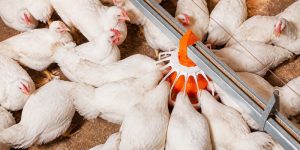
Net Energy and Precision Feeding Shape the Future of Poultry Nutrition
Edgar Oviedo
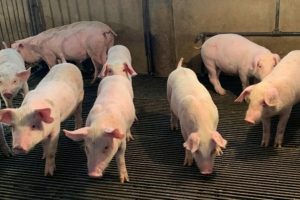
Mycotoxins in Swine: Health Risks and Nutritional Solutions
Giuseppe Carcò
Mycotoxins and Piglet Ear Necrosis: Cause, Cofactor or Coincidence?
Alberto Morillo
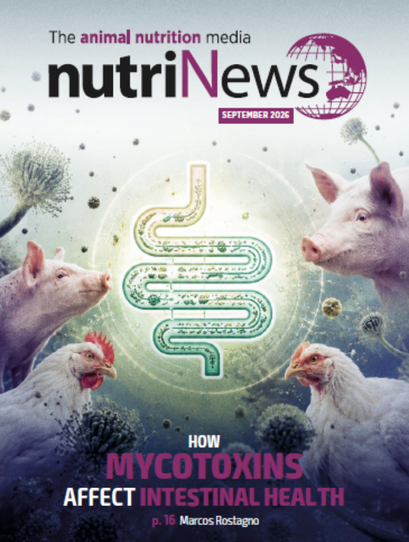
How Mycotoxins Affect Intestinal Health in Pigs and Poultry
Marcos Rostagno
From Antibiotics to Functional Feeds in Aquaculture
Babatunde Saliu
Peas as an Alternative to Soybean Meal in Beef Cattle Finishing Diets
Daniel Villalba Mata,
Improving Egg Yolk Pigmentation Through Better Nutrient Transport

Aquaculture and Aquaponics Nutrition: How Fish Shape the Growth of Greens
Trenton Corby
Consistency in Soybean Meal Drives Performance and Sustainability