 13 Jan 2023
Establishing accurate protein requirements for maintenance and lactation is necessary in order to develop more cost-effective diets, while reducing nitrogen (N) losses and its environmental impact.

Considerable progress has been made in protein nutrition for dairy cows. However, current global demands for dairy products and a rising social pressure regarding the reduction of its environmental footprint continue to drive the development of new models that enhance protein use. With the aim of predicting protein requirements more accurately, optimizing milk production and economic performance, increasing the retention of dietary N in milk, and minimizing N excretion into the environment.
Maintenance and lactation are the main components of protein requirements for lactating dairy cows.
| It has been assumed that the net protein requirement for maintenance (NP M) is the sum of fecal and urinary excretion of endogenous protein (EPFU) and protein losses from dandruff. |
Invasive, costly and laborious methods (N-free intragastric nutrition, digest exchange, and stable isotope labeling) have been adopted to obtain EPFU, but have provided limited amounts of animal and diet data.
| An alternative approach is to estimate EPFU by extrapolating the interception-regression between N intake and total urinary and fecal excretion of N (NFU; Swanson, 1977; Owens, 1987). |
Since N-equilibrium assays have been widely published, meta-analyses of N equilibrium assays can provide a robust estimate of EPFU and NP M.
Various models of dairy cow nutrition (NRC, 2001; Van Duinkerken et al., 2011; Van Amburgh et al., 2015) have adopted EPFUs from Swanson’s (1977) meta-analysis of N metabolism assays in non-lactating cattle.



As lactating dairy cows typically have a higher intake and excretion of N per body mass than non-lactating cattle, Swanson’s (1977) model may underestimate NP M. The NASEM committee (2021) adopted the assumptions of Lapierre et al. (2020) to predict EPFU from a literature review with a scarce number of dairy cows.
 The new NASEM model (2021) appears to have improved milk protein yield predictions compared to NRC (2001). However,an assessment of its modelled protein requirements against observed values was not reported.
| The net protein requirement for lactation (NP L) is more easily determined and represents true protein secretion in milk. However, to obtain the MP requirements for lactation ( MP L ), it is necessary to know the efficiency of MP use for NP L (EMP L). |
Subscribe now to the technical magazine of animal nutrition
AUTHORS
From 2025 Data to 2026 Decisions: Managing Mycotoxin Risk in a Changing Climate
Alterion® NE Celebrates 10 Years of Poultry Gut Health Innovation
The Science Behind Kolin Plus: Beyond Choline Replacement
Summer Infertility in Sows: Managing Heat Stress and Reproductive Performance
AO-Biotics® Amaferm®: Supporting Livestock Digestion and Performance

Interview with Güner Gövenç
Güner Gövenç,
Net Energy and Precision Feeding Shape the Future of Poultry Nutrition
Edgar Oviedo
Mycotoxins in Swine: Health Risks and Nutritional Solutions
Giuseppe Carcò
Mycotoxins and Piglet Ear Necrosis: Cause, Cofactor or Coincidence?
Alberto Morillo
How Mycotoxins Affect Intestinal Health in Pigs and Poultry
Marcos Rostagno
From Antibiotics to Functional Feeds in Aquaculture
Babatunde Saliu
Peas as an Alternative to Soybean Meal in Beef Cattle Finishing Diets
Daniel Villalba Mata,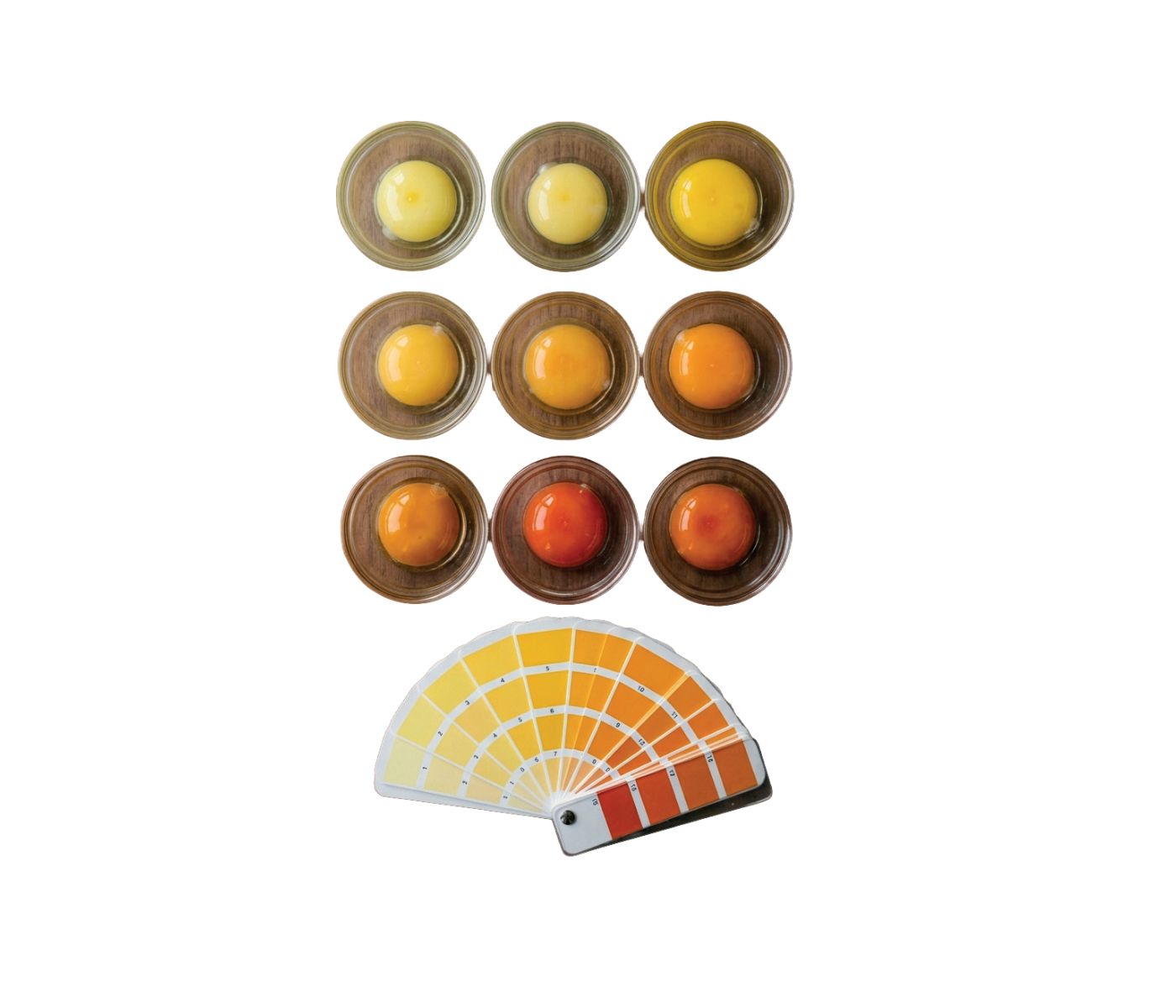
Improving Egg Yolk Pigmentation Through Better Nutrient Transport

Aquaculture and Aquaponics Nutrition: How Fish Shape the Growth of Greens
Trenton Corby
Consistency in Soybean Meal Drives Performance and Sustainability