HOW MYCOTOXINS AFFECT INTESTINAL HEALTH
Marcos Rostagno, DVM, MSc, PhD.
MYCOTOXINS IN POULTRY AND SWINE PRODUCTION
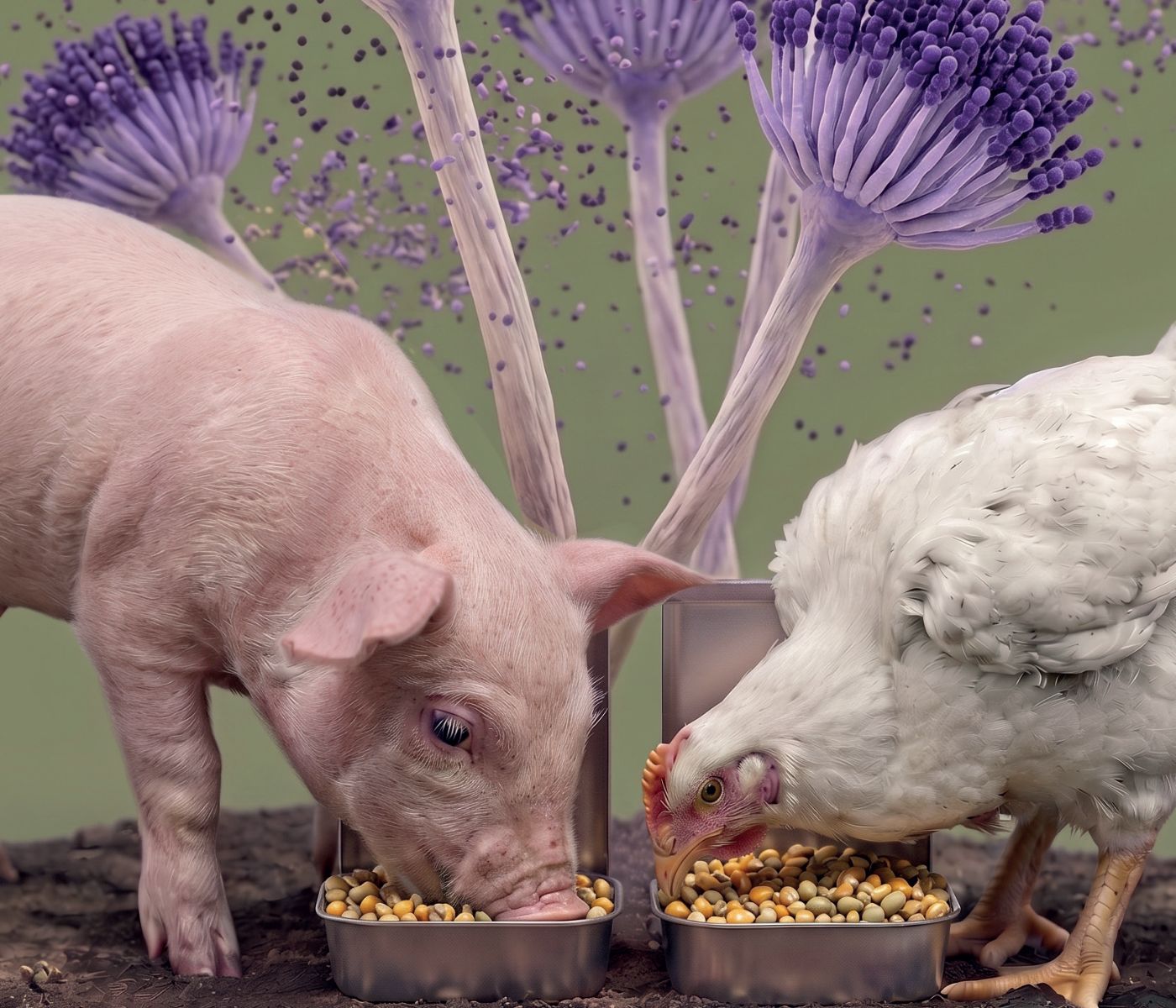
Feed contamination with mycotoxins is a global, persistent threat to the animal production industry, with the vast majority of feed samples testing positive for at least one mycotoxin. Commercial poultry and swine production systems are exceptionally vulnerable to mycotoxins, due to high grain inclusion rates. While acute mycotoxicosis causes overt clinical disease and immediately visible losses, subclinical and chronic cases are the norm, but pose the most challenge and cause more severe economic losses.
Mycotoxins are secondary metabolites produced by certain species of filamentous fungi, under specific environmental conditions, such as high humidity, warm temperature and low ventilation. These secondary metabolites are not essential for growth, but produced as defense mechanisms or competitive advantage arsenals to survive within their ecological niches. Mycotoxins are low-molecular weight, chemically stable substances capable of withstanding thermal, physical and chemical interventions. Once produced in the grains or feed, mycotoxins will persist and maintain their biological activity for very long periods of time.
While a very large variety of mycotoxins has been identified, five main mycotoxins pose significant threat to animal production, including: Aflatoxins, deoxynivalenol, zearalenone, fumonisins, and ochratoxin A.
The purpose of this article is not to discuss individual mycotoxins and their specific effects, but instead, it aims to offer a broad and high-level view of the different ways mycotoxins affect the intestinal tract of monogastric animals.
THE MULTIPLE EFFECTS OF MYCOTOXINS ON THE INTESTINAL TRACT
At the basic level, mycotoxins disrupt cellular functions, causing severe oxidative stress and turning off protein synthesis and energy production pathways. As mycotoxins are small, chemically stable, lipophilic molecules, they can easily pass through cell membrane to target deep intracellular processes. Moreover, mycotoxins can cause cell membrane damage by inserting into bilayers to cause structural instability and leakage. The chemical structure of a specific mycotoxin determines which metabolic pathway it affects inside the targeted host cell. Through these effects, mycotoxins cause the host cells to undergo a cascade of systemic failures, leading to energy starvation, ribotoxic stress with release of inflammatory cytokines, and apoptosis (i.e., programmed cell death).
STRUCTURAL EFFECTS
Enterocytes along the intestinal tract are the very first point of exposure to mycotoxins ingested with the feed consumed by the animals. As enterocytes are rapidly dividing cells with a high rate of protein synthesis (required to maintain their rapid turnover cycle), they are highly sensitive to mycotoxin exposure and easily disrupted, leading to shortening of the height of the intestinal villi (villus atrophy), substantially reducing the surface area available for nutrient absorption.
Additionally, as mycotoxins interfere with cellular protein synthesis, translation of crucial structural proteins like claudins, occluding and zonula occludens are interrupted (all well-known tight junction proteins), damaging the structural seal between epithelial cells, resulting in abnormal, increased intestinal paracellular permeability, a condition known as “leaky gut”.
This condition allows undigested feed antigens, luminal pathogens and large toxins to leak directly into the lamina propria, triggering immune responses, leading to chronic, low-grade inflammation, ultimately contributing to intestinal distress and nutritional inefficiencies.
Healthy gut → Leaky gut
FUNCTIONAL EFFECTS
In addition to shortening intestinal villi and reducing the surface available for nutrient absorption along the intestinal tract, some mycotoxins inhibit crucial nutrient transporter proteins, suppressing the active transport mechanism of essential nutrients, such as glucose for instance.
Additionally, mycotoxins alter intestinal secretion patterns, as they disrupt the fluid, electrolyte and protective mucus balances maintained by the mucosal lining by causing hypersecretion of electrolytes and water, goblet cell and mucus depletion, and hyperactive inflammatory secretions.
Mycotoxins are also capable of causing enteric nervous system disruption through necrotic and inflammatory changes within the enteric nervous system (ENS), which coordinates intestinal motility, blood flow and secretion patterns. The synchronized contractions along the intestinal tract (peristalsis) are critical to moving feed, waste and bacteria through the digestive tract.
When secretion and motility are compromised, a cascade of pathophysiological consequences unfolds, leading to multiple effects, including malnutrition, diarrhea and dehydration, as well as intestinal bacterial overgrowth and pathogen colonization.
MICROBIAL EFFECTS
Mycotoxins can affect the intestinal microbiome through a mix of direct and indirect effects. As previously described, mycotoxins can cause structural and functional disruptions of the intestinal tract, which will consequently affect the microbiome through a variety of different mechanisms, primarily through alterations of environmental conditions and nutrient availability, resulting in populational instability and shifts.
Interestingly enough, very little attention has been given to the direct effect of mycotoxins on the intestinal microbiome. As mycotoxins are mostly secondary metabolites produced by fungi to compete with other microorganisms in nature, it is not surprising that they possess potent antimicrobial properties.
Therefore, upon ingestion of contaminated feed, these toxins will interact directly with the intestinal microbiome and act as antimicrobials, disrupting the complex microbial ecosystem along the intestinal tract, potentially leading to dysbiosis, and flourishing of pathogens.
What makes this interaction between mycotoxins and microbiome fascinating is that it is bidirectional. While mycotoxins affect the microbiome, the microbiome acts as a primary defense line, as some intestinal bacteria are capable of producing specific enzymes to biotransform, degrade or physically bind to mycotoxins, neutralizing them before they can act.
However, if the mycotoxin load is too high and its antimicrobial effects overwhelm these bacterial populations, this natural protection system collapses. This is still a wide-open gap of knowledge that needs some attention, as it offers an opportunity to explore.
IMMUNE EFFECTS
It is well-known that the intestinal tract is the largest external surface and the primary barrier against pathogens and toxins, while simultaneously containing over 70% of the immune cells.
Mycotoxins are capable of disrupting the intestinal immune system through different pathways, including disruption of the physical barrier (as previously described), damaging cellular targets (including, enterocytes, macrophages and dendritic cells, and lymphocytes), suppression of synthesis and secretion of immunoglobulins, altered profile of cytokine production (triggering upregulation of pro-inflammatory cytokines, while downregulating anti-inflammatory cytokines), and causing persistent inflammation.
Depending on the intensity of the exposure to mycotoxins (ingested amounts and duration), these effects can become broader or systemic, potentially leading to increased susceptibility to different pathogens and diseases.
THE CONSEQUENCES
As individual fungi can produce multiple toxins and feed rations combine multiple ingredients, animals usually consume a “cocktail” of low-level mycotoxins. When mycotoxins interact, their combined toxicity and effects are often greater than the sum of their individual effects (ie., synergistic effect), leading to higher impact and consequent losses. This is very important to keep in mind, as in real-world conditions, animal feed is rarely contaminated with just one mycotoxin.
An additional complicating factor frequently missed is the heterogeneous distribution of mycotoxins in batches of grains and complete feed. Because of this uneven distribution, different animals in the same pen, barn or house consuming the same feed batch can experience completely different outcomes. While one animal may ingest a highly concentrated pocket of toxins and show severe clinical symptoms, other animals in the same group may remain entirely healthy.
However, mycotoxins rarely cause acute or sudden clinical disease or mortality outbreaks in commercial animal production systems. Instead, their impact is usually subclinical and chronic, often missed by most, if not proactively monitored. Nevertheless, the described biological disruption of the complex systems component of the intestinal tract caused in different degrees by mycotoxins will lead to the following two main consequences:
1. REDUCTION IN GROWTH PERFORMANCE
Mycotoxins exert a variable, but measurable detrimental impact on the growth performance of both broilers and pigs. Reported reductions vary by species, mycotoxin type and dosage, and whether the contamination involves single or multiple co-occurring toxins.
Swine are biologically highly sensitive to mycotoxins, while poultry generally tolerate higher systemic thresholds, but their rapid metabolic rate means subclinical contamination still causes sharp drops in flock performance and uniformity, particularly because mycotoxins are not homogeneously distributed in the feed consumed.
BROILERS
10–15% reduction in body weight gain
7–10% decrease in feed intake
5–8% decline in feed efficiency
PIGS
8–12% reduction in body weight gain
6–10% decrease in feed intake
3–7% decline in feed efficiency
In broilers, an average of 10-15% reduction in body weight gain, 7-10% decrease in feed intake and 5-8% decline in feed efficiency have been reported. In pigs, an average of 8-12% reduction in body weight gain, 6-10% decrease in feed intake and 3-7% decline in feed efficiency have been observed.
2. INCREASED INCIDENCE OF PATHOGENS
The common occurrence of mycotoxins in animal feed significantly contributes to increasing the incidence of pathogens and consequent risk of diseases in flocks and herds.
By chronically disrupting the intestinal tract defenses and suppressing its immune system, mycotoxins contribute to opportunistic pathogens, like Salmonella, Escherichia coli, Clostridium perfringens and many others to easily colonize, multiply, and translocate.
Moreover, animals affected by mycotoxins, not only are more likely to carry pathogens, but also are more likely to become “super-spreaders” within the herd or flock, amplifying the challenge. Because of the increased incidence of pathogens, an increased need for veterinary interventions arises, contributing to the constant need to use a variety of feed additives, as well as an increased frequency of antibiotics, leading to additional costs and broader implications.
AN EVOLVING THREAT
The complexity of the mycotoxin-host interaction creates a very dynamic, multifaceted challenge to poultry and swine production systems. The challenge of mycotoxins has been present for decades, and is very likely to persist, generating losses and additional costs.
Mitigating the mycotoxin threat requires a proactive, holistic approach, including rigorous crop management in the field, optimized storage conditions, routine feed analysis, and the strategic deployment of interventions and feed additives, such as toxin adsorbents (or binders) and biotransformation agents (or biological modifiers) to safeguard animal health and performance.
There is plenty of room for improvement in how animal production systems deal with the occurrence of mycotoxins, which will only become more pressing as margins become tighter and production scale keeps increasing, and the need for precision is increasingly critical.
Unfortunately, the risk of mycotoxins has not been improving lately, and in fact, it is getting worse as rising global mean temperatures, erratic precipitation, elevated atmospheric CO2, and prolonged droughts are contributing to shifting traditional risk zones or regions, making them broader.
This extreme variance serves as a powerful biological trigger for toxin synthesis (i.e., a biosynthetic catalyst). Moreover, many times, these climate shifts, in particular elevated temperatures and humidity, can disrupt traditional post-harvest grain as well as complete feed storage (i.e., silos and their microclimate), leading to production and accumulation of mycotoxins.
These pattern changes and broader occurrence of mycotoxins have been shown by many different studies and global assessments conducted in recent years. Therefore, it is easy to conclude that the mycotoxin challenge in animal production will only become more relevant, and consequently require more attention.
🔒 Contenido exclusivo para usuarios registrados.
Regístrate gratis para acceder a este post y a muchos más contenidos especializados. Solo te llevará un minuto y tendrás acceso inmediato.
Iniciar sesiónRegístrate en nutriNews
REGISTRARME