MYCOTOXINS IN SWINE PRODUCTION:
HEALTH EFFECTS, TECHNICAL RISK MANAGEMENT
AND NUTRITIONAL SOLUTIONS
Giuseppe Carcò
WHAT ARE MYCOTOXINS?
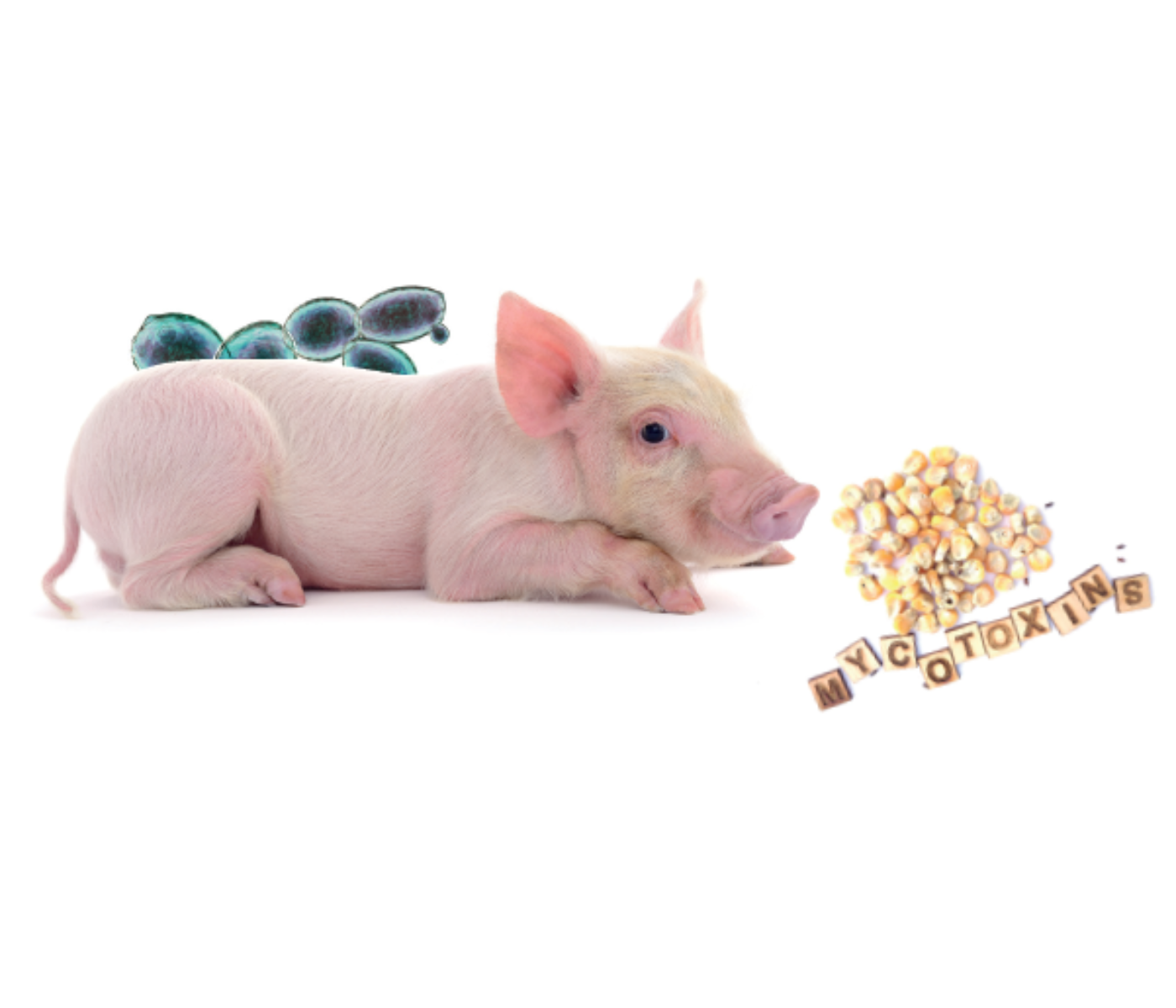
Mycotoxins are toxic secondary metabolites naturally produced by filamentous fungi (commonly referred to as moulds) (Oswald, 2013). These chemical entities can be detected in the majority of raw materials intended for the manufacturing of feedstuffs and foodstuffs.
Fungi synthesize mycotoxins primarily as an evolutionary defence and survival mechanism to withstand adverse environmental conditions. The primary ecological drivers include:
- Competition for resources: fungi utilize mycotoxins as biochemical weapons to eliminate or inhibit other microorganisms (such as bacteria or antagonistic fungi) competing for the same nutritional substrates.
- Predator deterrence: these toxins exert a repellent action, discouraging insects, acari, and small organisms from consuming the mould or its growth substrate.
- Response to environmental stress: mycotoxin biosynthesis frequently escalates when the fungus encounters critical physiological stress, such as acute thermal fluctuations, water scarcity, or the presence of competitive chemical agents.
FACTORS DETERMINING MYCOTOXIN DEVELOPMENT
The proliferation of mycotoxins in feedstuffs is regulated by a complex network of environmental and biological variables. Temperature, water activity (aw), and the physical integrity of the crops constitute the three critical factors governing not only the survival and dissemination of different fungal genera, but crucially, the biochemical triggering of toxigenesis.
TEMPERATURE
Temperature is one of the most critical environmental parameters regulating mycotoxin development, as it directly modulates both fungal vegetative growth and secondary metabolism (toxin synthesis). Crucially, fungal growth kinetics and mycotoxin production rarely exhibit parallel trends. A fungus can achieve optimal vegetative growth at a specific temperature and release toxins only in case of thermal shock; this occurs because the synthesis of these metabolites is frequently up-regulated as a physiological defence response to sudden microclimatic variations.
Thermal fluctuations act as a biological switch, activating mycotoxin metabolic pathways when the ambient temperature shifts above or below the organism’s thermal optimum. This behaviour varies substantially depending on the specific fungal genus. In nature, there are fungi that could be defined as “warm”, such as those belonging to the genus Aspergillus, which thrive in tropical climates or under overheated storage conditions, synthesizing aflatoxins. Conversely, there are “cold” fungi, such as Fusarium or Penicillium, which prefer the temperate or cold climates typical of Northern Europe and respond to low-temperature stress by producing distinct mycotoxins, such as trichothecenes or ochratoxin A.
WATER ACTIVITY IN FEEDSTUFFS
Water activity (aw) represents the fraction of unbound water available for microbial metabolic and reproductive processes. This parameter dictates the ecological dominance of specific fungal genera on cereal grains (Manaa and Kim, 2017). Throughout the life cycle of the crop (from pre-harvest fields to post-harvest silos), a biological succession occurs among three distinct fungal groups: prior to harvest, hygrophilic fungi predominate (aw=1.00), whereas immediately post-harvest, mesophilic fungi take over (aw ranging between 0.95 and 1.00).
Finally, during prolonged storage, when the grain is sufficiently dried, xerophilic fungi become dominant, possessing the capacity to proliferate at low aw levels (aw=0.85). The most prominent representatives of this category are species of the genus Aspergillus, followed by the genus Penicillium. Notably, the induction of mycotoxin biosynthesis generally requires higher aw thresholds than those strictly required for basic fungal survival and vegetative growth. Consequently, a feed commodity may exhibit visible macro-moulding without necessarily presenting mycotoxin contamination. Lastly, the biological effect of water activity cannot be decoupled from the thermal profile of the substrate. The interaction between these two parameters is critical when defining storage protocols: under elevated summer temperatures, it is mandatory to dry the grain mass rigorously to minimize aw. Conversely, if dealing with grain that is too wet, it is suggested to lower the temperature of the silo.
DAMAGE CAUSED BY ANIMALS
Mechanical damage inflicted by insects, birds, and rodents acts as a potent catalyst for mycotoxin contamination, operating via two distinct mechanisms.
First, these animals disrupt the protective pericarp and outer anatomical barriers of kernels and plants, providing fungal spores with a facilitated entry route into the internal endosperm tissues, which are highly enriched in nutrients. Secondly, insects act as active biological vectors. While migrating between plants or within the soil matrix, they disperse fungal spores adhering to their cuticles and appendages. When an insect infests a healthy kernel, it inoculates the fungal pathogen directly into the fresh lesion, drastically accelerating the rate of infection and colonization.
For these reasons, implementing a rigorous pest control management protocol during the storage phase is imperative: maintaining warehouses and silos tightly sealed and protected against rodents, avians, and insect vectors suppresses vector-borne dissemination, thereby preserving grain integrity and preventing post-harvest mycotoxin spikes.
MAIN MYCOTOXINS AND THEIR EFFECTS ON SWINE HEALTH, PERFORMANCE, AND REPRODUCTIVE PARAMETERS
Although the total number of naturally occurring mycotoxins remains largely unquantified, toxicological research has focused on approximately 30 molecules and has formally characterized over 300 secondary metabolites within this category (Cevolani, 2025).
The marked susceptibility of the porcine species to mycotoxicosis is primarily linked to the elevated inclusion rates of cereals and cereal co-products within swine formulations—matrices that are highly susceptible to fungal contamination. This vulnerability is further compounded by the high incidence of co-contamination phenomena: the simultaneous ingestion of multiple mycotoxins frequently exerts synergistic or additive toxicological effects, which amplify systemic toxicity and exacerbate biological and performance losses.
This section outlines the toxicodynamics of the five classes of mycotoxins of greatest zootechnical relevance, illustrating their repercussions on health, performance (Fig.1) and food safety, and detailing the regulatory limits and guidance values for European Union (Directive 2002/32/EC and Commission Regulation (EU) 2015/786). Notably, Commission Recommendation (EU) 2026/1801 of 24 July 2026 has revised these guidance values, establishing stricter thresholds for several of the mycotoxin classes addressed below, starting 1 July 2027.
Fig. 1 – Localization of damage caused by the main mycotoxins (Adapted from Cevolani, 2025)
T-2, DON, AFB1, OTA, FUM
Intestinal hemorrhages
Liver damage
Spleen damage
Pulmonary edema
T-2, DON, AFB1, OTA, FUM
Decreased performance
Immunosupression
Pancreatic necrosis
AFB1, T-2, DON
Diarrhea
Blood in faeces and urine
Spleen and bladder inflammation
ZEA, T-2, DON
Abortion
Irregular heats
Ovarian cysts
Embrionic losses
Tail necrosis
Ninphomania
T-2, DON
Decreased feed intake
Oral mucosal lesions
Feed refusal
Vomiting
T-2, DON
Foot lesions
AFLATOXINS (AFLATOXIN B1)
Synthesized by fungi of the genus Aspergillus, these metabolites are characterized by high toxigenic kinetics at elevated temperatures and on low-aw substrates. They routinely contaminate corn, corn co-products, cotton derivatives, and oilseed cakes.
Effects and pathogenesis: Chronic exposure induces severe hepatotoxicity and nephrotoxicity, impairs lipid digestion, disrupts protein synthesis/metabolism, and depresses feed efficiency.
Carry-over and food safety: The transport and carry-over of residues into skeletal muscle tissue is minimal (<1% of the total ingested dose), thereby posing a negligible risk to human consumers.
Statutory limits: Maximum limit of 0.01 mg/kg in complete feed.
OCHRATOXIN A (OTA)
Produced by moulds of the genera Penicillium and Aspergillus, OTA is prevalent in cool and temperate agro-climatic zones. The commodities at highest risk include small grains (wheat, barley) and milling co-products.
Effects and pathogenesis: Induces severe nephropathy (hepato-renal dysfunction), systemic immunotoxicity, and impaired post-vaccination immune response.
Carry-over and supply chain: Exhibits a significant bioaccumulation and carry-over rate into edible tissues under high exposure levels. This constitutes a critical food safety concern for the cured meat supply chain, where the toxin may originate also from the proliferation of environmental ochratoxigenic molds during the prolonged curing/aging phases.
Recommended limits: Guidance value of 0.05 mg/kg in complete feed.
FUMONISINS (FB1 + FB2)
Synthesized by Fusarium moniliforme, this class includes fumonisin B1, which is classified as a potential human carcinogen.
Effects and pathogenesis: Acute high doses (>12 mg/kg) induce lethal porcine pulmonary edema and hydrothorax.
Chronic prolonged exposure causes respiratory pathologies (proliferation of pulmonary connective tissue) and severe hepatocyte damage (necrosis and cholestasis). In breeding sows, they compromise fertility and impair embryonic/fetal development.
Carry-over and supply chain: although empirical data are limited, current literature considers the carry-over of fumonisins into human edible tissues to be negligible.
Recommended limits: Guidance value of 5 mg/kg in complete feed.
DEOXYNIVALENOL (DON)
Produced by Fusarium graminearum, deoxynivalenol (vomitoxin) constitutes, alongside fumonisin B1, the most prevalent mycotoxin globally. Found predominantly in cereals and their co-products, it is characteristically associated with feed refusal in swine.
This neurobehavioral phenomenon is mediated not only by the direct irritating action exerted by the trichothecene on the oral and gastric mucosa, but also by the up-regulation of serotonin turnover in the central nervous system, a mechanism driven by altered neurotransmitter ratios and increased concentrations of plasma and brain tryptophan.
Finally, DON suppresses the cell-mediated immune response against Porcine Reproductive and Respiratory Syndrome Virus (PRRSV), thereby increasing the severity of pulmonary lesions and mortality, and aggravating the clinical course of this viral infection (Savard et al., 2014).
Recommended limits: Guidance value of 0.9 mg/kg in complete feed.
ZEARALENONE (ZEA)
Biosynthesized primarily by Fusarium roseum and Fusarium graminearum, ZEA contaminates corn, winter small grains, and their derivatives. It possesses high binding affinity for estrogen receptors, exhibiting potent estrogenic activity.
Effects and pathogenesis: In prepubertal gilts and young females, it induces clinical hyperestrogenism (vulvovaginitis, uterine oedema, ovarian cysts, and rectal/vaginal prolapse), whereas in boars it triggers degeneration of the germinal epithelium and disrupts spermatogenesis.
Recommended limits: Guidance values of 0.1 mg/kg for piglets and gilts feed; 0.25 mg/kg for sows and fattening pigs feed.
EMERGING MYCOTOXINS
Emerging mycotoxins are secondary metabolites whose occurrence has been recently documented or identified in food and feed matrices. They represent a novel food safety challenge because, due to incomplete toxicological and analytical characterization, they are difficult to monitor and mitigate within the agrifood chain. This category frequently includes beauvericin, enniatins, and sterigmatocystin. Beauvericin and enniatins are synthesized by Fusarium species; the first impairs oocyte maturation in young stock, while the latter reduces embryonic development. Sterigmatocystin (synthesized by Aspergillus species) can compromise feed intake and cause transient diarrhoea.
MASKED MYCOTOXINS
Masked mycotoxins represent a covert form of feed contamination resulting from xenobiotic metabolism by the host plant (such as wheat or corn) upon fungal attack. As a detoxification mechanism, the plant enzymatically conjugates the parent mycotoxin to a polar molecule, typically a glucose residue.
This structural modification alters the physicochemical properties of the toxin, rendering it undetectable via standard routine analytical assays, leading to an underestimation of total toxicity. The toxicological threat materializes post-ingestion: during digestion, commensal microflora and endogenous hydrolytic enzymes break this chemical bond, releasing the mycotoxin into the intestinal lumen for systemic absorption.
MITIGATION AND CONTROL STRATEGIES FOR MYCOTOXINS IN THE CEREAL AND FEED SUPPLY CHAIN
PREVENTIVE CONTROL DURING GRAIN STORAGE
The mitigation of mycotoxin contamination relies primarily on upstream preventive protocols focused on regulating post-harvest microclimatic variables. Controlling the interaction between core temperature and grain water activity is the fundamental strategy to inhibit fungal growth kinetics and prevent the activation of secondary metabolic pathways responsible for toxigenesis.
To optimize grain preservation, particularly during high-risk summer periods characterized by elevated thermal kinetics, technological feed additives—specifically organic acids and their salts (available in liquid or powder formulations)—can be incorporated into the stored raw materials. These formulations function as fungistatic agents and mould inhibitors, preserving the biochemical integrity of the grain.
Additionally, in multi-bin storage facilities, mechanical grain turning (transferring the commodity between silos) is highly effective. This operational procedure promotes mass aeration, homogenizes and reduces grain moisture, and mitigates the formation of localized hot spots.
Beyond microclimatic metrics, physical impurities such as fractured pericarp fractions, foreign matter, and soil residues constitute an ideal micro-niche for fungal colonization. To eliminate these fractions, pre-cleaning and mechanical screening systems are deployed to separate impuirities from intact kernels. The separated screenings and processing residues can be redirected as organic substrates to anaerobic digesters for biogas production, converting a biohazard into a renewable energy resource.
RISK MANAGEMENT DURING FEED MANUFACTURING
Advanced biosecurity and quality control measures must be integrated within the feed manufacturing workflow:
Analysis of incoming raw materials at the feed mill: upon receiving each grain consignment, it is imperative to quantify contamination levels using a statistically representative sampling protocol. Because mycotoxin distribution within the bulk is non-homogeneous, the sampling procedure must include multiple systematic incremental samples collected from different points and depths throughout the storage facility. The resulting composite sample is homogenized and subjected to analytical testing, utilizing rapid screening kits or Enzyme-Linked Immunosorbent Assays (ELISA) for precise mycotoxin quantification.
Milling: adequate ventilation and dust-extraction systems must be maintained post-milling to prevent moisture stagnation and condensation within the pneumatic and mechanical conveying systems.
Pelleting: this hydrothermal processing phase requires rigorous monitoring; the injection of dry saturated steam can increase conditioned moisture which, if not efficiently extracted during cooling, elevates the aw available for mold germination. Furthermore, standard pelleting thermal profiles do not provide total thermal sterilization and fail to deactivate highly thermostable mycotoxins already present in the mash.
FINISHED PRODUCT MANAGEMENT AND CONSERVATION
Maintaining the hygienic-sanitary standards and suppressing mycotoxin development in finished feed depends on:
- Monitoring residual moisture content post-cooling.
- Periodic mechanical and chemical sanitation of finished feed bins to prevent encrustation and the development of localized fungal niches.
- Optimizing warehouse logistics and inventory control to ensure rapid feed turnover.
- Inclusion of technological additives, specifically mould inhibitors and preservatives (such as organic acid blends and their salts) formulated in liquid or powder to suppress fungal spore germination.
NUTRITIONAL STRATEGIES FOR SWINE COUNTERMEASURES AGAINST MYCOTOXIN RISKS
The preventive engineering and processing practices detailed above represent indispensable tools for monitoring and suppressing fungal proliferation and subsequent mycotoxin synthesis in feed ingredients. While these pre-consumption protocols are essential to reduce exposure levels, current nutritional immunology and toxicology provide complementary dietary strategies.
These are formulated to support host physiology, preserve intestinal barrier integrity, and optimize endogenous detoxification pathways when animals are exposed to fluctuating levels of mycotoxins in commercial diets.
Currently, various feed additives are approved to decrease the systemic bioavailability of mycotoxins in swine by restricting gastrointestinal absorption and accelerating excretion. Based on their toxicokinetic mechanism of action, these additives are classified into two main macro-categories: adsorbing agents (mycotoxin binders) and biotransformation agents (biological modifiers) (Cevolani, 2025).
The first class comprises additives that physically chelate mycotoxins within the intestinal lumen, forming stable complexes that reduce toxin bioavailability and promote excretion via the faeces. The efficacy of these compounds is directly dictated by their specific surface area and structural porosity, which govern their total adsorption capacity.
Within the class of adsorbing agents, we distinguish:
- Inorganic matrices: represented predominantly by phyllosilicates (clays), among which bentonite stands out, widely validated for its high affinity and capacity to selectively bind polar molecules such as aflatoxins.
- Organic matrices: including activated carbon—produced via controlled pyrolysis of carbonaceous plant biomass—and yeast cell walls derived from Saccharomyces cerevisiae. These organic adsorbents possess a flexible three-dimensional macromolecular network that provides numerous functional binding sites capable of interacting with different mycotoxin functional groups.
The category of bio transforming agents includes live probiotic microorganisms (specific bacterial strains, yeasts) or purified, isolated enzymes capable of catabolizing mycotoxins within the gastrointestinal tract.
Their mechanism of action is strictly enzymatic: upon interacting with the mycotoxin, they selectively cleave its toxic pharmacophores—such as the epoxide ring in deoxynivalenol (DON) or the ester linkages in fumonisins—converting the parent toxin into stable, non-toxic, hydrophilic metabolites. Consequently, these modified, non-toxic derivatives cross the intestinal mucosa poorly and are safely excreted via the faeces or urine, thereby safeguarding the animal’s physiological homeostasis and zootechnical performance parameters.
The selection of the appropriate feed additive is dictated by the chemical and structural profile of the target mycotoxins. While planar, highly polar molecules like aflatoxin B1 are efficiently neutralized via physical surface adsorption, complex, non-polar contaminants like DON and fumonisins require specific enzymatic biotransformation to alter their molecular structure. To counteract the frequent multi-mycotoxin co-contamination of raw materials, commercial formulations typically combine inorganic binders, organic matrices, and biological modifiers, providing a broad-spectrum, multi-valent mitigation strategy to protect swine health.
GENERAL CONCLUSIONS
Mycotoxins constitute a complex, ubiquitous threat to the livestock supply chain, with the porcine species exhibiting heightened clinical susceptibility due to its physiology and high dietary dependency on cereals. Effectively mitigating this toxicological risk requires an integrated, multi-hurdle approach combining strict preventive controls during grain storage and feed manufacturing with advanced targeted nutritional strategies capable of neutralizing toxins within the swine gastrointestinal tract, thereby safeguarding pig’s health and zootechnical efficiency.
References available upon request to the author.
🔒 Contenido exclusivo para usuarios registrados.
Regístrate gratis para acceder a este post y a muchos más contenidos especializados. Solo te llevará un minuto y tendrás acceso inmediato.
Iniciar sesiónRegístrate en nutriNews
REGISTRARME