 30 Jun 2026
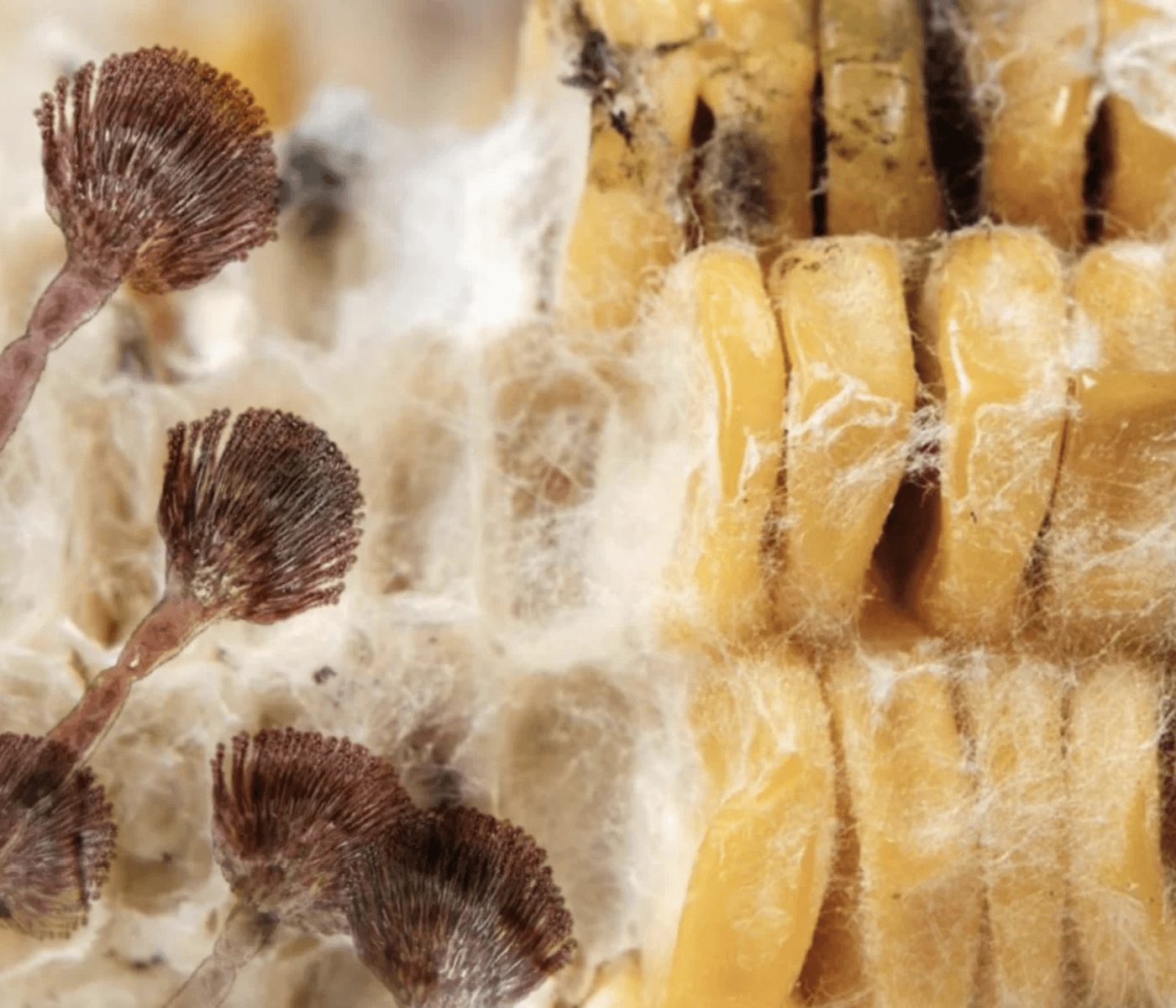
Mycotoxin contamination remains widespread in North America, with corn and corn co-products continuing to create significant risks for poultry performance, health, and feed safety.
Feed safety remains one of the most important pillars of successful poultry production, yet mycotoxins continue to challenge producers across North America. Despite advances in grain handling, storage practices, and quality assurance programs, naturally occurring fungal toxins remain common in corn, corn co-products, soybean ingredients, and complete poultry feeds.
Recent surveys confirm that mycotoxin contamination remains widespread throughout the region, reinforcing the need for continuous surveillance, effective risk assessment, and targeted mitigation strategies. For today’s poultry industry, managing mycotoxins is no longer simply a quality control exercise—it has become an essential component of flock health, productivity, and profitability.
A USDA-led survey evaluating poultry feed and feed ingredients demonstrated the scale of the challenge. Among the analyzed samples:

Every corn and feed sample contained at least one mycotoxin, highlighting just how common contamination has become across commercial feed ingredients.
Perhaps more importantly, researchers observed that co-contamination was the rule rather than the exception, with many samples containing two or even three toxins simultaneously.
Corn continues to represent the largest source of mycotoxin exposure in North American poultry diets. Because corn typically accounts for the majority of dietary energy, contamination can rapidly affect large portions of commercial feed formulations.
Surveys of U.S. corn harvested between 2018 and 2022 found that fumonisins were particularly prevalent, especially in corn co-products where toxin concentrations were often considerably higher than in whole grain.
Researchers also found widespread contamination with Type B trichothecenes, reinforcing the importance of evaluating complete mycotoxin profiles rather than focusing on a single toxin.
Environmental conditions such as rainfall during flowering, delayed harvest, insect damage, and poor storage conditions all contribute to fungal growth and toxin production.
One of the greatest challenges of mycotoxins is that their impact is often subclinical.
While severe contamination can produce obvious clinical signs, lower concentrations frequently result in chronic production losses that are more difficult to detect but equally costly.
Common consequences include:
These subtle effects often translate into significant economic losses across an entire production cycle.
Mycotoxins affect much more than growth performance.
Many toxins damage intestinal epithelial cells, alter the gut microbiota, and compromise nutrient absorption. Others interfere directly with immune function, leaving birds less capable of responding to vaccination programs or infectious disease challenges.
Because modern poultry production relies heavily on maintaining gut integrity and minimizing antimicrobial use, controlling mycotoxin exposure has become increasingly important within comprehensive flock health programs.
Given the variability between harvest years, geographic regions, storage conditions, and ingredient suppliers, routine testing has become one of the most effective management tools available.
Feed mills and integrated poultry companies increasingly rely on analytical testing to characterize incoming raw materials and adjust formulation strategies accordingly.
Risk assessment should include:
No single intervention completely eliminates mycotoxin risk. Successful control programs typically combine multiple approaches throughout the production chain.
Common mitigation strategies include:
Increasingly, producers are adopting integrated feed safety programs that combine prevention, monitoring, and mitigation rather than relying on any single solution.
Climate variability is expected to continue influencing fungal growth patterns across North America. Wetter growing seasons, temperature fluctuations, and extreme weather events may alter both the prevalence and distribution of major mycotoxins.
As grain production adapts to changing environmental conditions, poultry producers will likely require more dynamic surveillance systems and increasingly flexible mitigation strategies.
The evidence is clear: mycotoxins remain a persistent feed safety challenge for North American poultry production.
Fumonisins, deoxynivalenol, zearalenone, and aflatoxins continue to dominate contamination profiles, while multiple-toxin exposure adds further complexity to risk assessment.
Looking ahead, producers who invest in comprehensive feed safety programs, regular ingredient monitoring, and science-based mitigation strategies will be better positioned to protect bird health, maximize production efficiency, and maintain profitability.


Subscribe now to the technical magazine of animal nutrition
AUTHORS
Consistency in Soybean Meal Drives Performance and Sustainability
Anna Cotcho
Kolin Plus FC: greener choline nutrition for poultry

Middle East conflicts disrupt global feed markets
Edgar Oviedo
Optimizing nutrition for dairy goat and sheep productivity in Cyprus
Carolina Kyriacou
pHix-up improves rumen stability in dairy cows
Subacute ruminal acidosis
Net energy and growth: keys to better prediction in swine production
Gabriela Martínez
How starch structure & protein reduction shape gut health in weaned pigs
Diana Luise
Astaxanthin supplementation in aquaculture
Babatunde Saliu
What is intestinal health?
Marcos Rostagno
Calcium, phosphorus, and phytase optimization in broiler diets
Anna Cotcho