 06 Jul 2026
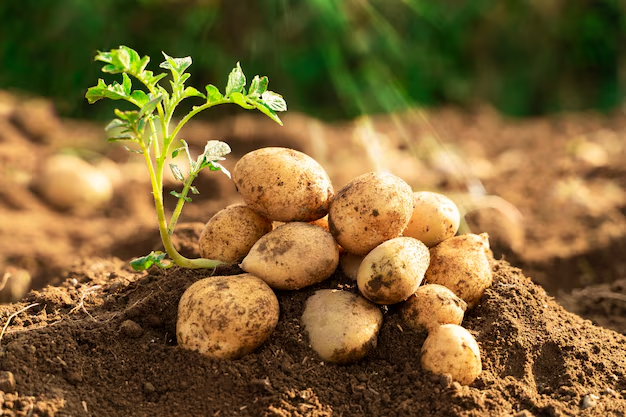
Chinese researchers have developed an efficient potato vine silage technology that converts potato crop residues into high quality livestock feed, as reported by AgroXXI.
The technology was created by specialists from Qinghai Provincial Forage Technology Extension Station and the Qinghai Agricultural Waste Utilization Platform following three years of field research.
Qinghai Province grows potatoes on about 66,700ha annually, generating more than 1 million tons of fresh potato vines. However, this biomass has long remained underutilized due to its high solanine content, a natural toxin that is harmful to livestock. At the same time, the region faces a chronic feed shortage and relies on costly feed shipments from other provinces.
The new technology uses specialized microbial inoculants to accelerate the breakdown of solanine while carefully controlling moisture content and compaction during the ensiling process. Researchers also recommend mixing potato vines with straw from other crops to improve nutritional balance and produce higher quality silage.
During the trials, scientists selected two bacterial strains capable of performing efficiently under the cold conditions of the Qinghai-Tibet Plateau. The anaerobic fermentation process reduced solanine levels by more than 70%, lowering concentrations to 2.34-6.69 mg/kg, well within China’s feed safety standards.
A 90-day sheep feeding trial conducted in 2025 confirmed the effectiveness of the technology. Farmers reported that livestock readily consumed the silage, with no signs of poisoning, diarrhea, loss of appetite, or other adverse effects. In addition, production costs were more than twice as low as those of conventional corn silage.
Beyond the economic benefits, the technology also offers significant environmental advantages. It eliminates the need to burn or discard potato vines, reduces agricultural waste, and supports a circular farming system that links potato production, silage making, livestock farming, and the return of organic manure to fields, improving the overall sustainability of agricultural production.

Subscribe now to the technical magazine of animal nutrition
AUTHORS
From 2025 Data to 2026 Decisions: Managing Mycotoxin Risk in a Changing Climate
Alterion® NE Celebrates 10 Years of Poultry Gut Health Innovation
The Science Behind Kolin Plus: Beyond Choline Replacement
Summer Infertility in Sows: Managing Heat Stress and Reproductive Performance
AO-Biotics® Amaferm®: Supporting Livestock Digestion and Performance

Interview with Güner Gövenç
Güner Gövenç,
Net Energy and Precision Feeding Shape the Future of Poultry Nutrition
Edgar Oviedo
Mycotoxins in Swine: Health Risks and Nutritional Solutions
Giuseppe Carcò
Mycotoxins and Piglet Ear Necrosis: Cause, Cofactor or Coincidence?
Alberto Morillo
How Mycotoxins Affect Intestinal Health in Pigs and Poultry
Marcos Rostagno
From Antibiotics to Functional Feeds in Aquaculture
Babatunde Saliu
Peas as an Alternative to Soybean Meal in Beef Cattle Finishing Diets
Daniel Villalba Mata,
Improving Egg Yolk Pigmentation Through Better Nutrient Transport

Aquaculture and Aquaponics Nutrition: How Fish Shape the Growth of Greens
Trenton Corby
Consistency in Soybean Meal Drives Performance and Sustainability