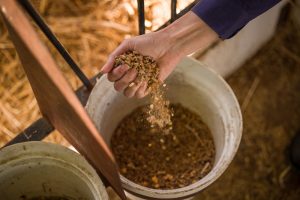




EARLY RUMEN DEVELOPMENT SETS THE STAGE FOR LATER PERFORMANCE
 09 Sep 2026
Getting the rumen “switched on” early is one of the most important goals in calf, lamb and kid rearing.
A well-developed rumen supports better growth, feed efficiency and health, while poor rumen development is linked to setbacks at weaning and beyond.
A new review by Yu and Wu synthesizes current knowledge on how the rumen develops in young ruminants, which factors influence that process, and what hormonal and cellular pathways appear to regulate it.
EARLY RUMEN DEVELOPMENT SETS THE STAGE FOR LATER PERFORMANCE

A functional rumen allows young ruminants to transition from dependence on milk toward microbial fermentation, VFA absorption and efficient use of solid feeds, making rumen maturity a key factor in weaning success and subsequent growth.
In newborn ruminants, the rumen is small and functionally immature. Milk feeding largely bypasses the rumen via the esophageal groove, so the young animal depends on the abomasum and small intestine for digestion.
As solid feed intake increases, the rumen:


The review emphasizes that rumen development is pivotal for overall growth performance and production efficiency in dairy calves, beef cattle, sheep and goats.
Animals with earlier and more complete rumen maturation typically handle weaning better, maintain growth during diet transitions and achieve target weights sooner.
The authors outline rumen development as a progressive process.
SOLID FEED IS THE MAIN TRIGGER
The review stresses that solid feed intake is the primary driver of rumen development. Calves, lambs and kids that begin consuming starter feed and forage earlier tend to develop larger and more functional rumens at a younger age.
Yu and Wu group the key influencers into nutritional, management and biological factors.
Starter feed and forage: Early access to high-quality starter concentrates and some effective fiber such as hay or chopped forage stimulates rumen motility, papillae development and microbial colonization.
Diets too low in physically effective fiber can impair rumination and rumen muscle development.
Fermentable carbohydrates: Starch and soluble fibers increase production of propionate and butyrate, which act as local signals for papillae growth and epithelial cell proliferation.
However, excessive rapidly fermentable starch without adequate fiber can cause subacute ruminal acidosis and damage the developing epithelium.
Protein level and source: Adequate rumen-degradable and undegradable protein supports microbial growth and host tissue development. Imbalances can limit microbial protein synthesis or lead to excess ammonia.
Additives and supplements: Buffers such as sodium bicarbonate, yeast products, probiotics and certain feed additives can help stabilize rumen pH and microbiota during the transition.
Age and criteria for weaning: The review supports weaning based on digestive maturity—steady solid feed intake, visible rumination and good growth—rather than age alone.
Animals weaned before the rumen is functionally ready often suffer growth checks and higher morbidity.
Feeding frequency and form: Frequent, consistent access to fresh starter and forage encourages steady intake. Pelleted versus textured starters, particle size and palatability all influence how quickly young ruminants adopt solid feed.
Housing and environment: Clean, low-stress environments with adequate space and social contact promote normal feeding behavior and rumen development. Overcrowding, poor ventilation and high pathogen load can depress intake and disrupt microbial colonization.
Species and breed: Dairy calves, beef calves, lambs and kids differ in growth patterns and rumen development rates.
Sex and birth weight: Heavier, well-grown neonates often begin eating solid feed earlier and develop the rumen faster than small or compromised newborns.
Health status: Early-life diseases such as scours and pneumonia reduce feed intake and divert nutrients away from growth and rumen development, potentially causing long-term setbacks.
A major focus of the review is the role of the growth hormone (GH) / insulin-like growth factor (IGF) axis in rumen development.
Key points from the review include:
Rumen development is not controlled by feed alone. Nutritional status also influences systemic growth signals such as the GH/IGF axis, linking overall animal growth with maturation of the rumen epithelium.
The authors propose that nutritional strategies which optimize the GH/IGF axis—through adequate energy, protein and micronutrients, while minimizing stress and disease—can indirectly support more rapid and complete rumen development.
Beyond systemic hormones, the review highlights emerging evidence on local cellular signaling pathways that respond to microbial metabolites, particularly VFAs.
GPR41 (FFAR3) and GPR43 (FFAR2) are G-protein-coupled receptors expressed in various tissues, including the gastrointestinal tract, that recognize VFAs such as acetate, propionate and butyrate.
Activation of these receptors can influence:
The review focuses on a proposed RAP1A/GPR41–PPAR signaling cascade:
In the context of the rumen, VFAs produced by microbial fermentation—particularly butyrate and propionate—may act not only as energy sources but also as signaling molecules.
These metabolites may activate GPR41/43 and influence RAP1A and PPAR pathways in rumen epithelial cells.
This could help explain how increased solid feed intake and VFA production directly stimulate papillae growth, epithelial thickening and metabolic maturation of the rumen wall.
FROM DIET TO RUMEN DEVELOPMENT
The proposed pathway provides a mechanistic link between:
Diet → microbial fermentation → VFA production → local signaling → structural and functional rumen development.
Although the review focuses on hormonal and cellular pathways, it acknowledges that the rumen microbiome is central to the whole process.
Future work integrating metagenomics, metabolomics and host transcriptomics is likely to clarify how specific microbial communities and metabolites interact with the GH/IGF axis and RAP1A/GPR41–PPAR pathways to drive rumen development.
The review translates these mechanistic insights into several practical recommendations.
WEANING SHOULD FOLLOW RUMEN READINESS
The review supports moving beyond age alone and considering solid feed intake, rumination, growth and general health as indicators that the young animal is physiologically prepared for the transition away from milk.
Yu and Wu identify several areas where more work is needed:
The review by Yu and Wu provides a concise but comprehensive picture of rumen development in young ruminants, linking:
Together, these mechanisms form a framework for designing feeding programs and interventions that promote healthy, early rumen development—supporting better growth, smoother weaning and more efficient production later in life.
Yu G, Wu D. Research advances in rumen development and regulatory mechanisms in young ruminants. PeerJ. 2026.
Open-access review summarizing rumen development stages, influencing factors, and regulatory mechanisms via the GH/IGF hormonal axis and RAP1A/GPR41–PPAR-mediated signaling pathways in calves, lambs and kids.
Subscribe now to the technical magazine of animal nutrition
AUTHORS
Consistency in Soybean Meal Drives Performance and Sustainability
Anna Cotcho
Kolin Plus FC: greener choline nutrition for poultry

Middle East conflicts disrupt global feed markets
Edgar Oviedo
Optimizing nutrition for dairy goat and sheep productivity in Cyprus
Carolina Kyriacou
pHix-up improves rumen stability in dairy cows

Subacute ruminal acidosis
Net energy and growth: keys to better prediction in swine production
Gabriela Martínez
How starch structure & protein reduction shape gut health in weaned pigs
Diana Luise
Astaxanthin supplementation in aquaculture
Babatunde Saliu
What is intestinal health?
Marcos Rostagno
Calcium, phosphorus, and phytase optimization in broiler diets
Anna Cotcho