 22 out 2026
By Priscila Beck, Director General Brazil at agriNews Group – reporting from Kuala Lumpur, Malaysia
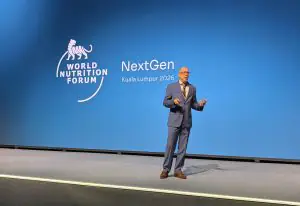
At the World Nutrition Forum, Jack Bobo linked trust in innovation to the challenges facing a food sector that must manage risks, rethink growth strategies and reduce its environmental impact.
Scientific evidence that an innovation works does not guarantee market acceptance. For Jack Bobo, Executive Director of the UCLA Rothman Family Institute for Food Studies, overcoming that resistance also requires building trust between the food sector and society.
That relationship becomes more important, he argued, when changes affect production methods, business costs and consumer expectations. “Innovation moves at the speed of trust,” he told the World Nutrition Forum 2026 on Thursday, 22 October, in Kuala Lumpur, Malaysia.

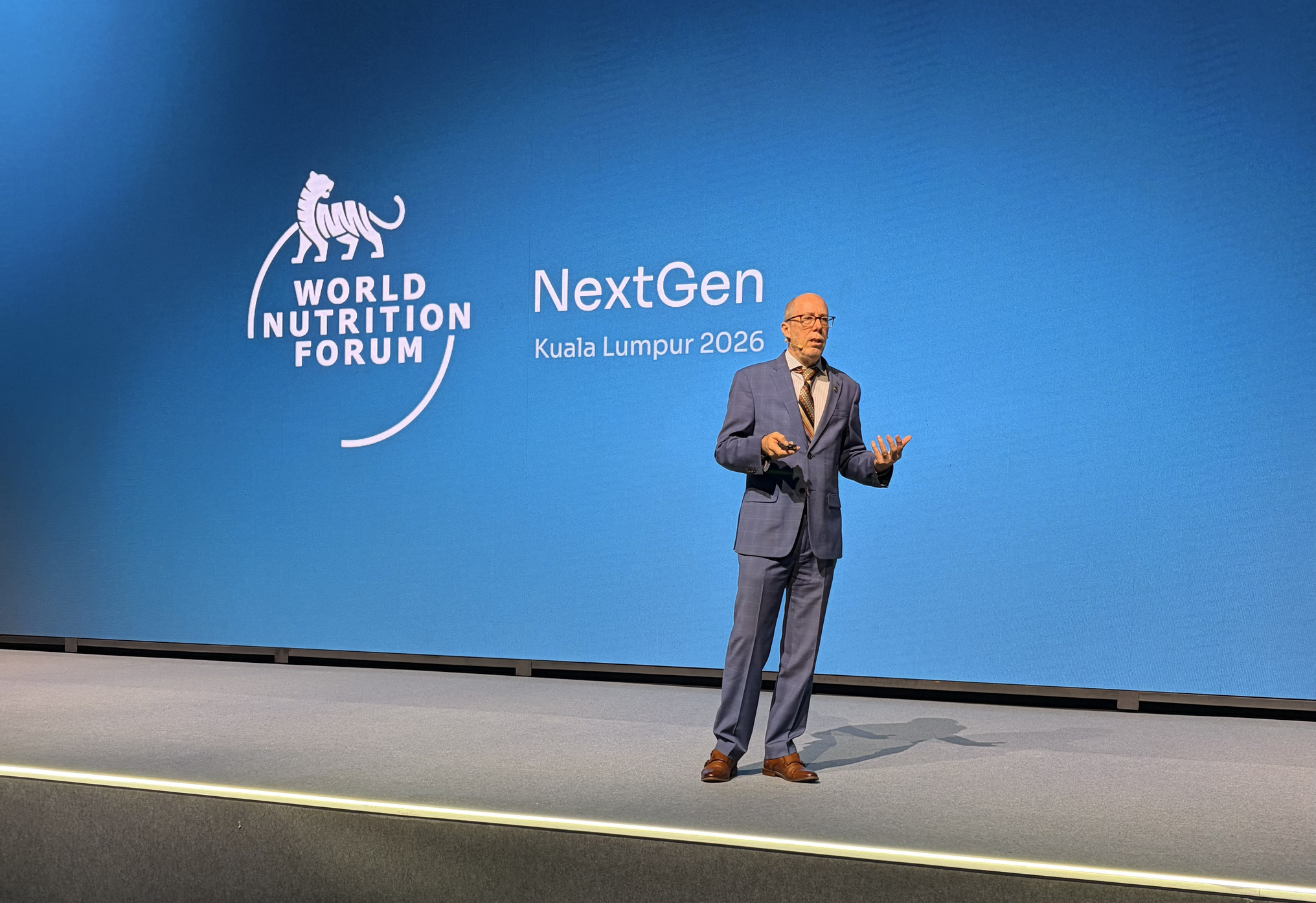
Speaking to animal nutrition and livestock industry professionals, Mr Bobo connected technology acceptance to the future of food businesses. He questioned the pursuit of efficiency in an increasingly unstable environment and the assumption that markets will continue to reward higher production volumes. To address those challenges, he argued, the sector needs to strengthen collaboration and its dialogue with society.
“Science tells us what we can do, but the public tells us what we should do,” he said.
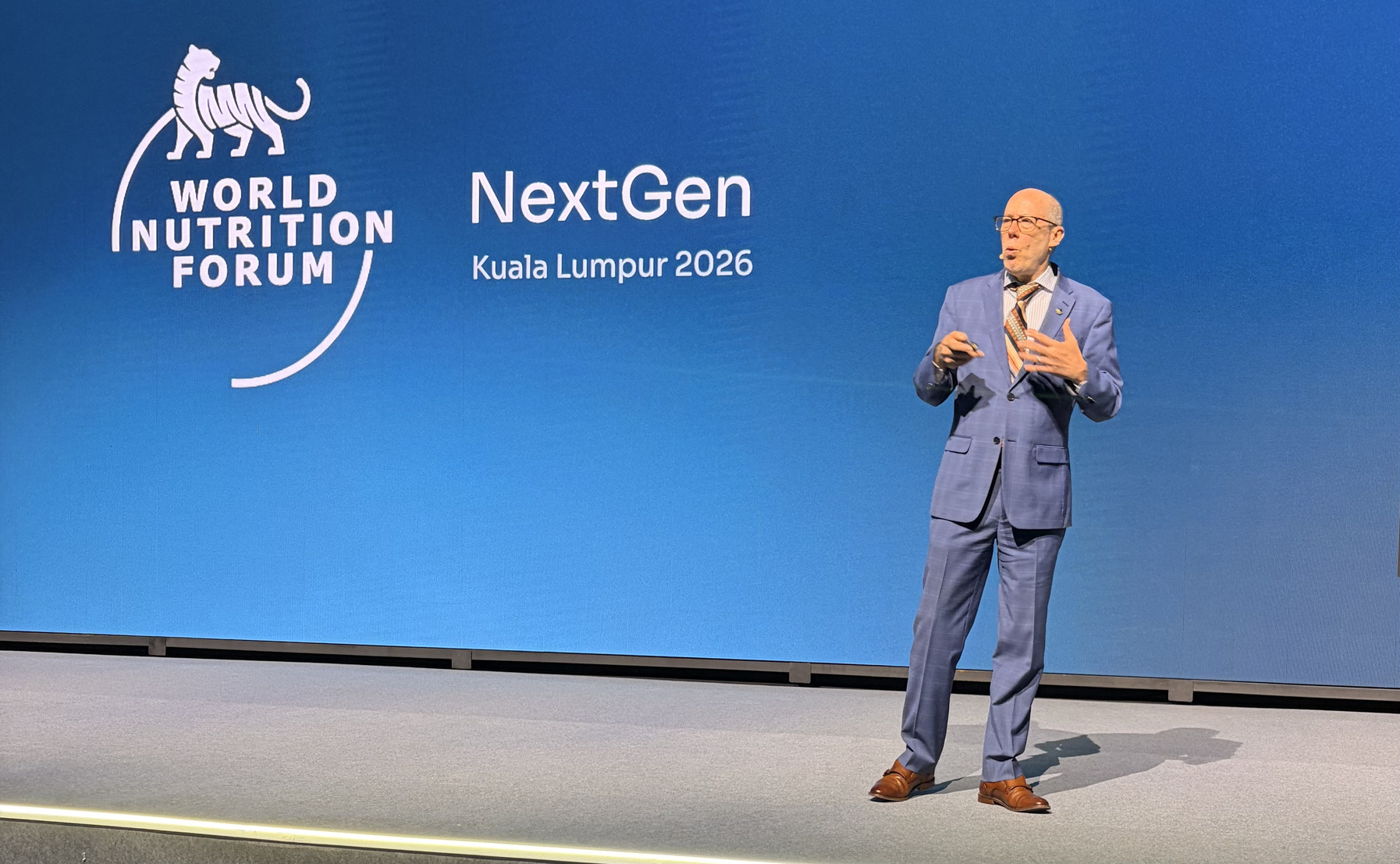

Jack Bobo explores consumer trust in food innovation, business resilience and changing protein markets at World Nutrition Forum 2026 in Kuala Lumpur.
When efficiency increases exposure to risk
Bobo observed that businesses have historically sought to extract the maximum return from every resource. That approach, he argued, needs to be reassessed in the face of geopolitical risks, extreme weather and supply chain disruptions.
In a world of instability and turbulence, “efficiency can equal fragility,” he said. His argument was that optimizing operations can increase exposure to losses when conditions change.
Business performance therefore needs to be assessed alongside the ability to absorb shocks and stabilize returns. In Mr Bobo’s analysis, decisions based solely on expected operating conditions can overlook events that threaten business continuity. Resilience becomes valuable because it helps manage those risks.
Sustainability as protection for the business
That discussion led Mr Bobo to question how sustainability is presented within companies. When it is seen only as a cost, he argued, it becomes vulnerable to cuts during periods of financial pressure.
“We should be thinking about sustainability the way we think of resilience, because resilience is like insurance,” he said. He cited droughts and floods to explain the relationship between that protection and more stable returns. In his view, the language used to discuss sustainability influences how organisations assess its value and who bears its costs.
Answering a question about food production and environmental protection, Mr Bobo returned to the need to understand what different audiences expect from the sector. While industry professionals speak about efficiency, innovation and science, other stakeholders may be focused on reducing environmental impact. Acknowledging that concern helps explain how the proposed solutions seek to contribute to the same goal.
Markets that may require a different growth strategy
Mr Bobo also urged the sector to look beyond immediate demand growth. Exploring scenarios of population stabilization and eventual decline, he questioned strategies based on continuous expansion in production volumes.
To illustrate his argument, he highlighted the importance of the Chinese market to the pork and seafood sectors and urged those industries to consider demographic change in their long-term planning. “The future will not reward quantity. It will reward quality,” he said when discussing that scenario.
In his analysis, slower-growing or contracting markets will require stronger differentiation. He challenged companies to consider how they will compete and create value when producing more may no longer be enough to sustain returns.
That argument connects to the distinction he drew between planning for the most likely future and exploring other possible futures. Organizations can prepare for a continuation of the past, he argued, without recognising that the expected destination may differ from the one they want to build.
“We need to stop preparing for the future we expect and start creating the future we want,” he said.
Trust needs to come before the launch
Trust is part of that discussion because it influences whether proposed innovations are accepted. During the question-and-answer session, Mr Bobo was asked how to respond when a technology has demonstrated scientific results but still faces market resistance.
He drew on his experience working in the US government. “If people don’t trust you, they don’t want to see your science, and if people do trust you, they don’t need to see your science, and yet we always lead with science because we love it so much,” he said.
Mr Bobo used the contrast to explain how trust affects people’s willingness to listen to a scientific explanation. His recommendation was to build relationships before an organization needs to introduce an innovation to the market.
“We need to build those relationships before we need them,” he said. In food, that task involves connections that go beyond the technical assessment of a product.
Mr Bobo noted that food brings families and friends together and is closely associated with people’s identities. A change in what people eat can therefore feel like interference in something personal. “If you mess with my food, you’re messing with my family,” he said.
Communication can create resistance
Mr Bobo warned that companies and professionals can contribute to the very barriers they want to overcome. Presenting a problem and immediately offering a solution, for example, can trigger scepticism when audiences sense an intention to sell.
Discussing confirmation bias, Mr Bobo used his own reactions as an example. Faced with a news report about organic food that challenged his beliefs, he said he would investigate the authors, funding and methodology. If the findings confirmed what he already thought, he might be willing to share them before asking those same questions.
The example invited science professionals to examine their own standards for evaluating information. Recognizing those biases, he argued, is necessary to understand how other people interpret information and evidence.
Mr Bobo also cited tensions between parts of the alternative protein sector and animal agriculture to show how messages perceived as threats can fuel defensive responses. In his analysis, those involved recognize attacks directed at them but do not always see how they contribute to the confrontation.
When a group or organization is cast as the villain of a story, he explained, “you automatically become the villain of their story”. For Mr Bobo, reducing polarization is necessary to address problems that depend on collaboration.
He argued that communication should place challenges in historical context, recognizing progress already made to demonstrate that further change is possible. Messages focused entirely on catastrophe, he suggested, can lead to apathy.
Closing his presentation, Mr Bobo urged the sector to rethink how it involves people in the changes it wants to achieve. “We need to stop asking people to sacrifice for the future, and we need to invite them to embrace it.”



Assine agora a revista técnica de nutrição animal
AUTORES

Digestibilidade e fermentação in vitro em pets: reduzir o uso de animais
Josiane Aparecido Volpato,
A água, o nutriente mais importante na nutrição suína
Juan Gabriel Espino
A próxima margem da nutrição animal está além da fórmula
Priscila Beck
Micotoxinas: critérios técnicos para o uso de adsorventes
Adriano Mallmann,
A Ciência por Trás do Kolin Plus FC: Além da Substituição da Colina
Dra. Reshma R Chandran
Gerenciando o Risco de Micotoxinas em um Clima de Mudança
Micotoxinas em aves: ocorrência, impactos e estratégias de mitigação
Alexandra Weaver
Ingredientes alternativos na alimentação de frangos de corte
Édina de Fátima Aguiar,
Menos Ração, Mais Lucro: Como a Genômica Revoluciona a Eficiência Alimentar
Marcos Vinicius Barbosa da Silva