PET NUTRITION | SUSTAINABLE INGREDIENTS | OMEGA-3
Microalgae Could Transform Omega-3 Supply for Pet Food as El Niño Threatens Fish Oil Markets
Climate-related disruptions to marine fisheries are raising new questions about the long-term availability of fish oil. Microalgae-derived omega-3 fatty acids are emerging as a promising option for pet food manufacturers seeking reliable, traceable and potentially more sustainable sources of EPA and DHA.
The pet food industry is increasingly exploring alternative sources of essential nutrients as climate variability, environmental pressures and changing consumer expectations reshape ingredient supply chains.
Among the ingredients attracting growing attention are microalgae-derived omega-3 fatty acids, which could provide an alternative or complement to traditional fish oil in dog and cat food formulations.
The issue has become particularly relevant as concerns over El Niño-related disruptions to Pacific fisheries raise questions about the stability of marine oil supplies.
A September 2026 report published by Petfood Industry examined this emerging opportunity following a presentation by Natália Moraes of dsm-firmenich at CIPAL 2026 in Buenos Aires, Argentina.
Her presentation highlighted how biotechnology could help pet food manufacturers secure long-chain omega-3 fatty acids while reducing their reliance on fluctuating marine resources.
The opportunity: By producing EPA and DHA directly from selected microalgae, ingredient manufacturers can potentially diversify omega-3 supplies without depending exclusively on wild-caught fish.
El Niño exposes vulnerabilities in marine ingredient supplies
Fish oil has traditionally been one of the principal sources of long-chain omega-3 fatty acids in commercial pet foods.
However, the availability of marine oils is influenced by several factors, including ocean temperatures, fish population dynamics, fishing regulations and climatic variability.
El Niño events can create particularly challenging conditions for fisheries along the Pacific coast of South America.
As surface waters warm, the normal upwelling of cold, nutrient-rich water may weaken. This can alter the availability of plankton and affect the distribution and productivity of fish populations.
The Peruvian anchoveta, an important species for global fishmeal and fish oil production, is especially sensitive to changes in oceanographic conditions.
Reduced catches or restrictions intended to protect fish stocks can affect the availability of marine ingredients used in aquaculture feeds, livestock nutrition and pet food manufacturing.
For pet food producers, these disruptions may translate into greater price volatility, procurement challenges and uncertainty in ingredient sourcing.
Supply chain consideration: The importance of alternative omega-3 sources extends beyond individual El Niño events. Climate variability, competing demand and fisheries management can all influence the long-term availability of marine oils.
Why EPA and DHA matter in dog and cat nutrition
Omega-3 fatty acids are widely recognized for their physiological importance in companion animals.
However, not all omega-3 fatty acids have the same biological functions.
While plant-derived ingredients such as flaxseed can supply alpha-linolenic acid (ALA), marine oils and certain microalgae provide the long-chain omega-3 fatty acids eicosapentaenoic acid (EPA) and docosahexaenoic acid (DHA).
Dogs and cats have limited capacity to convert dietary ALA into sufficient quantities of EPA and DHA, making direct dietary sources particularly relevant when formulating diets intended to deliver these fatty acids.
EPA and inflammatory regulation
EPA participates in the formation of lipid mediators involved in inflammatory responses. Dietary EPA is therefore of interest in nutritional approaches supporting joint health, skin function and certain clinical conditions.
DHA and neurological development
DHA is an important structural component of neural and retinal membranes. It is particularly relevant during early development, when adequate nutrient supply supports normal brain and visual function.
Skin, coat and overall nutritional quality
Long-chain omega-3 fatty acids also contribute to cell membrane composition and may support skin and coat health. Their nutritional effects depend on the animal’s life stage, health status, total diet and the amounts supplied.
For manufacturers developing premium, functional or life-stage-specific pet foods, maintaining a reliable source of EPA and DHA is therefore an important formulation consideration.
Microalgae offer direct access to marine omega-3 fatty acids
An important distinction between fish oil and microalgae oil lies in the origin of their omega-3 fatty acids.
In marine ecosystems, many microalgae are primary producers of EPA and DHA. These compounds subsequently move through aquatic food webs and accumulate in fish and other marine organisms.
Consequently, selected microalgae can provide a direct source of long-chain omega-3 fatty acids without requiring fish to be harvested as an intermediate ingredient.
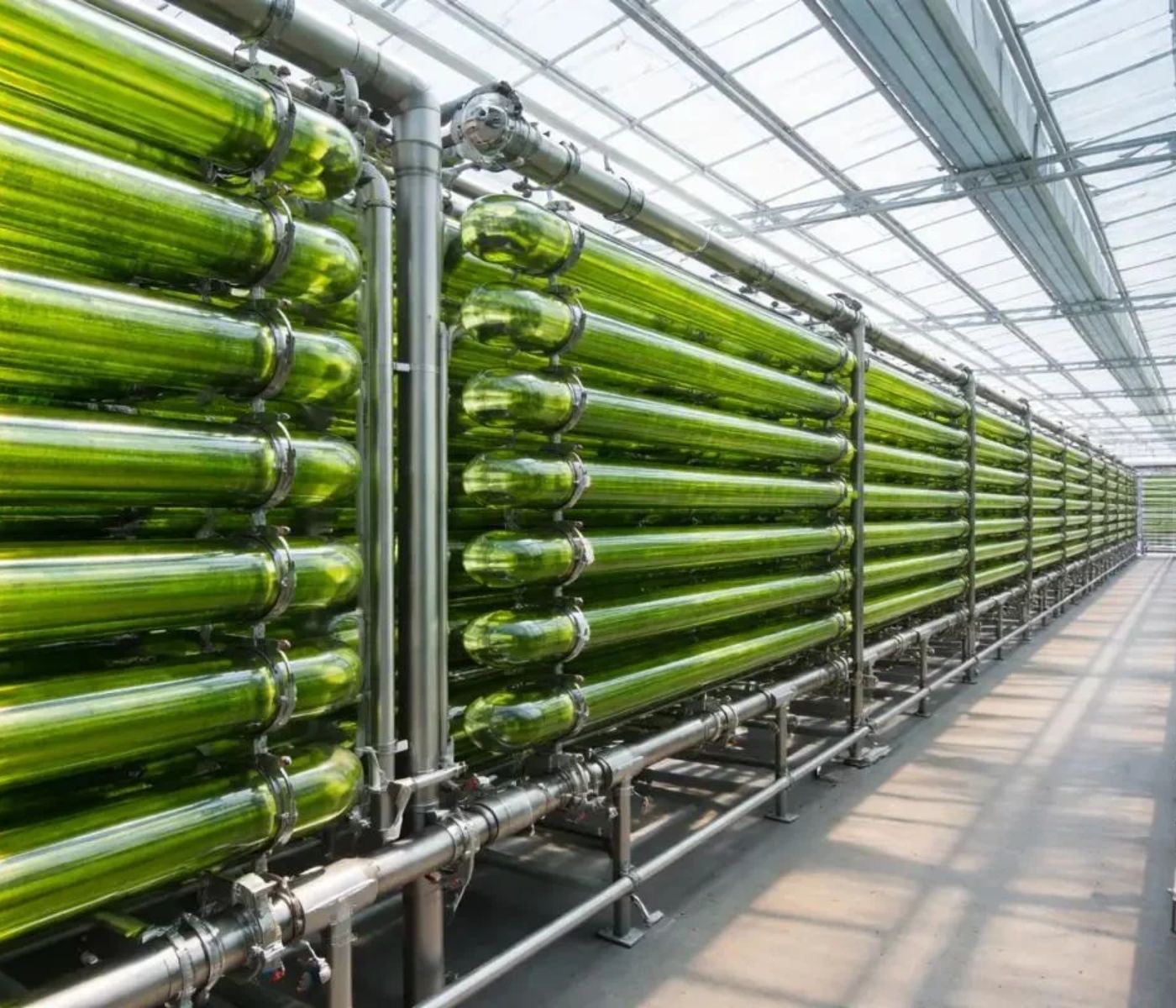
Through controlled cultivation and fermentation technologies, companies can grow suitable microalgal strains and extract oils containing EPA, DHA or both.
This approach may allow ingredient producers to establish more predictable production systems with reduced exposure to fluctuations in wild fish catches.
A different production model: Traditional fish oil production depends on marine harvesting or fish-processing by-products. Microalgal omega-3 production can take place in controlled facilities, offering opportunities for improved traceability and more consistent ingredient specifications.
Scientific interest in these technologies continues to expand.
A 2025 review published in Critical Reviews in Food Science and Nutrition examined microalgae as emerging sources of DHA and EPA, highlighting advances in cultivation techniques, strain improvement and production efficiency.
The review identified microalgae as promising ingredients for applications extending from human nutrition to animal feed, while emphasizing the importance of continued technological development.
Could algae-based oils improve ingredient consistency?
Beyond sustainability, microalgae-derived oils may offer practical advantages for pet food formulation and quality control.
Fish oil composition can vary depending on species, geographic origin, season, processing conditions and storage practices.
Such variability can influence fatty acid concentrations, sensory characteristics and the performance of oils in finished pet food products.
Controlled microalgae production offers the potential to achieve more standardized fatty acid profiles and consistent ingredient specifications.
During her CIPAL 2026 presentation, Moraes emphasized that the potential advantage of microalgal oil was not necessarily superior palatability compared with fish oil, but rather greater consistency between production batches.
For pet food manufacturers, consistency can be valuable when managing product specifications, nutritional declarations and consumer expectations.
Nevertheless, the quality of microalgal oils depends on the specific strain, cultivation conditions, extraction methods, stabilization and storage practices.
As with fish oil, appropriate antioxidant protection and quality monitoring remain important because oils rich in polyunsaturated fatty acids are susceptible to oxidation.
Industrial investment signals growing commercial interest
The potential of microalgae is increasingly attracting investment beyond laboratory research.
In October 2026, Danish biotechnology company Algiecel announced the opening of a new microalgae production facility at a Novonesis industrial site in Kalundborg, Denmark.
According to reporting by Petfood Industry, the facility expands the company’s production capacity nearly fivefold compared with its pilot-scale operation.
MICROALGAE PRODUCTION DEVELOPMENT
12 metric tons
Annual biomass production targeted by Algiecel beginning in 2027, according to the company’s reported plans.
The facility uses carbon dioxide captured from an adjacent biogas operation, illustrating how microalgae production may be integrated with industrial resource streams.
Although the announced production volume remains relatively modest compared with global marine oil demand, the project demonstrates ongoing efforts to transition microalgae technologies from pilot facilities toward commercial manufacturing.
Scaling these systems successfully will be essential if algae-based omega-3 ingredients are to become more widely accessible to pet food manufacturers.
Sustainability benefits must be evaluated across the entire production process
The possibility of producing omega-3 fatty acids without harvesting fish is an important advantage of microalgae-based technologies.
However, reduced dependence on marine fisheries does not automatically guarantee a lower overall environmental footprint.
Microalgae cultivation can require energy, water, nutrients and specialized infrastructure. Depending on the production method, harvesting, drying and oil extraction may also contribute substantially to production costs and environmental impacts.
A 2026 scientific review published in Bioresource Technology identified several advantages of microalgae, including high potential productivity and reduced land requirements compared with some terrestrial crop systems.
At the same time, the researchers highlighted challenges related to energy demand, contamination control, downstream processing and economic competitiveness.
These findings suggest that the sustainability of algae-derived omega-3s should be assessed using appropriate life-cycle methods that account for production inputs, energy sources and processing technologies.
Sustainability perspective: Microalgae can help diversify omega-3 sourcing and potentially reduce pressure on marine resources, but their environmental performance depends on how the ingredients are produced.
What should pet food manufacturers consider?
As algae-derived omega-3 ingredients become more commercially available, their adoption will require careful evaluation of nutritional, technological and economic factors.
One important consideration is the fatty acid profile. Different microalgal species and strains produce different proportions of EPA and DHA, meaning that not every algae-based oil can be considered nutritionally equivalent to conventional fish oil.
Manufacturers must also evaluate oxidative stability, ingredient compatibility, palatability, regulatory status and the ability of suppliers to deliver consistent quantities at commercially viable prices.
Key formulation considerations
- EPA and DHA concentrations: Verify the actual fatty acid composition rather than relying on total omega-3 content alone.
- Oxidative stability: Evaluate peroxide values, secondary oxidation indicators and antioxidant protection.
- Palatability: Assess acceptance in the intended dog or cat food formulation.
- Processing compatibility: Consider the effects of extrusion, heat treatment and storage on ingredient quality.
- Regulatory compliance: Confirm that the specific ingredient is authorized or otherwise compliant in the target market.
- Economic feasibility: Compare cost per unit of delivered EPA and DHA, not simply cost per kilogram of oil.
These factors will determine whether microalgae can serve as a direct replacement for fish oil, a complementary ingredient or a targeted source of specific fatty acids.
A more diversified future for omega-3 nutrition
The growing interest in microalgae reflects a broader transformation in the pet food industry, where nutritional innovation is increasingly connected to supply chain resilience and environmental responsibility.
Fish oil is likely to remain an important ingredient in pet food manufacturing, particularly where established supply chains and competitive pricing support its continued use.
However, relying on a wider range of omega-3 sources could help manufacturers respond more effectively to fluctuations in marine ingredient availability.
Microalgae-derived EPA and DHA offer a promising route toward that diversification, combining nutritional functionality with opportunities for controlled production and improved traceability.
As cultivation technologies advance and production scales increase, their role in commercial dog and cat foods may continue to expand.
Ultimately, the success of these ingredients will depend on demonstrating that they can deliver reliable nutritional value, consistent quality, competitive economics and measurable sustainability benefits.
Sources and further reading
Petfood Industry. Tim Wall. September 26, 2026.
During strong El Niño, microalgae offer sustainable source of omega-3s for pet food.
Petfood Industry. October 9, 2026.
Algiecel scales microalgae fish oil alternative for pet food.
Sharma, T., et al. (2025).
Microalgae as an emerging alternative raw material of docosahexaenoic acid and eicosapentaenoic acid – a review.
Critical Reviews in Food Science and Nutrition.
Deepika, C., Hankamer, B., & Ross, I. L. (2026).
Can microalgal omega-3 PUFA production systems remain viable as GM plant sources emerge?
Bioresource Technology, 441, 133525.