



Key message: The EU–Mercosur agreement may improve soy trade flows, but sustainability compliance, traceability and deforestation rules could limit how much benefit reaches feed manufacturers and livestock producers.
 26 May 2026
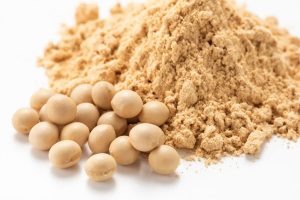
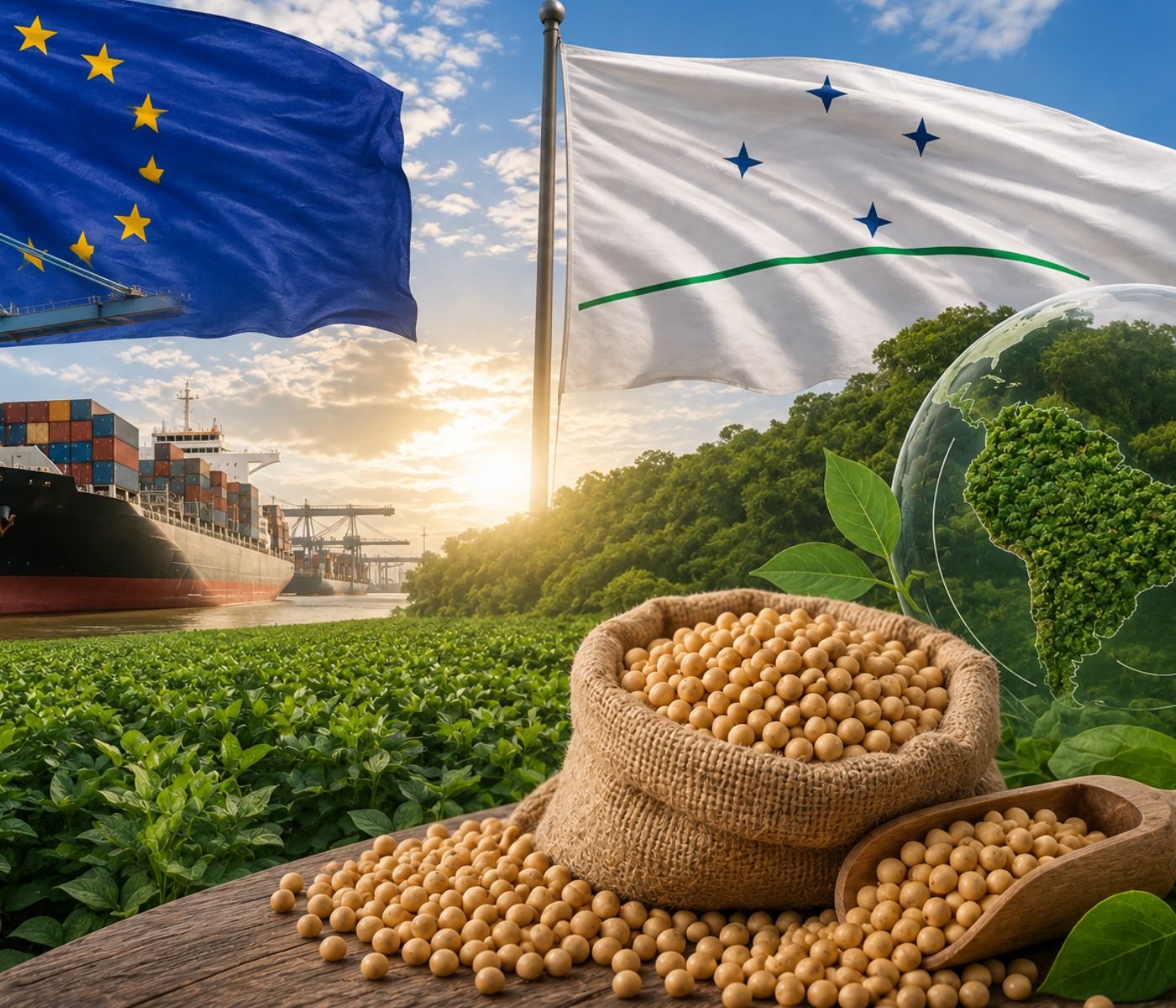
The provisional application of the EU–Mercosur trade agreement could reshape Europe’s access to soybean and soybean meal supplies from South America. For the feed and livestock sectors, this matters because soybean meal remains one of the most important protein sources in poultry, swine and dairy rations.
By improving trade conditions with Brazil, Argentina, Paraguay and Uruguay, the agreement could help support Europe’s feed manufacturers, crushers and animal protein chains. However, the real impact will depend on whether tariff relief and improved market access are enough to offset the rising compliance burden linked to EU sustainability rules, especially the EU Deforestation Regulation (EUDR).
Key message: The EU–Mercosur agreement may improve soy trade flows, but sustainability compliance, traceability and deforestation rules could limit how much benefit reaches feed manufacturers and livestock producers.
Europe remains highly dependent on imported vegetable protein, and soybean meal is central to livestock feed formulation. It provides a concentrated source of protein and amino acids that is difficult to replace at scale without reformulating diets or increasing reliance on alternative protein meals.
Recent market reporting shows that EU soybean meal imports have remained strong, with forecasts for 2025/26 moving close to previous decade-high levels. This underlines how important external suppliers remain for Europe’s animal production systems.
Mercosur is particularly important in this context. Brazil and Argentina are among Europe’s key suppliers of soybeans and soybean meal, while Paraguay and Uruguay also form part of the wider South American trade bloc. Any change in trade access, tariffs or regulatory friction can therefore have direct consequences for feed availability and cost.
The agreement is expected to reduce or remove tariffs on several products and create more predictable trade rules between the European Union and Mercosur countries. For the soy sector, this could support more stable import conditions and improve long-term planning for European crushers and feed companies.

In principle, easier access to South American soy could benefit several parts of the value chain:
Feed industry relevance: The deal is not only about cheaper imports. For feed users, the bigger question is whether it can improve supply security in a market where protein meal availability remains essential.
While the trade agreement may reduce commercial barriers, the biggest uncertainty is regulatory. The EU Deforestation Regulation requires companies placing soy and other covered commodities on the EU market to prove that these products are not linked to recent deforestation or forest degradation.
For soy trade, this means operators will need to provide detailed due diligence, including traceability information and geolocation data. In practical terms, this may require companies to verify where soy was produced, document the supply chain and ensure that products meet EU deforestation-free requirements.
The EUDR is scheduled to apply from 30 December 2026 for large and medium operators, with micro and small operators following later. Although the regulation has already faced implementation delays and simplification discussions, it remains a major compliance issue for companies handling soy, beef, palm oil, wood and other covered commodities.
Practical challenge: Even if tariffs fall, the cost of segregation, documentation, geolocation data and due diligence could make soy imports more complex and expensive.
For Europe’s feed sector, soybean meal is difficult to replace quickly. Alternative protein meals such as rapeseed meal or sunflower meal can be useful, but they do not always provide the same nutritional profile, amino acid density or formulation flexibility.
This is especially important for poultry and swine diets, where digestible amino acid balance is critical. A disruption in soybean meal availability, or a significant increase in compliance-related costs, could affect diet formulation, feed prices and livestock margins.
Therefore, the EU–Mercosur agreement may help from a trade perspective, but it does not remove the broader challenge of sourcing soy that is both commercially competitive and compliant with EU sustainability rules.
For European crushers, the key question is whether improved import access will translate into stronger domestic processing. If soybean imports become more predictable, crushers may benefit from better throughput and a more stable supply of soybean meal for the feed market.
However, if verified and non-verified soy must be handled separately, companies may face higher logistical costs. This could include dedicated storage, separate transport flows, additional supplier verification and more complex documentation systems.
Feed manufacturers may also need to adapt purchasing strategies. Instead of focusing only on price and protein value, buyers may increasingly need to evaluate traceability, documentation quality, supplier risk and regulatory compliance.
Bottom line for feed companies: The future soy market will be shaped not only by price and availability, but also by the ability to prove compliance with environmental and traceability requirements.
The EU–Mercosur agreement reflects Europe’s need to secure reliable trade relationships while also maintaining environmental and sustainability ambitions. For the feed industry, this creates a balancing act.
On one hand, the agreement could improve access to key protein ingredients and reduce some trade barriers. On the other hand, stricter sustainability rules may increase the cost and complexity of bringing those ingredients into the European market.
This tension is particularly relevant for soy because South America is a major global production hub, but also a region closely scrutinized in discussions about land use, deforestation and agricultural expansion.
Several factors will determine whether the EU–Mercosur agreement becomes a net positive for Europe’s feed chain:
The EU–Mercosur agreement could strengthen Europe’s access to soybeans and soybean meal from South America, supporting feed manufacturing, crushing and livestock production.
However, the benefits are not automatic. The agreement arrives at a time when the EU is also tightening sustainability expectations for agricultural commodities. As a result, tariff relief may be partly offset by the cost of proving that soy supply chains are deforestation-free.
For Europe’s feed sector, the central issue is no longer only whether soy can be imported at competitive prices. It is whether soy can be sourced in a way that is reliable, traceable, compliant and economically viable.
The EU–Mercosur deal may open the door to more stable soy supply, but the EUDR will determine how easy that door is to walk through.
Reuters. EU states back record South America trade accord after 25 years. 2026.
Reuters. EU–Mercosur trade accord to apply provisionally from May 1. 2026.
European Commission. EU–Mercosur Interim Trade Agreement starts to provisionally apply. 2026.
European Commission. Regulation on deforestation-free products.
USDA Foreign Agricultural Service. Oilseeds: World Markets and Trade. 2026.
USDA Foreign Agricultural Service. European Union: Oilseeds and Products Annual. 2026.

Subscribe now to the technical magazine of animal nutrition
AUTHORS
Rumen microorganisms and metabolizable amino acid balance
Fernando Bacha Baz
Broiler nutrition during the first feeding phase

Genetic improvement in corn strengthens its strategic role in animal nutrition
Insect biorefineries and the future of sustainable animal nutrition
Ari Riihimaa
LivoLiv supplementation improves liver health and broiler performance
Mycotoxin binders explained: why one size never fits all
Rui A. Gonçalves
Active Feeding strategy for PRRS-positive weaned piglets
Alberto Morillo Alujas
Sow colostrum and its strategic impact on piglet survival and growth
Marianna Altieri
Bacillus probiotics help support intestinal health in cats
Lorenna Nicole Araújo Santos