 07 Apr 2022
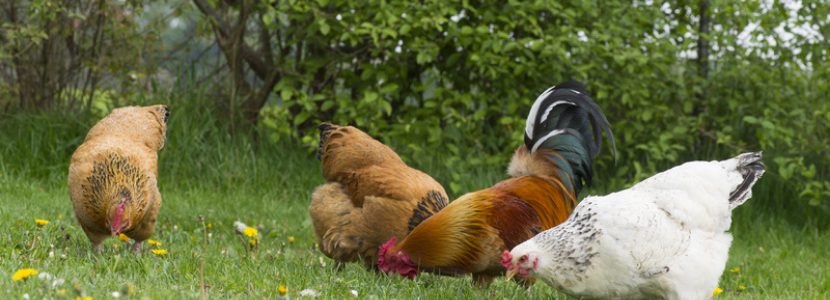
Free range chickens’ intestinal microbial population is a topic of interest for the poultry industry and more specifically for those carrying out this kind of production system.
Outdoor broiler production faces several of the same problems as outdoor laying hens, including predator threats, bird health, and environmental exposure.
Sossidou et al. (2015) have suggested that slow-growing poultry breeds are preferred for this type of production. This is due to the fact that they are more adaptable to environmental conditions associated with prolonged pasture occupation thanks to their growth rate, skeletal development, behavioral characteristics, and a well-developed immune system.
Fast-growing broiler breeds can be ready for the market in as little as 7 weeks, while slow-growing breeds may require up to 12 weeks before entering markets.
In addition, Sossidou et al. (2011, 2015) noted that there may be benefits for animal welfare and lower nutritional requirements for slow-growing breeds in grasslands vs. fast-growing breeds under these same conditions.

Food safety concerns have also been considered with broiler production in the wild. The main foodborne pathogens associated with poultry are Campylobacter and Salmonella
The colonization route of foodborne pathogens in the gastrointestinal(GI) tract and systemic invasion is presumably similar to what occurs in conventional poultry (Shi et al. , 2019). This certainly depends on host factors, such as intermittent dietary intake which is potentially experienced in free range grazing.
Since antibiotics are generally excluded in free range production, the occurence of antibiotic resistance in microorganisms isolated from birds produced under these conditions would presumably be less frequent.
Factors such as:
Diet
Race
The age of birds
And housing conditions
may exhibit a potential influence on the development of the GI tract microbial consortium in broilers.

These types of dietary differences between conventionally raised broilers and “Free Range” chickens may also have a distinctive influence on the respective GI tract microbiota.
Age can affect the diversity of the gut microbiome in poultry, even when diet does not.
Subscribe now to the technical magazine of animal nutrition
AUTHORS

From 2025 Data to 2026 Decisions: Managing Mycotoxin Risk in a Changing Climate
Alterion® NE Celebrates 10 Years of Poultry Gut Health Innovation

The Science Behind Kolin Plus: Beyond Choline Replacement

Summer Infertility in Sows: Managing Heat Stress and Reproductive Performance
AO-Biotics® Amaferm®: Supporting Livestock Digestion and Performance

Interview with Güner Gövenç
Güner Gövenç,
Net Energy and Precision Feeding Shape the Future of Poultry Nutrition
Edgar Oviedo
Mycotoxins in Swine: Health Risks and Nutritional Solutions
Giuseppe Carcò
Mycotoxins and Piglet Ear Necrosis: Cause, Cofactor or Coincidence?
Alberto Morillo
How Mycotoxins Affect Intestinal Health in Pigs and Poultry
Marcos Rostagno
From Antibiotics to Functional Feeds in Aquaculture
Babatunde Saliu
Peas as an Alternative to Soybean Meal in Beef Cattle Finishing Diets
Daniel Villalba Mata,
Improving Egg Yolk Pigmentation Through Better Nutrient Transport

Aquaculture and Aquaponics Nutrition: How Fish Shape the Growth of Greens
Trenton Corby
Consistency in Soybean Meal Drives Performance and Sustainability