



Key point: The deal could make GB–EU agri-food trade smoother, faster and less costly, but it would also bring Great Britain closer to EU rules in several regulatory areas.
 22 May 2026
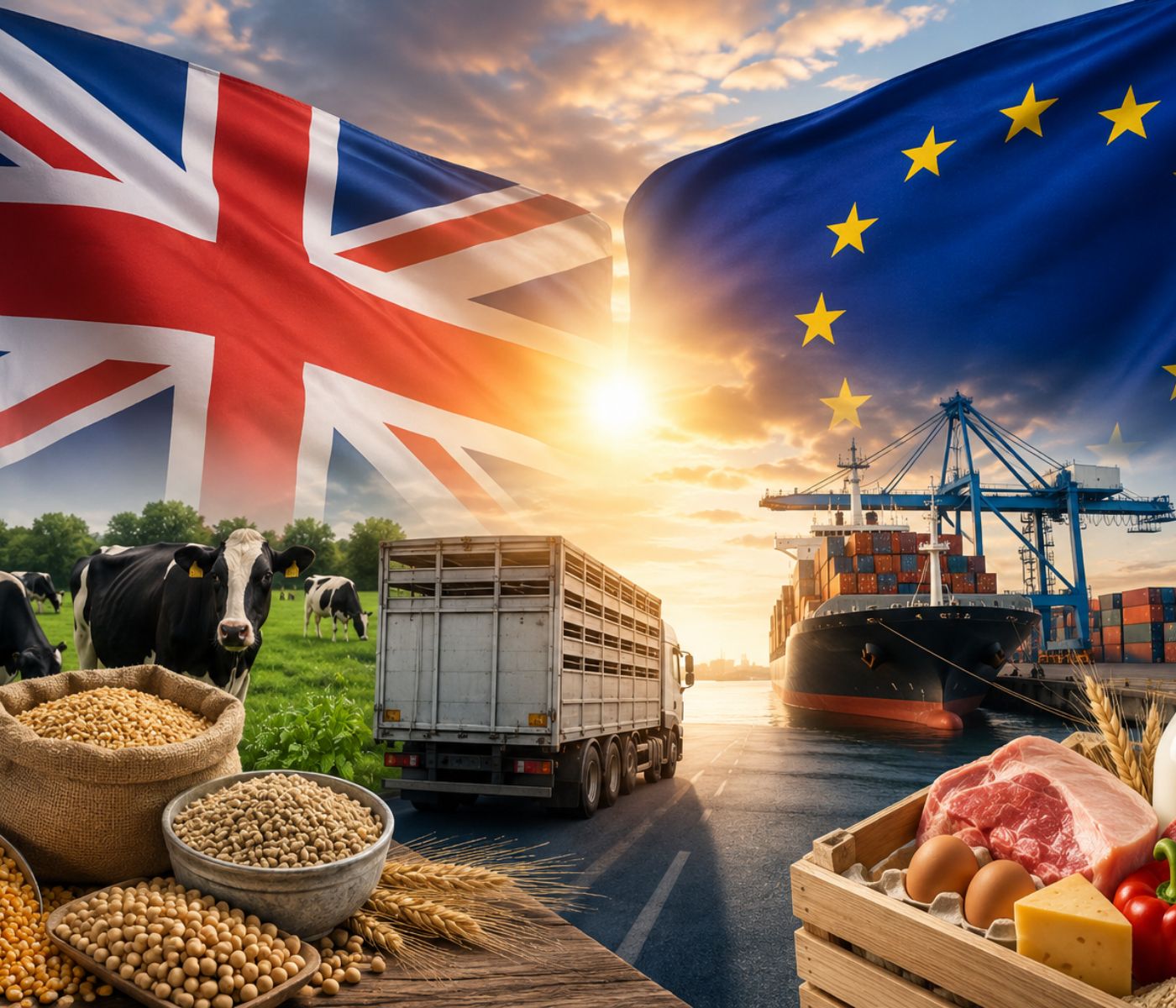
The UK’s planned sanitary and phytosanitary (SPS) realignment with the European Union could become one of the most important post-Brexit changes for farming, food, feed and agri-food businesses.
If negotiations remain on track, the proposed Common SPS Area could reduce many of the routine border checks, certificates and administrative requirements currently affecting animals, food, feed, plant products and other agri-food goods moving between Great Britain and the EU.
Key point: The deal could make GB–EU agri-food trade smoother, faster and less costly, but it would also bring Great Britain closer to EU rules in several regulatory areas.
SPS stands for sanitary and phytosanitary standards. These are the rules designed to protect food safety, animal health and plant health.
Under the proposed arrangement, Great Britain would apply EU rules domestically across a broad range of agri-food areas. These may include the trade, production and movement of animals and animal products, food and feed safety, nutrition labelling, food claims, organic rules, pesticide regulation and related standards.
For the agri-food sector, this could represent a major shift away from post-Brexit regulatory divergence and toward closer practical alignment with the EU.
For many businesses, the biggest attraction is the possibility of fewer border checks, less paperwork and lower trade friction.

Government guidance indicates that the agreement could remove routine SPS border checks for many covered agri-food products and eliminate the need for Export Health Certificates for certain goods. These certificates can create additional costs, delays and administrative pressure for businesses.
Why it matters: Even farms that do not export directly may be affected, because ingredients, inputs, feed materials and supply chains are closely connected across the agri-food sector.
Reduced friction could improve the reliability of supply chains, especially for products that move frequently across borders or require speed and predictability. This includes perishable goods, animal products, plant materials, feed ingredients and processed food products.
The proposed SPS agreement is particularly relevant for the feed and animal nutrition sectors because it explicitly covers food and feed safety, animal products and related standards.
Feed manufacturers could benefit from smoother cross-border movement of raw materials, feed additives, premixes and finished products. Reduced paperwork and fewer checks could help limit delays, improve planning and reduce costs across supply chains.
However, closer alignment could also mean that businesses operating in Great Britain may need to follow more EU-like rules on compositional standards, nutrition claims, labelling, feed safety requirements and related regulatory obligations.
For feed businesses: The agreement could simplify trade, but it may also require companies to review formulations, labels, claims and compliance procedures.
The NFU has supported the overall goal of reducing trade barriers, but it has also warned that alignment must be managed carefully so that it does not disrupt UK food production.
One of the union’s main requests is for a variable-paced transition, allowing different sectors to adapt at different speeds depending on how much UK rules have diverged from EU rules since Brexit.
The NFU has also called for safeguards or specific considerations in areas such as precision breeding, bovine TB vaccination and some mycotoxin-related rules. These areas are important because sudden regulatory alignment could affect innovation, disease control strategies or the use of certain crops and ingredients.
Current government information indicates that the UK intends for the agreement to take effect from mid-2027, although negotiations are still ongoing and the final details remain subject to agreement.
For farmers, growers, food manufacturers and feed companies, the key issue is not only whether border checks are reduced. The bigger question is what level of domestic regulatory alignment will be required in return.
Businesses will need to monitor the details carefully and begin preparing for possible changes to compliance systems, documentation, product specifications and supply-chain planning.
Important reminder: The agreement is not simply about trade at the border. It could also influence how agri-food and feed products are regulated inside Great Britain.
The proposed realignment reflects a broader shift in UK–EU relations, moving from post-Brexit divergence toward closer practical cooperation in areas where trade friction has created costs and uncertainty.
For many agri-food businesses, this could restore some of the ease of movement lost after Brexit. For others, the concern is that dynamic alignment may limit the UK’s ability to design its own policies in the future.
This is why the next phase of negotiations will be critical. The final agreement will need to balance trade facilitation, regulatory certainty, food safety, biosecurity and the specific needs of UK farming systems.
For food, feed and farm businesses, the proposed Common SPS Area could reduce costs, simplify trade and improve supply-chain reliability.
However, the benefits will depend on how the transition is managed and whether specific safeguards are included for sectors where UK conditions or policy priorities differ from the EU.
The next two years will determine whether GB–EU SPS realignment becomes a practical opportunity for agriculture or another regulatory shift that businesses struggle to absorb.
Source: NFU

Subscribe now to the technical magazine of animal nutrition
AUTHORS
Consistency in Soybean Meal Drives Performance and Sustainability
Anna Cotcho
Kolin Plus FC: greener choline nutrition for poultry

Middle East conflicts disrupt global feed markets
Edgar Oviedo
Optimizing nutrition for dairy goat and sheep productivity in Cyprus
Carolina Kyriacou
pHix-up improves rumen stability in dairy cows
Subacute ruminal acidosis
Net energy and growth: keys to better prediction in swine production
Gabriela Martínez
How starch structure & protein reduction shape gut health in weaned pigs
Diana Luise
Astaxanthin supplementation in aquaculture
Babatunde Saliu
What is intestinal health?
Marcos Rostagno
Calcium, phosphorus, and phytase optimization in broiler diets
Anna Cotcho