GLOBAL TRADE | FOOD SECURITY | AGRICULTURAL COMMODITIES
Global Food Supply Chains Under Pressure as Conflicts Threaten Aid for 7.3 Million People
Geopolitical instability across major maritime trade routes is exposing vulnerabilities in global agricultural supply chains, increasing the cost of transporting essential commodities and threatening the delivery of humanitarian food assistance.
The global agricultural sector is facing renewed uncertainty as ongoing conflicts disrupt the international movement of cereals, fertilizers and energy products.
The consequences extend beyond international commodity markets, potentially affecting agricultural producers, feed manufacturers, livestock operations and consumers, particularly in countries that rely heavily on imports.
Addressing the United Nations Security Council on November 23, 2026, World Food Programme (WFP) Executive Director Luke Lindberg warned that persistent trade disruptions could generate an additional US$727 million in humanitarian operating costs by mid-2027.
According to the agency, these financial pressures could jeopardize food assistance for approximately 7.3 million people.
The warning, subsequently reported by Al Jazeera and Reuters, highlights the increasingly interconnected nature of geopolitical stability, agricultural trade and global food security.
Three strategic trade corridors face simultaneous disruption
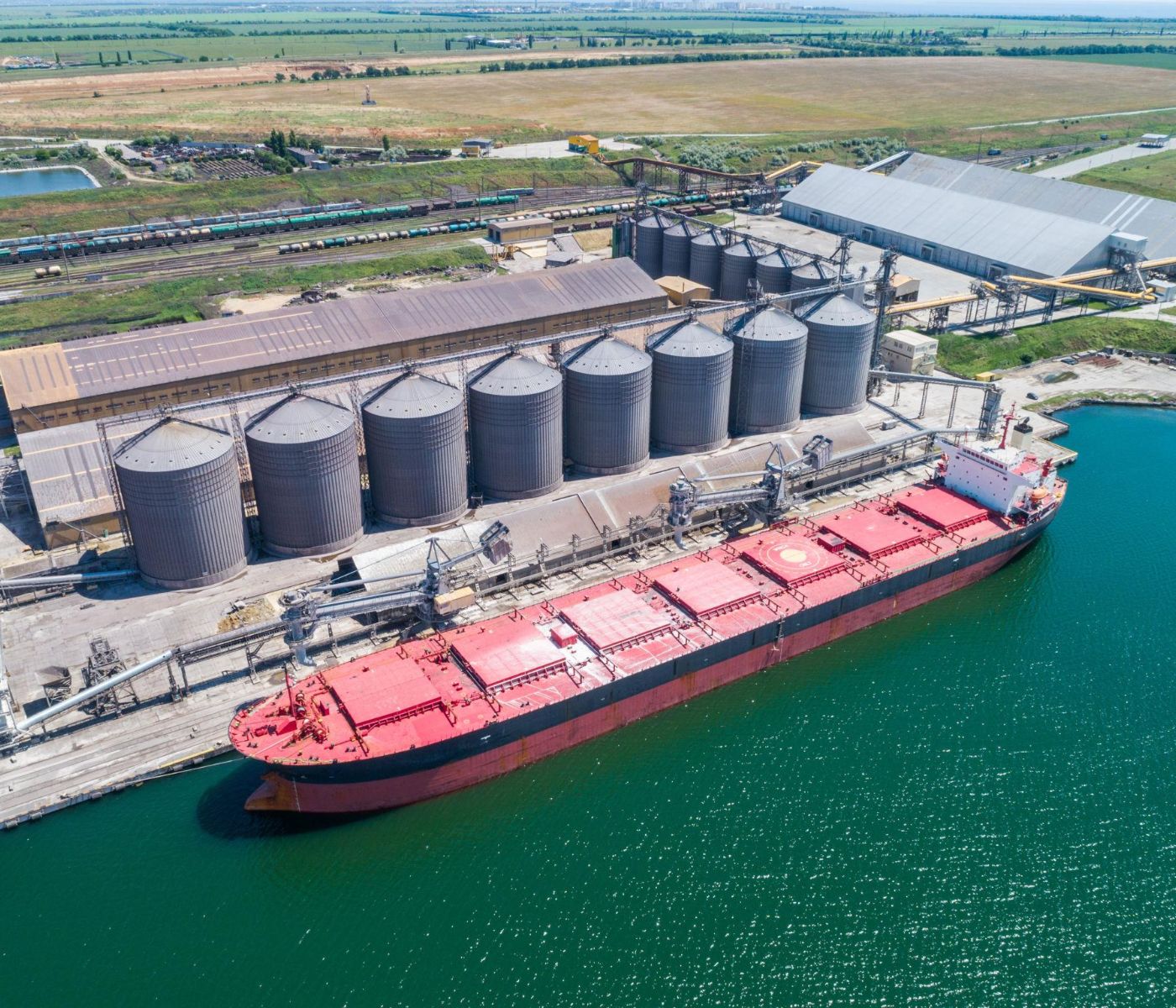
International agricultural markets depend on an extensive maritime transport network connecting major production regions with importing countries.
The current situation is particularly concerning because security challenges are affecting three important maritime corridors simultaneously.
Strategic maritime routes supporting global agriculture
Strait of Hormuz: A critical passage for energy commodities and agricultural fertilizers originating in the Persian Gulf.
Bab al-Mandeb Strait: An essential connection between the Indian Ocean, Red Sea and Suez Canal, facilitating international commerce between Asia, Africa and Europe.
Black Sea: A major export corridor for agricultural commodities, particularly cereals originating in Russia and Ukraine.
Limited alternatives to these established routes can make disruptions especially costly. Shipping companies may need to modify schedules, secure alternative transport arrangements or navigate considerably longer distances.
UN Trade and Development (UNCTAD) has previously documented how diversions around Africa’s Cape of Good Hope have increased voyage durations, fuel consumption, insurance expenses and greenhouse gas emissions.
For agricultural commodities, which are frequently traded in large volumes and with relatively narrow margins, these additional expenses can significantly influence the competitiveness of imported raw materials.
Black Sea instability threatens international grain availability
The Black Sea region occupies a particularly important position in global cereal markets.
Russia and Ukraine collectively account for approximately one-third of international wheat trade, according to the WFP, making the region an essential supplier for numerous food-importing countries.
The November briefing highlighted a 63% year-over-year reduction in the number of vessels transporting wheat and maize through the Bosphorus by mid-October.
The agency also estimated that as much as 10 million tonnes of wheat originating in Russia and Ukraine might not reach international markets.
GLOBAL GRAIN TRADE AT RISK
10 million tonnes
Potential volume of wheat prevented from reaching global markets.
44 million people
The estimated number of people that this quantity of wheat could feed, according to WFP calculations.
Source: World Food Programme, November 23, 2026. These figures represent estimated potential consequences rather than confirmed final export losses.
The situation illustrates an important distinction between agricultural production and food availability.
Even when sufficient grain has been harvested and stored, disruptions to international logistics can prevent it from reaching regions where demand is greatest.
For countries with limited domestic cereal production or insufficient purchasing power to compete for alternative supplies, interruptions in established trade relationships can create significant food security challenges.
Global cereal production remains high, but trade is contracting
Recent data from the Food and Agriculture Organization of the United Nations (FAO) provide additional context for understanding current agricultural market conditions.
In its November 6, 2026 update, FAO projected that worldwide cereal production would remain close to record levels, despite expectations of weaker international trade.
| Global agricultural indicator | Latest estimate | Market context |
|---|---|---|
| World cereal production, 2026 | 2,999 million tonnes | Second-highest level on record |
| World cereal trade, 2026/27 | 507.7 million tonnes | Projected decline of 3.3% |
| World wheat trade | -8.6% | Expected seasonal contraction |
| Global cereal stocks-to-use ratio | 32.4% | Slightly above the previous season |
Source: FAO Cereal Supply and Demand Brief, November 6, 2026. Production and trade figures are forecasts and remain subject to revision.
FAO also anticipates an accumulation of wheat inventories in Russia and Ukraine, partly because of difficulties moving agricultural products into international markets.
These conditions demonstrate why apparently comfortable global cereal inventories do not necessarily guarantee adequate regional availability or affordable access to grain.
Transportation infrastructure, trade policies, purchasing power and geopolitical stability remain essential determinants of whether agricultural commodities can be distributed efficiently.
Food prices remain elevated despite October decline
Although geopolitical tensions continue to create uncertainty, international commodity prices have not followed a uniformly upward trajectory.
The FAO Food Price Index averaged 133.9 points in October 2026, representing a decline of 1.2% from the previous month.
Nevertheless, the index remained 5.9% above its October 2025 level, indicating that international food commodity prices continued to face significant year-over-year pressure.
| FAO price index | October 2026 | Monthly change |
|---|---|---|
| Overall food prices | 133.9 | -1.2% |
| Cereals | 116.8 | -4.5% |
| Vegetable oils | 199.2 | +0.3% |
| Meat | 125.5 | -1.2% |
| Dairy | 117.8 | -1.1% |
Selected commodity groups from the FAO Food Price Index, released November 6, 2026. Index values are based on the 2014–2016 reference period.
Improving crop prospects in several exporting countries, seasonal harvest pressure and weaker international demand contributed to lower cereal quotations during October.
However, global benchmark prices should not be interpreted as direct indicators of the prices paid by individual feed manufacturers or agricultural producers.
Freight charges, exchange rates, storage costs, insurance premiums and regional supply limitations can produce significant differences between international commodity quotations and local purchasing costs.
Fertilizer supply disruptions could affect future harvests
Beyond the immediate implications for food distribution, interruptions in agricultural input supply chains could influence production during upcoming growing seasons.
Fertilizer production and distribution are closely connected to international energy markets and maritime transport infrastructure.
The Strait of Hormuz plays a particularly important role in this system, handling approximately 30% of global fertilizer supplies, according to the WFP.
Persistent disruptions could make fertilizer procurement more expensive or delay its delivery during critical periods of the agricultural calendar.
Agricultural concern: Fertilizer availability during planting and crop development can influence both crop productivity and farmers’ production costs. The consequences of current logistical disruptions may therefore extend into future harvests.
The potential consequences are particularly relevant for agricultural regions in Africa and Asia, where access to affordable inputs can already represent a significant production constraint.
Farmers facing higher fertilizer prices may respond by reducing application rates, changing crop selection or limiting the area planted.
Depending on soil fertility, crop requirements and environmental conditions, these decisions could affect subsequent yields and the availability of agricultural commodities.
Climate variability adds an additional layer of uncertainty. The interaction between unfavorable weather, costly agricultural inputs and disrupted trade can increase the vulnerability of farming systems to external shocks.
Implications for the animal feed industry
The international animal feed industry is closely connected to agricultural commodity markets through its dependence on cereals, oilseed meals, vegetable oils and other feed ingredients.
Changes in commodity availability and transportation costs can therefore influence both feed formulation decisions and the financial performance of livestock enterprises.
Even when ingredients remain available internationally, disruptions can make procurement less predictable, increase delivery times and raise the cost of maintaining adequate inventories.
For companies operating in import-dependent markets, these challenges may be particularly pronounced.
Potential areas of impact across the feed supply chain
- Raw material procurement: Greater uncertainty surrounding the availability, delivery schedules and landed costs of imported commodities.
- Feed formulation: Increased need to evaluate alternative ingredients according to nutritional value, digestibility and economic competitiveness.
- Feed manufacturing: Potential increases in energy, transportation and inventory management expenses.
- Livestock profitability: Pressure on production margins if higher feed costs cannot be recovered through meat, milk or egg prices.
- Supply chain planning: Greater importance of supplier diversification, procurement flexibility and contingency strategies.
These represent potential industry implications rather than quantified outcomes from the WFP assessment.
For nutritionists and feed formulation specialists, volatile ingredient markets reinforce the importance of maintaining accurate nutrient matrices and evaluating alternative raw materials without compromising animal performance, health or feed safety.
Ingredient substitution should account for digestible nutrient concentrations, antinutritional factors, processing requirements and potential effects on feed intake.
Depending on local conditions, improved utilization of regional agricultural by-products may also offer opportunities to reduce exposure to certain international commodity markets.
Strengthening resilience across livestock production systems
Livestock producers and integrated animal production companies cannot directly control geopolitical events or international freight markets. However, they can evaluate strategies to limit their exposure to sudden supply chain disruptions.
A resilient feeding strategy should combine nutritional flexibility with effective procurement, ingredient quality control and financial planning.
| Strategic area | Considerations for feed and livestock businesses |
|---|---|
| Supplier diversification | Reduce excessive dependence on a single production region or supplier. |
| Alternative ingredients | Evaluate locally available feed resources and suitable agricultural by-products. |
| Precision nutrition | Match nutrient supply to animal requirements while reducing unnecessary expenditure. |
| Inventory management | Balance supply continuity against storage expenses, quality deterioration and working capital requirements. |
| Feed efficiency | Monitor feed conversion, nutrient utilization and avoidable feed losses. |
| Market intelligence | Track international commodity prices, shipping developments, exchange rates and crop forecasts. |
Editorial considerations for managing commodity and logistics uncertainty within animal production systems.
The suitability of individual strategies will depend on the production system, species, regional ingredient availability and commercial objectives.
Economic efficiency should be pursued without compromising nutritional adequacy, product quality or animal welfare.
Humanitarian food assistance faces increasing financial pressure
The disruption of agricultural trade has particularly serious consequences for humanitarian organizations operating with limited resources.
Higher commodity and delivery expenses mean that existing funding commitments may support fewer beneficiaries.
Reuters reported that WFP’s intended assistance coverage for 2027 had already been reduced from its 2026 target of 110 million people to 91 million.
GROWING HUMANITARIAN FINANCIAL PRESSURE
$727 million
Additional operating expenses potentially facing WFP by mid-2027.
7.3 million
People whose assistance could be jeopardized if current conditions persist.
Source: World Food Programme, November 23, 2026.
The warning illustrates the direct relationship between the affordability of international agricultural commodities and the capacity of humanitarian agencies to deliver essential food supplies.
Maintaining reliable access to grain markets and transportation infrastructure is therefore not only an economic priority but also an essential humanitarian consideration.
International cooperation remains essential
WFP has called for renewed diplomatic efforts to safeguard humanitarian grain shipments originating in both Russia and Ukraine.
A previous example of international cooperation was the Black Sea Grain Initiative, established in July 2022 through United Nations mediation.
Before its termination in 2023 following Russia’s withdrawal, the agreement facilitated the export of nearly 33 million tonnes of Ukrainian grain.
A renewed arrangement would require international negotiations and appropriate measures to protect commercial and humanitarian shipments.
More broadly, the current crisis highlights the importance of investing in resilient transportation infrastructure, diversified trading relationships and effective coordination between governments, agricultural businesses and humanitarian organizations.
Global food security depends on more than agricultural production
The current challenges demonstrate that strong agricultural output alone cannot guarantee food security.
The ability to transport commodities efficiently, maintain affordable access to production inputs and distribute food to vulnerable populations is equally important.
For the global feed and livestock industries, these developments reinforce the need to combine nutritional efficiency with flexible procurement strategies and a deeper understanding of agricultural market dynamics.
While diversification and improved resource utilization can help businesses manage uncertainty, international cooperation remains fundamental to addressing disruptions at their source.
Building resilient food systems requires not only productive farms and efficient animal nutrition, but also reliable supply chains capable of connecting agricultural resources with the people and industries that depend on them.
Sources and further reading
1. Habib, H. (2026). Wars choke global food routes, threatening aid for 7.3 million, WFP warns. Al Jazeera. November 24, 2026.
Original article.
2. World Food Programme (WFP). (2026). WFP chief warns UN Security Council that ‘triple chokepoint’ is driving up hunger. November 23, 2026.
Official WFP publication.
3. Shalal, A. (2026). UN food agency chief warns wars jeopardize food aid for 7.3 million more people. Reuters. November 23, 2026.
Read report.
4. Food and Agriculture Organization of the United Nations (FAO). (2026). FAO Food Price Index edges down in October amid subdued demand. November 6, 2026.
Commodity prices and cereal market forecasts.
5. FAO. (2026). FAO Food Price Index.
Official commodity price database.
6. World Food Programme. (2026). What do disruptions in major trade routes mean for food security? October 8, 2026.
Background analysis.
7. UN Trade and Development (UNCTAD). (2025). Review of Maritime Transport 2025: Staying the Course in Turbulent Waters.
International maritime transport report.
8. UNCTAD. (2024). Review of Maritime Transport 2024: Navigating Maritime Chokepoints.
Report overview.
The humanitarian estimates and agricultural market forecasts presented in this article are based on information available as of November 25, 2026. The discussion of implications for animal nutrition, feed manufacturing and livestock production represents additional editorial analysis.