 11 Jun 2026
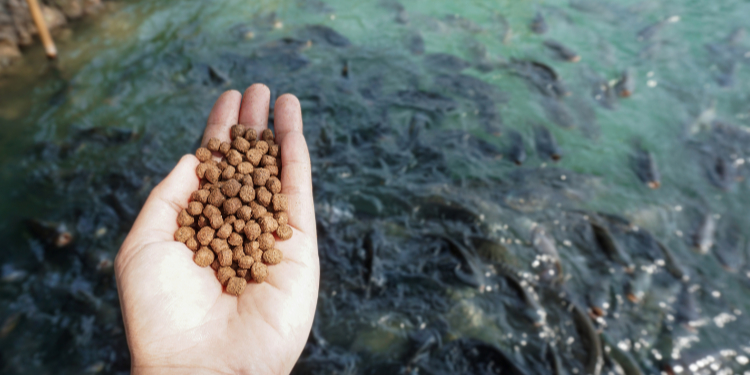
The Singapore Food Agency (SFA) and Singapore Institute of Technology (SIT) will set up a new research and development center in Singapore to create better aquafeed for barramundi, red snapper and shrimp, among other tropical marine species, to help local farms increase their yield.
The Feed and Feed Ingredient Technology Centre (F2TC) will be a one-stop platform to trial, pilot and scale up feed innovations to strengthen Singapore’s technical capabilities in aquaculture nutrition.
F2TC will also offer capabilities on feed formulation and efficacy trials, as well as bridge the gap between laboratory research and full commercial feed production. Set to be located at SIT in Punggol, the center will be fully operational in 2027.
Its research areas will also include evaluating ingredients and assessing how well the feed is digested, SFA and SIT told The Straits Times.

High-quality aquafeeds include those that can incorporate fishmeal alternatives such as single-cell proteins derived from waste streams or insect-based proteins, as well as feeds with functional additives such as probiotics that can improve fish health and survival rates.
Improving productivity through better inputs
Feed quality can affect production costs and profit margins as well as the quality of the fish.
Speaking at World Aquaculture Singapore 2026 on June 3, Janil Puthucheary, Singapore’s Senior Minister of State for Sustainability and the Environment, said the growth of aquaculture must increasingly be driven by improving productivity through better inputs.
“This would enable us to produce more with less within tighter land, resource and environmental constraints. High-yield, input-driven productivity is therefore central to building an aquaculture sector that is resilient and ready for the challenges ahead,” he added.
SFA’s role
SFA will provide technical expertise, industry networks and resources to support F2TC’s development and help anchor a pipeline of industry projects.
Technical expertise from SFA’s Marine Aquaculture Center can support research and development in feed formulation and feed extrusion, a process used to manufacture high-quality aquafeed.
SIT’s role
Meanwhile, SIT’s strength in extrusion process engineering, applied industry research, digitalization and AI-driven modelling are relevant to advancing feed innovation.
For example, SIT will use artificial intelligence and digital technology to study how quickly fish notice, approach and accept a feed.
Howard Tang, SIT’s Assistant Professor, who leads the initiative, said F2TC can help local farmers lower their operational costs by developing higher performance feed, which farmers will need less of to grow their fish.
Feed can account for about 60% or more of total production cost, he added.
The center hopes to work with partners, including local farms and institutes of higher learning, on 10 projects in the next five years, Mr Tang said.
Ken Cheong, Singapore Agro-Food Enterprises Federation Chief Executive said trials conducted at F2TC will allow farms in Singapore to test the new feed formulas and improve their productivity.
To be a regional hub for aquaculture research and development
Asia accounts for 90% of global aquaculture production, allowing the center to play a significant role in addressing structural challenges, including climate change and disease. It also aims to be a regional hub for aquaculture research and development, especially in warm-water species nutrition.
F2TC will also partner Clextral, a global leader in twin screw extrusion technology, on capability building and training.
Funding top-up
Besides the establishment of the center, Mr Puthucheary also announced a research and development funding top-up of USD 6.3 million to the AquaPolis Program to enhance marine tilapia aquaculture in Singapore.
This brings total funding for the research program, which focuses on three fish species, to close to USD 25 million. This new tranche will improve marine tilapia production through selective breeding, enabling better growth rates, disease resistance and saline tolerance, he added.
The new tranche will also help to develop genetic traceability tools to verify strains sold under The Straits Fish, which is an aggregated brand for locally farmed marine tilapia. This will help to counter fake claims by other brands.
Tilapia sold under the brand are farmed using sustainable methods that do not harm the marine environment.

Subscribe now to the technical magazine of animal nutrition
AUTHORS
From 2025 Data to 2026 Decisions: Managing Mycotoxin Risk in a Changing Climate
Alterion® NE Celebrates 10 Years of Poultry Gut Health Innovation
The Science Behind Kolin Plus: Beyond Choline Replacement
Summer Infertility in Sows: Managing Heat Stress and Reproductive Performance
AO-Biotics® Amaferm®: Supporting Livestock Digestion and Performance

Interview with Güner Gövenç
Güner Gövenç,
Net Energy and Precision Feeding Shape the Future of Poultry Nutrition
Edgar Oviedo
Mycotoxins in Swine: Health Risks and Nutritional Solutions
Giuseppe Carcò
Mycotoxins and Piglet Ear Necrosis: Cause, Cofactor or Coincidence?
Alberto Morillo
How Mycotoxins Affect Intestinal Health in Pigs and Poultry
Marcos Rostagno
From Antibiotics to Functional Feeds in Aquaculture
Babatunde Saliu
Peas as an Alternative to Soybean Meal in Beef Cattle Finishing Diets
Daniel Villalba Mata,
Improving Egg Yolk Pigmentation Through Better Nutrient Transport
Aquaculture and Aquaponics Nutrition: How Fish Shape the Growth of Greens
Trenton Corby
Consistency in Soybean Meal Drives Performance and Sustainability