 23 Jun 2026
By Thomas D’Alfonso, PhD, Worldwide Animal Nutrition Focus Area Director at USSEC
New university research confirms what quality-focused nutritionists have long suspected: heat damage to soybean meal – a known problem in many international origins – quietly erodes pig performance. And no amount of reformulating fully gets it back.
Consider a scenario familiar to many swine nutritionists: a diet formulated to look perfectly balanced on paper. The right protein, the right amino acids, yet pigs consistently come up short at the scale. A team of researchers at the University of Illinois set out to quantify exactly why.
The problem shows up most often when soybean meal comes from origins with less consistent processing controls. Research comparing soybean meal from the US, Argentina, Brazil, China and India shows measurably higher nutrient variability and greater heat damage indicators in South American origins.

In the US, soybeans naturally field-dry in the Midwest climate before harvest, arriving at the processing plant with lower moisture levels. Less moisture means less heat is required during processing. That is a key reason soybean meal derived from US Soy is less vulnerable to heat damage.
This research puts hard numbers on exactly what is at stake when that consistency is absent.
The invisible problem: Heat damage



Soybean meal must be heated during processing to destroy antinutritional factors that would otherwise harm animal health. But there is a narrow window. Too much heat triggers a Maillard reaction. This is the same chemical process that browns bread and caramelizes onions. In soybean meal, that reaction binds lysine, the critical first-limiting amino acid in swine diets, into a form pigs simply cannot use.
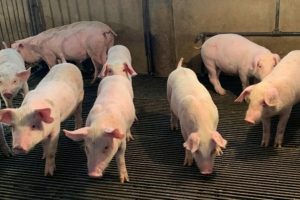
Researchers L Torrez-Mendoza and HH Stein at the University of Illinois fed 160 weanling pigs diets made with soybean meal processed at three heat levels: normal, moderately overheated and severely overheated. In the severely overheated group, reactive lysine – the bioavailable form pigs can use for muscle growth – dropped 44%, from 2.84% to just 1.59%
The result: By day 28, pigs fed the severely heat-damaged diet weighed nearly 3kg less than pigs fed the control diet, a statistically significant difference (P < 0.001). The performance gap translated directly into days to market, feed conversion and margin.
Can it be fixed? Not entirely
The researchers added crystalline amino acids to the heat-damaged diets to compensate for the lost lysine – essentially reformulating to match what a properly processed diet would deliver.
The intervention helped, but it did not fully restore performance. Pigs on the corrected diet improved relative to those on uncorrected damaged meal but still trailed the control group in final body weight, feed intake and growth efficiency. The researchers believe heat damage may also reduce energy digestibility – a consequence that amino acid supplementation alone cannot address.
The conclusion: Reformulation cannot fully compensate for a processing quality problem at the source.
Why soybean meal derived from US Soy delivers consistently
The implications for producers and nutritionists are clear: sourcing matters.
Studies comparing global soybean meal quality have found that meals from South American origins – particularly Brazil and Argentina – show significantly higher variability in processing quality, with more frequent instances of heat damage reflected in lower reactive lysine and reduced protein digestibility. At the same crude protein level on the label, those meals can deliver meaningfully less usable nutrition.
The industry measures processing quality with two key indicators:
Research from USSEC’s Soy Excellence Center network and published comparisons of global soybean meal quality show that soybean meal derived from US Soy maintains reliable protein quality indicators – including reactive lysine levels – across a wide range of production and export conditions.
In contrast, meals from some international origins show higher variability in processing quality, with elevated rates of heat damage reflected in lower amino acid bioavailability – even at the same stated crude protein level.
When moderate heat damage is enough to reduce gain-to-feed ratio and average daily gain – and when corrective reformulation falls short – sourcing from a reliably processed origin is not a premium. It is risk management.
Click here for the full research summary
The U.S. Soy Center for Animal Nutrition and Health (CAN) hosts the complete research summary – including methodology, data tables and production implications – for nutritionists and producers seeking additional detail.

Subscribe now to the technical magazine of animal nutrition
AUTHORS
From 2025 Data to 2026 Decisions: Managing Mycotoxin Risk in a Changing Climate
Alterion® NE Celebrates 10 Years of Poultry Gut Health Innovation

The Science Behind Kolin Plus: Beyond Choline Replacement
Summer Infertility in Sows: Managing Heat Stress and Reproductive Performance
AO-Biotics® Amaferm®: Supporting Livestock Digestion and Performance

Interview with Güner Gövenç
Güner Gövenç,
Net Energy and Precision Feeding Shape the Future of Poultry Nutrition
Edgar Oviedo
Mycotoxins in Swine: Health Risks and Nutritional Solutions
Giuseppe Carcò
Mycotoxins and Piglet Ear Necrosis: Cause, Cofactor or Coincidence?
Alberto Morillo
How Mycotoxins Affect Intestinal Health in Pigs and Poultry
Marcos Rostagno
From Antibiotics to Functional Feeds in Aquaculture
Babatunde Saliu
Peas as an Alternative to Soybean Meal in Beef Cattle Finishing Diets
Daniel Villalba Mata,
Improving Egg Yolk Pigmentation Through Better Nutrient Transport

Aquaculture and Aquaponics Nutrition: How Fish Shape the Growth of Greens
Trenton Corby
Consistency in Soybean Meal Drives Performance and Sustainability