 25 Mar 2022
Supplementation in newborn piglets is a key factor to focus on within the pig industry. In the last 10-15 years, there has been a tendency to select the most prolific sows, with litters greater than 12 live/calving piglets or even greater than 15 in some cases.(Guo et al., 2015) This however, results in greater heterogeneity regarding birth weight.
Larger litters have higher energy and nutritional needs as well as greater health challenges (Baxter et al., 2013; Rutherford et al., 2013).
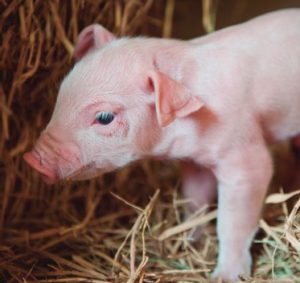
The epidemiology of pre-weaning mortality is complex, however, lack of energy is the main cause.(Lin et al., 2015) Resulting in hypothermia, and leading to mortality due to crushing, weakening, amongst other causes (Cara-mori et al., 2010).
The use of liquid diets enriched with milk and fat, has had good results, positively affecting the growth of small piglets during lactation or after weaning.
This review aims to characterize different feed sources that can contribute to adequate energy supplementation, reducing mortality and improving piglet performance during the lactation phase.
Importance of energy consumption in newborn piglets

Appropriate energy intake for newborn piglets is especially important for maintaining body temperature.
At 32-34ºC, glycogen stores of piglets that did not have access to colostrum will be scarce within 16 hours (Theil et al. , 2011).
These reserves can be depleted in 10 to 16 hours at 18-26ºC, depending on the environmental and body conditions of the piglet at birth.
The consequences of the depletion of this energy source are hypoglycemia, hypothermia and death (Xu and Cranwell, 2003). The first three days of life are considered the most critical phase. This is due to the challenge of maintaining energy balance, when the energy source is quickly depleted.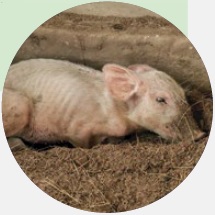
Subscribe now to the technical magazine of animal nutrition
AUTHORS
From 2025 Data to 2026 Decisions: Managing Mycotoxin Risk in a Changing Climate

Alterion® NE Celebrates 10 Years of Poultry Gut Health Innovation
The Science Behind Kolin Plus: Beyond Choline Replacement

Summer Infertility in Sows: Managing Heat Stress and Reproductive Performance
AO-Biotics® Amaferm®: Supporting Livestock Digestion and Performance

Interview with Güner Gövenç
Güner Gövenç,
Net Energy and Precision Feeding Shape the Future of Poultry Nutrition
Edgar Oviedo
Mycotoxins in Swine: Health Risks and Nutritional Solutions
Giuseppe Carcò
Mycotoxins and Piglet Ear Necrosis: Cause, Cofactor or Coincidence?
Alberto Morillo
How Mycotoxins Affect Intestinal Health in Pigs and Poultry
Marcos Rostagno
From Antibiotics to Functional Feeds in Aquaculture
Babatunde Saliu
Peas as an Alternative to Soybean Meal in Beef Cattle Finishing Diets
Daniel Villalba Mata,
Improving Egg Yolk Pigmentation Through Better Nutrient Transport

Aquaculture and Aquaponics Nutrition: How Fish Shape the Growth of Greens
Trenton Corby
Consistency in Soybean Meal Drives Performance and Sustainability