



A CHANGING APPROACH TO GUT HEALTH
Rather than expecting one ingredient to solve post-weaning challenges, current research is increasingly examining how multiple nutritional and biological mechanisms can be supported simultaneously.
 05 Oct 2026
For years, much of the discussion around piglet gut health has centered on finding nutritional tools capable of supporting animals through the difficult transition around weaning. But increasingly, the question is shifting from “Which additive works?” to “Which combination of biological processes needs to be supported?”
A recent editorial published in Frontiers in Veterinary Science brings together research exploring this changing perspective. Across studies investigating enzymes, fermentation metabolites, prebiotics, probiotics, bile-acid-related compounds, minerals and maternal nutrition, the evidence points toward a common idea: intestinal health and growth performance are shaped by multiple interconnected systems.
That means nutrition must be considered alongside the microbiome, epithelial barrier, immune system and even the sanitary conditions in which pigs are raised.
A CHANGING APPROACH TO GUT HEALTH
Rather than expecting one ingredient to solve post-weaning challenges, current research is increasingly examining how multiple nutritional and biological mechanisms can be supported simultaneously.


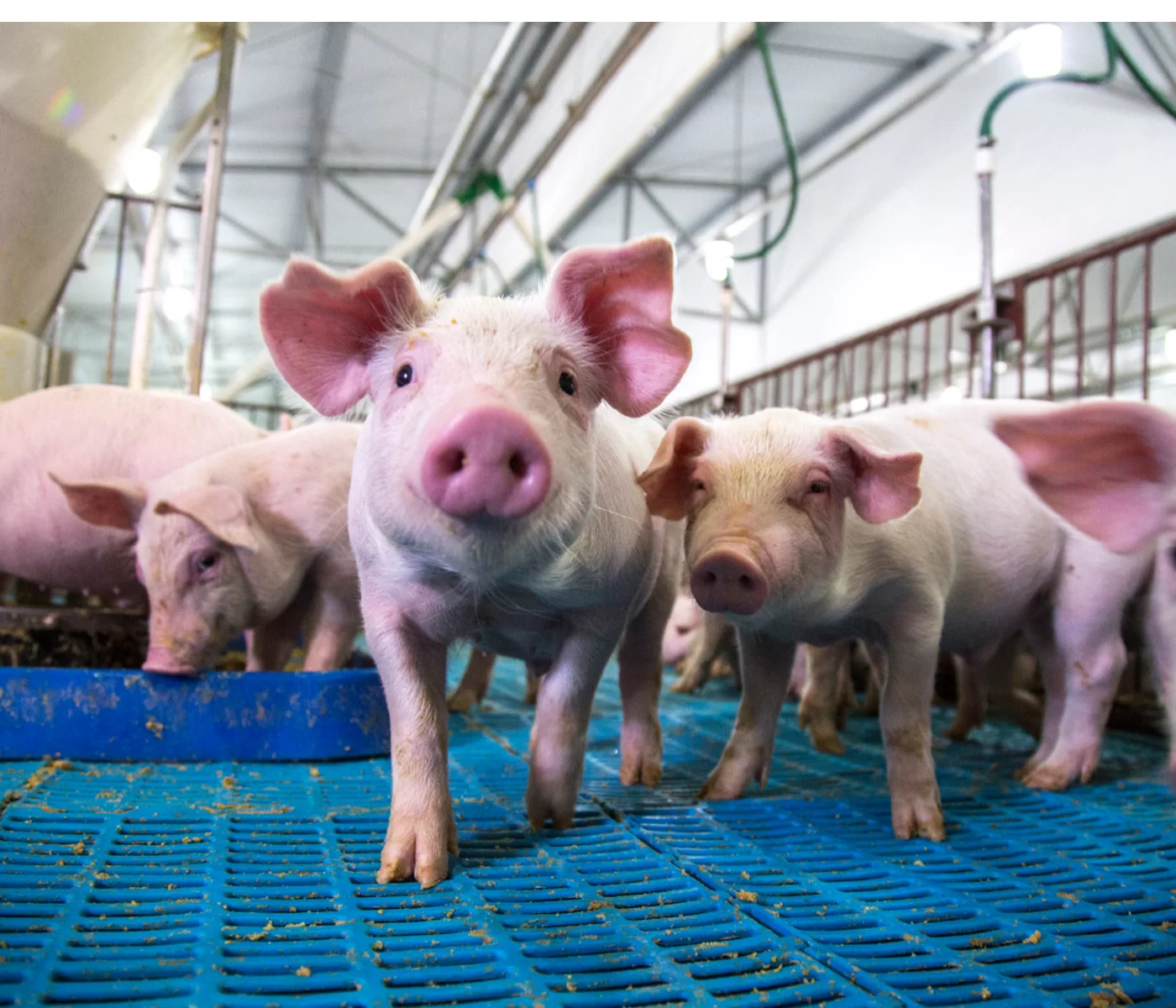
The period surrounding weaning places considerable pressure on young pigs. Their digestive and immune systems are still developing at the same time that they encounter major changes in diet, housing, social environment and microbial exposure.
Modern production adds further complexity. Larger litters associated with hyperprolific sow genetics can increase variation among piglets at birth, while efforts to move away from routine in-feed antibiotics and pharmacological zinc oxide have increased interest in alternative nutritional strategies.
As a result, maintaining performance after weaning increasingly requires attention to more than nutrient specifications alone. Digestive efficiency, microbial stability, epithelial integrity and immune competence all become part of the nutritional equation.


One logical place to begin is nutrient digestion.
Several studies discussed in the Frontiers Research Topic examined enzyme-based strategies under demanding nutritional conditions, including reduced-protein formulations and diets containing high levels of soybean meal.
Interventions involving phytase, xylanase, carbohydrases and protease, used individually or in combination with acidifiers, were associated with better nutrient utilization and indicators of intestinal health.
The studies reported improvements in amino acid utilization, reductions in biomarkers associated with intestinal irritation and, under some experimental conditions, lower post-weaning diarrhea.
WHY DIGESTIBILITY MATTERS
Improving digestion does more than make nutrients available to the pig. It can also change the quantity and type of substrate reaching the lower gastrointestinal tract, where those nutrients can influence microbial fermentation.
The interaction between diet and hindgut fermentation represents another important piece of the puzzle.
Research summarized by the authors showed that branched-chain volatile fatty acids could influence microbial fermentation efficiency and nutrient utilization, particularly when pigs consumed high-fiber diets.
Another study investigated spray-dried plasma during the nursery period and reported a lower prevalence of severe post-weaning diarrhea.
Together, these findings illustrate why modern feed formulation is increasingly interested not only in what the animal digests, but also in how the remaining dietary substrates interact with the intestinal microbial ecosystem.
Microbiome modulation has become a major focus of animal nutrition research. However, simply changing the abundance of certain bacteria does not necessarily mean intestinal health or performance will improve.
Some of the studies highlighted in the Research Topic therefore examined microbial changes alongside epithelial integrity and host responses.
Galacto-oligosaccharides, for example, were associated with reduced adhesion and invasion by enterotoxigenic Escherichia coli (ETEC), while also preserving epithelial integrity and supporting probiotic bacterial growth.
Another study examined hyodeoxycholic acid, showing effects on bile-acid-related signaling, tight-junction expression and Lactobacillus enrichment.
Researchers also evaluated combinations of Bacillus-based biotics and enzymes, reporting changes in immune competence together with lower pathogenic bacterial loads, particularly Mycoplasma spp.
A healthier microbiome is not simply a list of desirable bacteria. What matters is how microbial communities interact with the intestinal barrier, immune system, dietary substrates and the host itself.
Some nutritional interventions may become particularly important when animals encounter infectious or inflammatory pressure.
For example, one of the studies found that intramuscular iron administration supported intestinal barrier function and reduced inflammatory damage in pigs challenged with ETEC.
Zinc oxide was also associated with changes involving metabolic adaptation, immune regulation and intestinal integrity. However, its regulatory phase-out reinforces the need to identify other nutritional strategies capable of supporting these functions.
The broader implication is that nutrient status can influence more than growth. It can also affect how effectively an animal responds when its intestinal system is challenged.
Perhaps one of the most useful findings for commercial production is that the environment can sometimes exert a stronger effect than the diet itself.
One study comparing nutritional and sanitary influences found that hygiene conditions and pathogen exposure had a greater impact on gut microbial composition than dietary amino acid supplementation.
This provides an important explanation for why nutritional interventions do not always produce identical results between experimental facilities or commercial farms.
FEED DOES NOT OPERATE IN ISOLATION
A well-designed nutritional program still operates within a production environment. Hygiene, pathogen pressure and management conditions can amplify, reduce or potentially override the response to a dietary intervention.
The collection also offers a useful caution against interpreting every microbial shift as a positive production outcome.
In research evaluating propolis and probiotics, supplementation altered microbial populations, but crude propolis did not improve early growth or reduce post-weaning diarrhea.
This distinction is particularly relevant as functional feed ingredients become increasingly associated with microbiome claims.
Changes in microbial composition can provide valuable information about biological mechanisms, but their practical relevance should ultimately be considered alongside growth, health, diarrhea incidence, intestinal function and other animal-level outcomes.
Some of the most interesting findings summarized in the editorial occur before piglets even reach the nursery.
Maternal nutrition is increasingly being investigated as a way to influence fetal development, neonatal energy availability, intestinal maturation and immune development.
In one study, supplementation of sow diets with 3-hydroxyisobutyric acid reduced variation in birth weight within litters and improved neonatal energy availability through effects involving placental lipid transport.
Another maternal strategy involving fatty-acid supplementation improved sow productivity and was associated with stronger intestinal barrier function and mitochondrial integrity in offspring, together with reduced inflammatory injury.
Supplementation with chitosan oligosaccharides was also associated with improvements in milk quality, litter performance and neonatal immune development, alongside changes in microbial and antioxidant pathways.
The nutritional window for supporting piglet resilience may begin well before weaning. Maternal diets can potentially influence the biological starting point from which piglets face the challenges of early life.
What emerges from this body of research is not evidence for one universal gut-health solution. Instead, it supports a more integrated way of thinking about swine nutrition.
Enzymes can influence digestion. Fermentation metabolites can affect the hindgut environment. Prebiotics and biotics can interact with microbial communities. Minerals can influence physiological resilience. Maternal nutrition can affect development before birth.
But these mechanisms ultimately converge within the same animal.
DIGESTION — determining which nutrients become available to the animal and which reach the hindgut
MICROBIOTA — influencing fermentation and interactions between microbes and host
INTESTINAL BARRIER — maintaining the interface between the gut lumen and the animal
IMMUNE FUNCTION — shaping responses to microbial and inflammatory challenges
MATERNAL NUTRITION — influencing piglet development before nursery feeding begins
PRODUCTION ENVIRONMENT — determining the hygiene and pathogen pressures under which nutritional strategies must work
The findings suggest that the future of gut-health nutrition may depend less on identifying another standalone additive and more on matching complementary nutritional tools to the biological challenges animals are actually facing.
That also means asking more precise questions. Is poor performance being driven primarily by inadequate digestion? Excess substrate reaching the hindgut? Barrier disruption? Pathogen pressure? Immune activation? Early-life development? Or several of these factors simultaneously?
The answer may determine which nutritional strategy is most appropriate.
Importantly, the research also demonstrates why results from functional ingredients can vary among studies and farms. Diet is only one component of a dynamic system involving microbiota, host physiology and environmental exposure.
Rather than searching for a single answer to piglet gut health, the next step may be to build nutritional programs that connect digestion, microbiome management, intestinal integrity and immunity—from the sow through the nursery—while accounting for the environment in which those animals are raised.
Future research will be important for determining which combinations of nutritional interventions work synergistically and under which production conditions. This could help develop more precise feeding programs capable of supporting animal health, welfare and productive performance while reducing dependence on conventional antimicrobial tools.
Jang, Y.D., Jang, J.C. & Hong, J. (2026). Editorial: Advances in nutritional strategies for optimizing swine growth performance and gut health. Frontiers in Veterinary Science, 13:1910884. DOI: 10.3389/fvets.2026.1910884.
Subscribe now to the technical magazine of animal nutrition
AUTHORS

From 2025 Data to 2026 Decisions: Managing Mycotoxin Risk in a Changing Climate
Alterion® NE Celebrates 10 Years of Poultry Gut Health Innovation
The Science Behind Kolin Plus: Beyond Choline Replacement

Summer Infertility in Sows: Managing Heat Stress and Reproductive Performance
AO-Biotics® Amaferm®: Supporting Livestock Digestion and Performance

Interview with Güner Gövenç
Güner Gövenç,
Net Energy and Precision Feeding Shape the Future of Poultry Nutrition
Edgar Oviedo
Mycotoxins in Swine: Health Risks and Nutritional Solutions
Giuseppe Carcò
Mycotoxins and Piglet Ear Necrosis: Cause, Cofactor or Coincidence?
Alberto Morillo
How Mycotoxins Affect Intestinal Health in Pigs and Poultry
Marcos Rostagno
From Antibiotics to Functional Feeds in Aquaculture
Babatunde Saliu
Peas as an Alternative to Soybean Meal in Beef Cattle Finishing Diets
Daniel Villalba Mata,
Improving Egg Yolk Pigmentation Through Better Nutrient Transport

Aquaculture and Aquaponics Nutrition: How Fish Shape the Growth of Greens
Trenton Corby
Consistency in Soybean Meal Drives Performance and Sustainability